With old man winter approaching shortly, December presents a perfect opportunity for a topic that I have personally been waiting to pontificate on… conifers. This wonderful class of botanical treasures encompasses all things with needles (of course), but by definition it is any and all plants that produce a cone. To take it to the plant-geek level, these are Gymnosperms - a term going back to the Greeks meaning “naked seed.” Stepping back into the evolution of all the unique plants on earth over eons, this was a huge advancement in self-propagation for all conifers (and even for Cycads and the mythical Ginkgo tree as well). The vast array of flowering plants we enjoy are conversely termed Angiosperms – plants that produce a seed inside a carpel, like an ovary, fruit or berry. Think of that pinecone that dropped… what happens next? Because it is a “naked seed”, the cone simply needs to mature, stratify and then germinate in a suitable location. Because conifers of all kinds produce copious amounts of seeds, we get to enjoy our “Evergreen State” of Washington filled with native conifers like Douglas Fir, Western Hemlock and Red Cedar, among others.
Now that our quick history lesson has been covered, think of all the specimens in your own garden oasis. Having a year ‘round landscape is one of the all-time cravings of any gardener, and just because we are in the midst of winter does not mean that there is a lack of cool and interesting plants for visual excitement. Conifers are the bones of the garden to me, and when all the perennials have gone dormant and the foliage of fall has shed from deciduous treasures, what is left? Evergreen shrubs for sure, but even more so it is conifers. From miniature specimens to gigantic stately ones, conifers are the answer. Shades of green, bright yellows and calming blues are all there to admire, providing a seemingly endless array of textures, shapes and growth habits.
If I am being honest, I could seriously write about all things conifers week after week for months on end. Since many of these (along with Japanese Maples) were some of this plant-addict’s first irresistible eye-candy, I will try my best NOT to drool on my laptop as I write. Hence, this is officially part one of a new trilogy that will continue on in the coming weeks, adding even more considerations of coniferous evergreens. To start this week, here are some points I would spend time pondering, as they will help you decide which conifers will both meld with your gardening palette and perform nicely in your landscape.
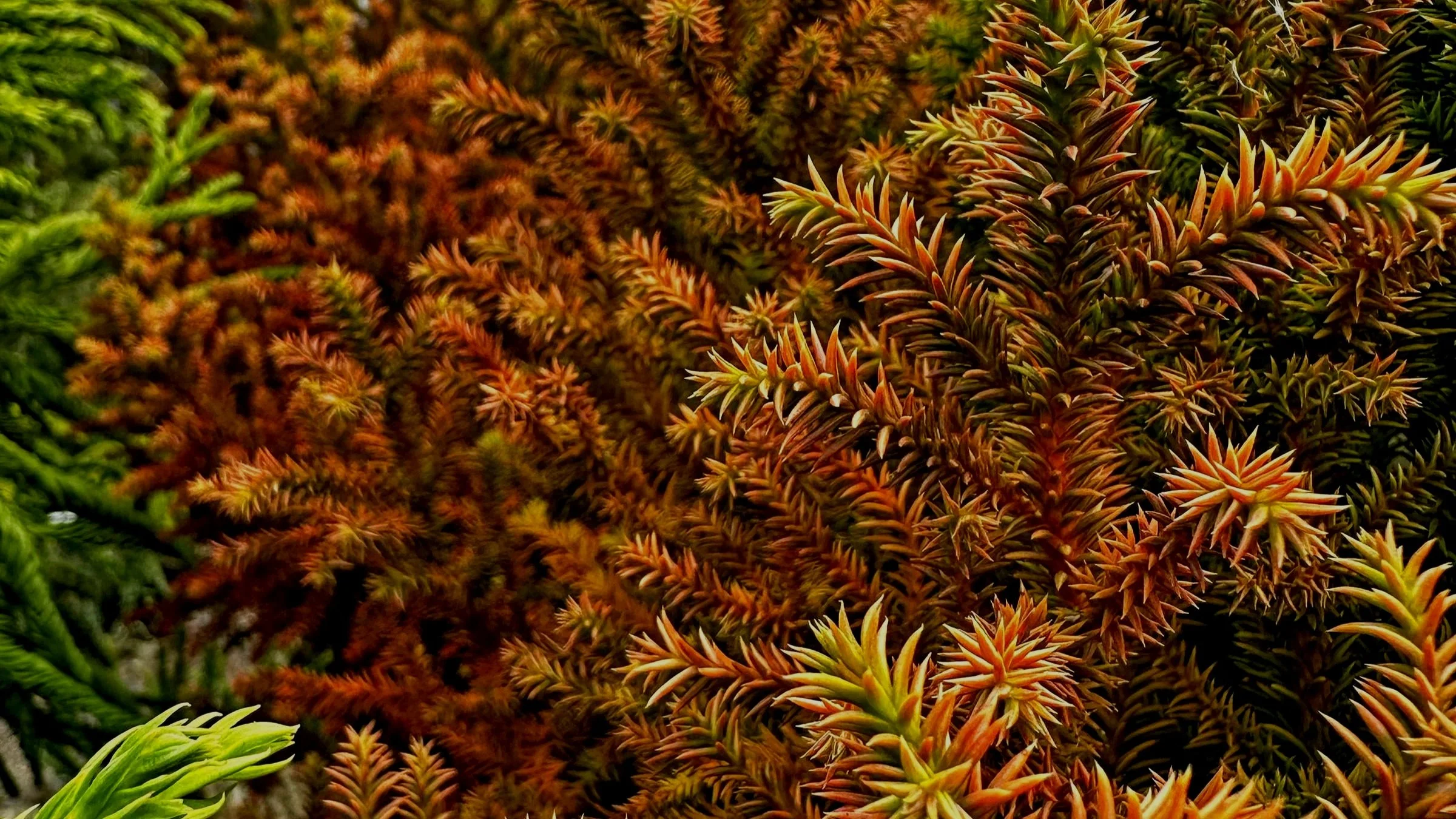
With so much green in our area, consider the many blue, yellow, white and variegated forms of conifers that are available to us PNW gardeners. These colors will pop in the landscape and shine over the winter months. Mother Nature (and our rain) provides the green backdrop for us to contrast with, so adding other colors of foliage really pops. Many conifers even turn color for the winter, like a golden Mugo Pine or numerous Japanese Cedars. Embrace the green (and the rain) like I do, then use it to your advantage when making decisions on which one to add where.
You should absolutely look and pay attention to the growth habit options. Tall and stately? Upright broad? Weeping? Globe shaped? Low and spreading? All of these types are useful in landscapes, but assess your location first. You will find properly labeled conifers with one of these terms, which should help you envision what it will look like in the future. Heights, spreads and growth rates are all part of this equation, so ponder the options. As an example take the multitude of cultivars of Hinoki Cypresses, wonderful PNW conifers for us to utilize. I have some in my yard that are only 2-feet tall by 3-feet wide after 20 years, while others have reached 15-feet tall by 10-feet wide. Another great example are the many weeping-type conifers. Some, like Weeping Alaskan Cedar, keep a central leader and mature into tall stately specimens while many others can be grown as a shrubby groundcover, like Weeping Norway Spruce. I bring this up to hopefully get you to think about which ones to stake, train or simply just let go and mature naturally.
Something my Dad taught me many moons ago seems to reverberate in many aspects of life, including with gardening… Always remember that you get what you pay for! With conifers there is a huge variation in cost, especially when we talk grafted collector flavors at the garden centers. Want slow? Look at the growth rates. Want big? Make sure to give your conifer room to mature then. Want small? Pay a little more for a dwarf/miniature. In my opinion, the magical word “dwarf” makes the gardener think of a little tiny plant. But keep in mind “dwarf” is a relative term, as a dwarf-this could be huge compared to a dwarf-that. I find most patrons I converse with about conifers really need a miniature conifer, one that truly stays small whether in ground or in a pot. This all comes back to remembering to put the right plant in the right place!
Pruning is a huge part of most plants lives in the garden, but to me maintaining conifers is even more important. Consider if you need to prune and then choose ones that can be pruned annually to make your life easier. Conifers like Cedar, Hemlock, Juniper, Yew and others are easy to shear to control size. Others like Pines, Spruce or true Firs are more difficult to keep smaller in some cases. Keeping this in mind, asking for help and giving your specimen the appropriate space are all key factors to growing success.
Conifers offer other desirable traits in our local landscapes as well, whether using them as focal points, foundation plants or even hedges. Many types of confers offer superior drought tolerance (once established), saving some water in our especially dry summers. Another huge benefit is animal resistance, as most conifers are very resistant to browsing deer and pesky rabbits - common challenges in our area.
The holiday season is in full swing, so I am hoping everyone enjoyed a wonderful Thanksgiving holiday with family and friends. If you are up for some extra credit homework over the holidays, gaze upon your landscape and think of the “Gymnosperms” you are cultivating versus the “Angiosperms.” A well-balanced landscape full of year-round attractions should include both, but this is the time of year conifers, large and small, truly shine. A visit to your local garden center should present a bunch of coniferous creatures to select from, each with texture, color and a desirable unique growth habit. Speak with a Certified Professional Horticulturist about your needs, ask lots of questions and find the perfect conifers for your specific landscape locations. Investing in a conifer is to begin a bond with a new life-long garden companion. By picking the right spots, planting them correctly and then caring for them season to season, any conifer will bring you and visitors to your oasis years of enjoyment in the garden.