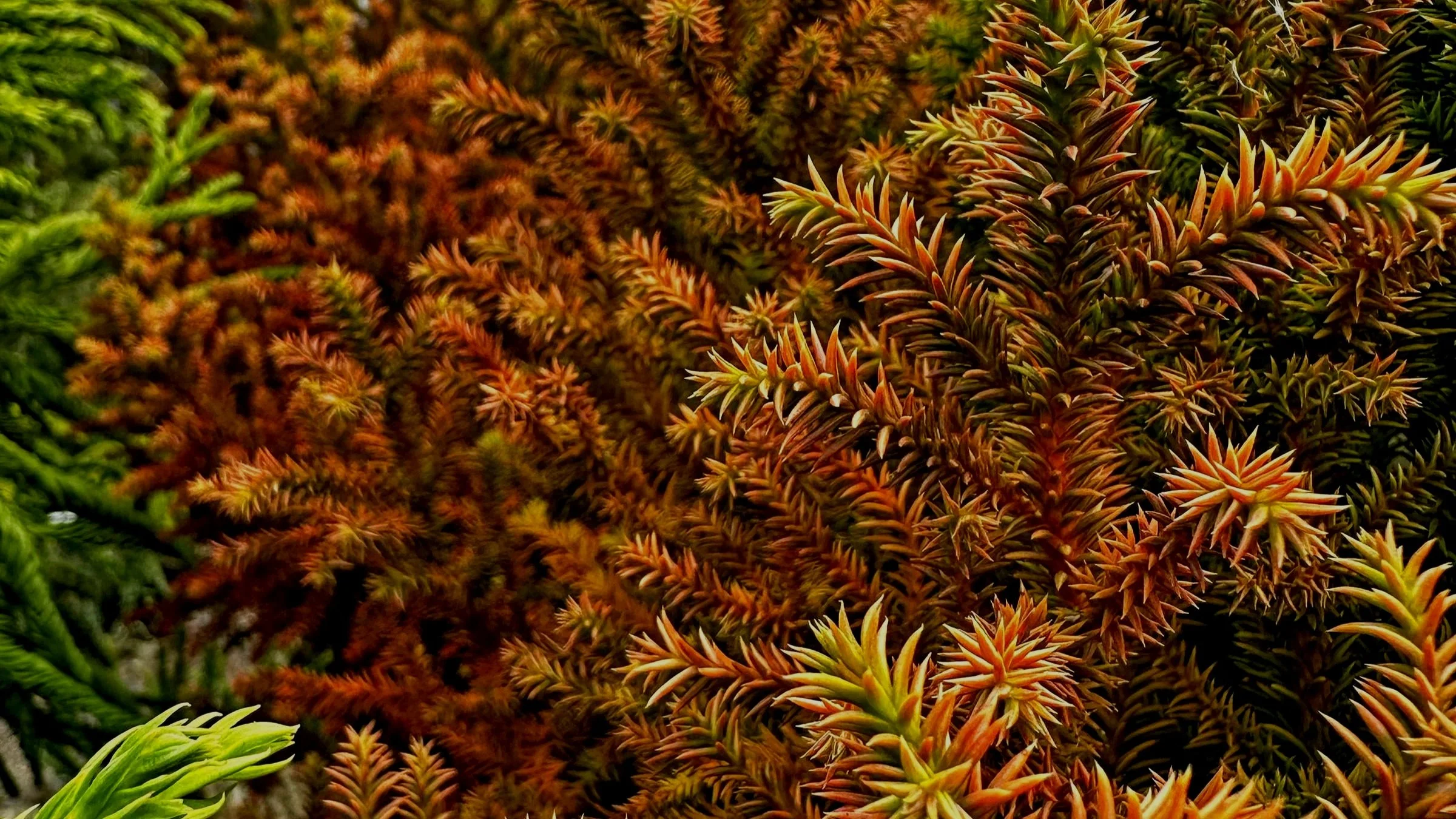
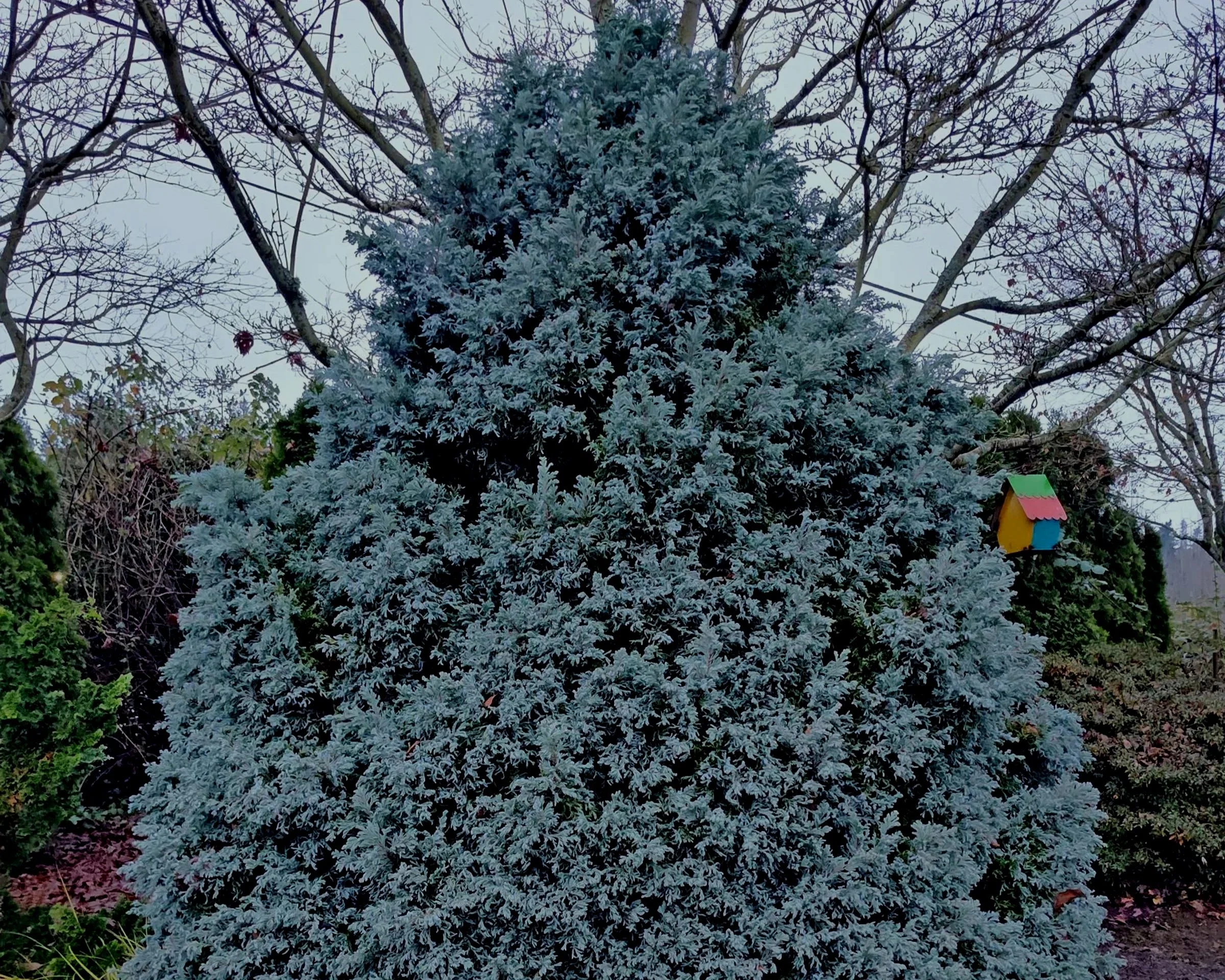
Honesty is always the best policy and since I promised a “Trilogy of Conifers” last week, on we go with even more conifer mojo. We explored their variations in color, texture and growth habits for local landscapes. In episode two this week, I want to focus on the many calming shades of blue, highlighting some selections with both superior color and shape.
As I stated last week, we are truly blessed to have so much green to use as a backdrop when painting with swathes of foliage color in our gardens. Using this green to highlight specimens is both easy and effective, helping to produce a truly magnificent year-round landscape full of contrasting combinations. There are a number of bluish-colored conifers worthy of consideration - some pretty intense, while others are more subdued. When I mapped out my landscape plan many moons ago, blue was a key component that I considered and conifers provided the options I desired. By siting different specimens here and there and mixing them amongst the rest of the gardening jungle, you only add to your kaleidoscope of landscape color.
If we start with some basics, blue evokes certain feelings and represents a number of different things to people all across the globe. I personally prefer not to dwell on the perhaps sad side of this color and will avoid “feeling blue” now and going forward, especially around the holiday season. To me, blue denotes calmness, serenity, and tranquility first and foremost. There is something very soothing about this color, almost peaceful to the eye. To others, blue represents security, evoking trust and reliability as well. If you picture two of earth’s wonders – the great blue sky and the endless blue ocean – you can truly reduce most trivial stresses. These same traits and feelings can be had with subtle additions of blue foliage into the garden. There are some excellent blue-flowering perennials (like Gentiana) and shrubs with blue blooms (like Ceanothus) or bluish foliage (like Hebe), but conifers sporting bluish needles add year-round interest, particularly noticeable in these darker days of winter.
In the world of conifers, many specific species include cultivars with blue foliage. Sometimes a more subtle blue works, while other times you want to make a serious statement with some extraordinarily serious blue, if you know what I mean. Breeders of coniferous creatures across the globe (including my favorite place Iseli Nursery in Oregon) spend decades selecting, evaluating and grafting new flavor after new flavor, always striving for that next perfect variety to help us gardeners out. Something smaller, something weeping, something more narrow, or most importantly, varieties with improved traits AND the most consistent and intense blue coloration to pop in any location.
Blue is a color for full sun and although part sun works as well, I would avoid excessive shade as plants may struggle and lose their color. I have a number of the suggestions listed below thriving at home, especially now that they are established against drought, pesky rabbits and browsing deer. Explore these and other options, as I am sure there is a blue treasure that will speak to you! Like all good plants, one may just hop into your shopping cart and hitch a ride home with you.
Colorado Blue Spruce (Picea pungens cvs): Whenever blue conifers is the subject, for me these are the place to start. They are also the perfect example of “you get what you pay for” as modern ones may cost more but they sport both better color and tidier habits. ‘The Blues Collection’ from Iseli was just released in 2024 and one variety included is ‘Moonstone’, a tidy globe-shaped grower, maturing at about 2-feet tall and 3-feet wide. ‘Monty’ is another in the collection and is the perfect small tree - tidy and narrow to about 8-feet tall and 6-feet wide. If something weeping is required, ‘The Blues’ is also a specific variety of Weeping Blue Spruce, perfect to stake into a Cousin-It-looking specimen or conversely leave sprawling out along the ground as more of a ground cover. Others I have enjoyed are ‘Avatar’ (fellow sci-fi lovers will know this name) and ‘Jeangenie’ (another excellent dwarf option)
.
Curly Tops Cypress (Chamaecyparis pisfiera): This modern version of the old Boulevard Cypress is one I chose years ago and still enjoy. Great blue color and interesting twisted needles add texture to boot. This is a smaller grower, maturing to perhaps 10-feet tall and 8-feet wide, but it will take some shearing if needed.
Cumulus Sawara Cypress (Chamaecyparis pisifera): Being slow growing and truly dwarf, this bluish-green variety is growing in my own rockery. Very soft and delicate like a cloud, this little treasure might reach 1.5-feet tall and 2-feet wide over time.
Junipers (Juniperus sp.): Please do not cringe when I say Juniper, it is not a botanical swear word! These are not the rat infested 1975 ones I am speaking about, but rather useful, drought tolerant ones that offer landscape solutions. Go low with an easy ground-hugger like ‘Blue Pacific’ - a sweet blue version of our native Shore Juniper. If something a little shrubbier is needed, you can’t get much bluer than a ‘Blue Star’ Juniper, a local landscape staple for years. If height is needed, there are a bunch of good upright narrow growers like ‘Blue Arrow’, ‘Moonglow’, ‘Wichita Blue’ and many others. These make great focal points in hot dry spots or can even create a hedge. Keep in mind with all these Junipers that success is about sun, well-drained soil, and minimal watering down the road.
Creeping Blue Noble Fir (Abies procera): This is one of my personal favorites, a lovely short and spreading flavor of Fir with intense blue color and a lovely sweeping habit to eat up some ground. Needles are a little softer and less prickly then spruce cultivars. These may reach about 3-feet tall and 6-feet wide over time, and simply prune out any leaders that might shoot for the sky to keep your specimen lower.
Serbian (Picea omorika) and Sitka Spruce (Picea sitchensis): Both of these Spruce species offer variable growth habits on specific cultivars and a bit more subtle blue coloring mixed with more silvers and greens. Our native Sitka Spruce grows massive, so dwarf versions like ‘Silberzwerg' or ‘Papoose’ might be more desirable. With Serbian Spruce, larger growers like ‘Silberblue’, narrow ones like ‘Bruns’ and dwarf shrub forms like ‘Kamenz' can all be found.
Blue Atlas Cedars (Cedrus atlantica): These true Cedars sport excellent blue color and love heat. The specie can grow very large and wide, but columnar forms have a smaller footprint if space is of concern. This is also the most widely planted weeping conifer – Weeping Blue Atlas Cedar – as they are super fun to train and shape with character as they grow.
Named bluish versions of Japanese White Pine (Pinus parviflora), Alaskan Cedar (Xanthocyparis nootkatensis), Scotch Pine (Pinus sylvestris), Limber Pine (Pinus flexilis), Eastern White Pine (Pinus strobus), grafted Lawson’s Cypress (Chamaecyparis lawsoniana) and so many others are out there too!
Local gardeners should find many of these coniferous treasures on a visit to your local garden center this time of year. Speak with a Certified Professional Horticulturist about your needs and allow them to help you find the prefect specimens for both color and growth habit. Whether it is a diminutive little shrub, a striking weeping specimen or a stately ginormous grower that you need, get the right flavor picked out for that specific spot. I invite you to seek these and many other conifers out. Perhaps even get lost online for a bit exploring options on a website like www.iselinursery.com, as I dare any plant lover to escape that site within an hour! Always remember that by adding some blue here and there, you are adding both sophistication and showing off your contrasting landscape style.
Happy Holidays to all once again, please be safe always and kind to all out there!