
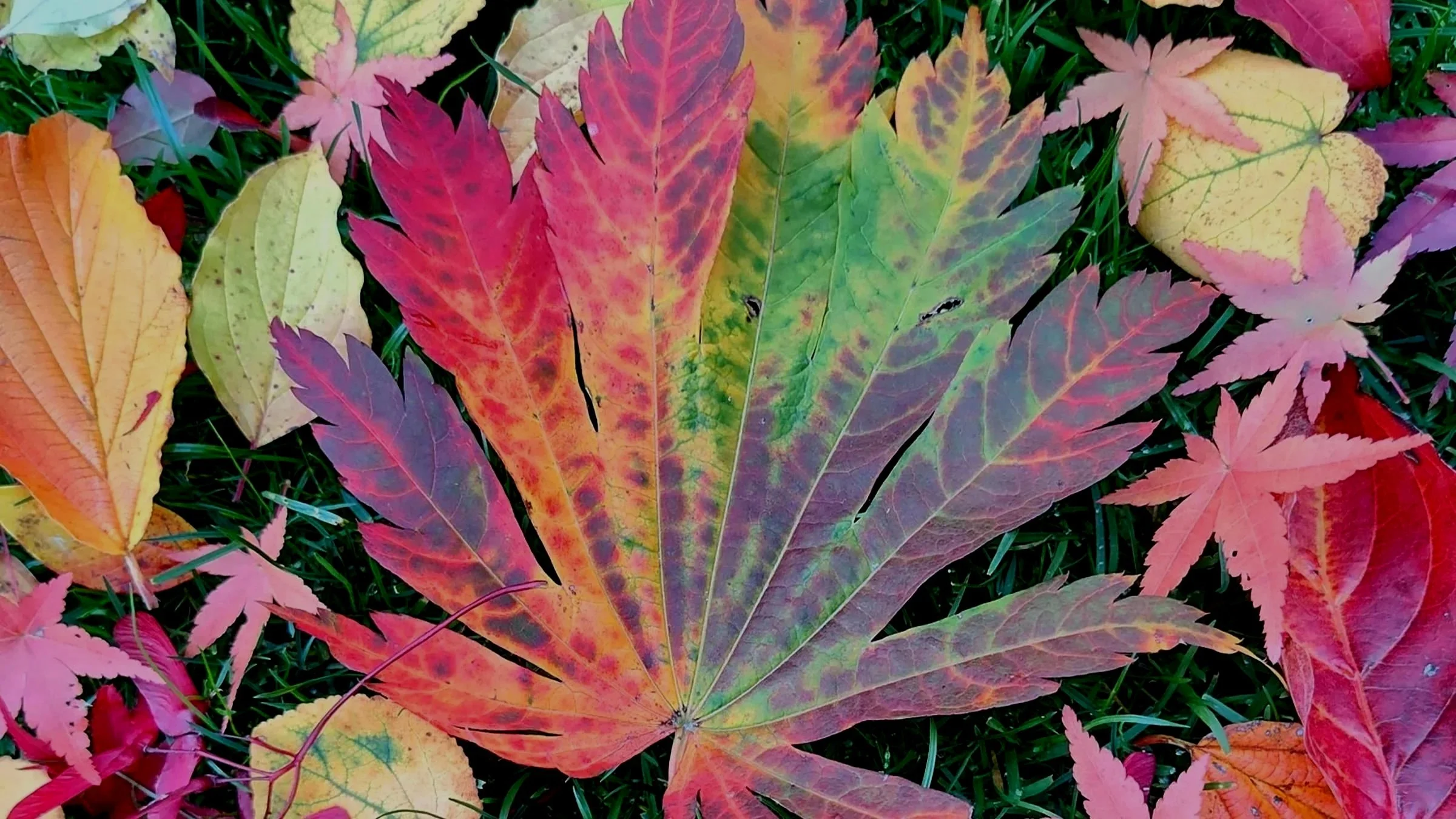
Autumn after autumn I am amazed with Mother Nature and all that she gives us. The seasons at our latitude produce wondrous colors for us to gaze upon, lighting up our landscapes and native lands with brilliant reds, oranges and golds. Big foliage, small foliage, grassy foliage - an unbelievable variety of size and shape, as well as color. This annual tradition of color is yet another miraculous present from evolution, but this gift runs far deeper than that. I dare you to attempt to count the number of leaves on this tree, or even better, how many blades (leaves!) of grass are on that lawn or golf course. I am sure that many, like me, are amazed nightly with the trillions of stars in the Milky Way galaxy. I would suggest that the leaves on our fine planet outnumber the stars in the sky, exponentially.
If you pause to think of a leaf, I would be curious to know what comes to your mind. I appreciate fall color while others might enjoy the crisp green of spring or the deeper greens of summer. The diversity of plants we enjoy locally provides us with plenty of specimens for specific seasonal interest or for all year long, and this same diversity has resulted in seemingly endless sizes and shapes of unique foliage for us gardeners to gaze upon. We are lucky to have many broadleaved evergreens as well as needle-adorned coniferous creatures to grow. Grassy foliage grows just about anywhere, from our lawns to ditches to greenbelts. During this fall season, deciduous and perennial plants of all kinds are the highlight, glowing with many brilliant colors. But remember, like I always say, a well-balanced and attractive landscape will contain swathes of all of these types of foliage.
Dozens of leaf shapes can be found, all with both distinct shape and purpose. Evolution is all about purpose - the natural selection of specific traits to allow Mother Nature to continue to thrive for eons while combating environmental changes. This leaf color absorbs heat, that shape reduces transpiration (water loss), this other one is huge to maximize sun exposure, that shape resists strong winds, that one in the desert is coated in wax to reduce water loss, etc. Leaves can create oils and toxins as defenses against creatures, or conversely add stimulants that may aid in health needs if you know what I mean. These subtle differences (or often not so subtle honestly) help create the biodiversity in our world that we can all enjoy. But it does not stop there, the benefits to all creatures big and small is frankly immeasurable as well.
The beginnings of the leaf go back some 500 million years. The remarkable process of photosynthesis is the back bone of this transition - a process that goes back over a billion years in which cells can convert sunlight into sugars (food) while producing oxygen. Single-celled primitive bacteria began photosynthesizing in the vast oceans, leading to the precursor of all plants… green algae. Over hundreds of millions of years, these organisms got better and better at trapping carbon dioxide and expelling oxygen, which all of us need dearly. This transition, over time, transformed our rock in space into the blue gem we enjoy today, removing some 90% of carbon dioxide over eons and allowing us to enjoy the livable oxygen-rich atmosphere nearly all life requires. Once the prehistoric algae migrated onto land, the diversity of plants exploded due to photosynthesis. Foliage evolved from stems into the plethora of leaves we see today, big or small and all maximizing this absorption of CO2 and expulsion of O2. In simple terms, thank you for the blue sky!
Here we are in autumn and I could not resist bringing leaves to the top of everyone’s mind. Thicker, tougher leaves like needles and broadleaved evergreens are adapted to withstand drought and cold, while thinner, broader leaves of deciduous shrubs and trees cannot survive as harsh of conditions and go out with a blaze of glory each fall. And it is not only this, it is also about recycling nutrients. Plants of all kinds are truly magical in that respect, nothing is wasted and everything has a purpose. When foliage drops in the fall, all of that built-in goodness lands on our garden soil, protecting the surface, sheltering beneficial insects and adding those nutrients through decomposition back into our landscapes. Think of it this way, if leaves were shed only when something actually died, our soils would be poor and unproductive. But luckily this recycling is a gift from plants to us humans, and do not fret, they will be back the following spring to both catch our eye and start this astonishing ancient cycle once again.
Leaves are magical if you think about it, little machines that have been dialed in over all this time to do exactly what Mother Nature needs them to do. It all started as little single-celled algae, then cycads and ferns, then needled and broadleaved plants, and so on. As time progressed over the eons of earth’s history, the race for sunlight commenced: what plant can grow higher, bigger, faster and win that race for maximum light. That is how we eventually got our selection of hardwood trees, unique in different climes across the globe. But it is not just this diversity of foliage that is important. Leaves produce the energy needed for bark, wood and the internal plumbing system of all plants that moves water and nutrients from roots to crown. As plants do what is called evapotranspiration (a fancy word for releasing excess water in the heat of the day) it draws these things up throughout the plant - think of it almost like you are sipping on a beverage through a straw. Or even better, almost think of this process as a river to the sky – water is released into the atmosphere that in turn recycles itself by falling as rain. A truly wondrous natural process indeed!
I wanted to pause this week to show some love for the leaves, perhaps a bit less specific on plants but rather a reminder to celebrate the wonders of foliage. Not only has the leaf allowed life to thrive on our plant now for eons, it will continue to adapt and help mediate the new norm of climate change. We all need to do what we can in our communities and green spaces to maximize and protect the power of the leaf. From providing shade to reducing temperatures to sheltering our avian friends and wildlife companions to flat out absorbing carbon dioxide and giving us oxygen to breathe, the leaf is nothing short of spectacular. So I ask you this fall as you are raking them up and perhaps cursing them under your breath a bit, try to be more appreciative and simply whisper a quiet “thank you” to both the plant and also Mother Nature.
