Now that we are into the heat of the PNW summer, I thought it would be fun to delve into the world of Hibiscus. When most gardeners close their eyes and think of the word Hibiscus, I would be curious to see what picture comes to mind. There are hundreds of species of this plant worldwide, with the vast majority thriving in climes much warmer than ours. All are known for big, bright and showy flower power from summer into fall and there are plenty of types that we can grow here locally.
For those of us that have been lucky enough to travel to a tropical paradise like Hawaii, it is all about Hibiscus x rosa-sinensis – what many refer to as Tropical or Chinese Hibiscus. Large flowers in bright oranges, sunny yellows, radiant reds, hot pinks and many other bold colors can be found. These of course cannot be grown outdoors in our region year around, but they do make interesting and showy container specimens that can be brought indoors for the winter or even just grown as a houseplant all year long. Temperatures dipping below 50°F brings defoliation and anything close to freezing will take a Hibiscus to the great compost heap in the sky. There are an endless array of hybrids that originated in China and various Pacific Isles, and they also continue to be bred into even more interesting color combinations.
In addition to Tropical Hibiscus there are many perennial types (mainly Hibiscus moscheutos and hybrids) that are plenty hardy temperature wise (Zone 4 to 5 for winter), BUT they need some serious heat to bloom well. I see them here and there doing well in our area in full sun, sporting their massive dinner-plate sized flowers in a myriad of colors depending on the exact variety. Many gardeners in Eastern Washington cultivate these as they are blessed with more summer heat than us. In our area these will wake up a bit later in the spring and grow slowly until temps warm up, finally blooming in late summer to early fall. They can reach 3 to 4-feet in a season, should be fed with fertilizer regularly and are quite impressive as a specimen perennial if you are blessed with the required hot spot. Often these are referred to as “rose mallow”.
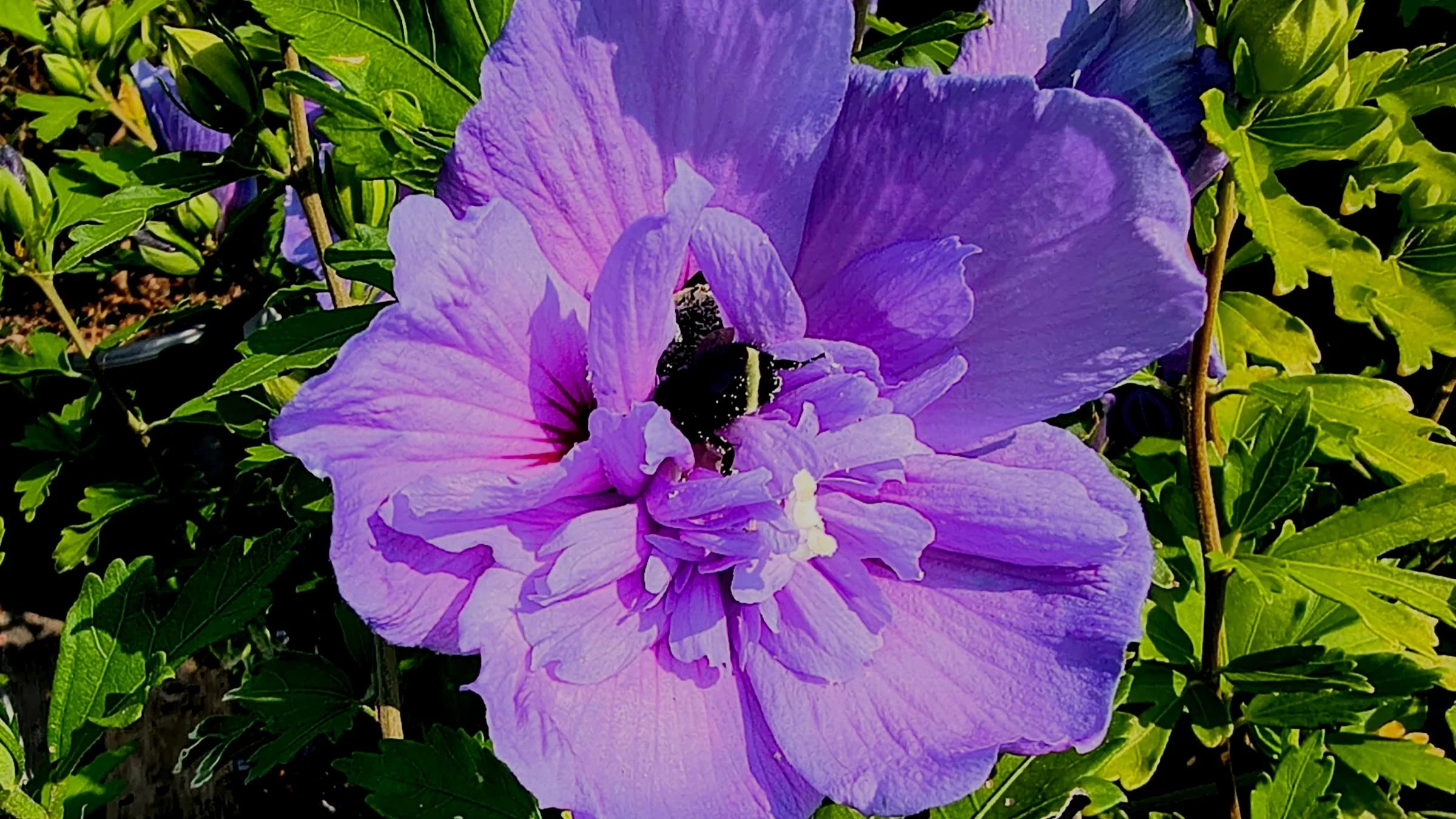
The third one I will mention is the focus of our discussion today, Hibiscus syriacus or what many call “Althaea” or “Rose of Sharon”. This specimen shrub comes in many named varieties, old and new, that all mature into lovely multi-stemmed or small tree-like woody specimens. Althaea are plenty hardy for our region and are honestly great options for a summer blooming focal point in the landscape.
Rose of Sharon (as I choose to call it) is one of those old-fashioned shrubs that brings me back to my grandmother’s garden. They are super easy to cultivate, blooming on new wood each summer to early fall. Simply cut them back a bit (if needed) coming out of winter and the new growth that emerges will set flower buds immediately for the summer. These are deciduous, glowing with lovely golden-yellow color in fall before dropping their leaves and have a nice light colored bark which adds some brightness over the winter as a bonus. Rose of Sharon should be grown in full sun in rich, well-drained soil for maximum bloom. I will describe some cultivar options below, but many more are worthy of growing as well. There are some centuries old classics, columnar forms, dwarfs and newer versions that look more “tropical” in size and color. Plus, this is one of the few cool plants that we can get in bluish flower options! Perhaps the strongest blues I have seen is one from Monrovia called ‘Versailles’, or even ‘Parapalu Violet’ from Proven Winners - both perhaps not the easiest ones to find but worth the search.
The Pillar Series: Often gardeners seek a plant with some height but not as much spread to be a focal point specimen. Proven Winners has bred a great series for exactly this, the Pillar Series. ‘White Pillar’ (pure white), ‘Purple Pillar’ (purple with dark center), and ‘Red Pillar’ (deep pink with red center) - all grow to 10 to 15-feet tall, but a tidy 4 to 5-feet wide. A perfect columnar habit for tight spaces in the landscape or even a hedge, sporting a lot of summer flower power indeed.
Tidy Dwarfs: In the world of Althaea, I was surprised when I saw some useful dwarfs introduced over the years – a truly tidy shrub option for summer bloom. Brought to you by Proven Winners once again, ‘Lil Kim’ (white with red eye) and ‘Lil Kim Red’ (hot pink with red eye) grow to about 4 to 5-feet tall and wide. These both would make good foundation plants in sun or even an informal lower hedge. Perfectly suited to mix into a pollinator garden with perennials to add some woody structure.
Old School Flavors: I could get lost mentioning these as there are so many good ones if you want to go old-school. Traditional varieties like ‘Diana’ (white), ‘Red Heart’ (white with red eye), ‘Minerva’ (lavender with dark eye), ‘Aphrodite’ (pink with dark eye) and so many other single-flowered options can be found still. These will all mature into large shrubs, in the 10 to 15-foot by 6 to 8-foot range and can be grown as a specimen multi-stem or single trunk small landscape tree. There are also showy doubles like ‘Collie Mullins’ (magenta), ‘Blushing Bride’ (light pink) and what I call the ‘Smoothie Series’ (Blueberry Smoothie, Strawberry Smoothie and Raspberry Smoothie). I think you can guess the colors on those.
Make Mine a Double: Speaking of double flowers, there is a useful modern collection from Proven Winners called the ‘Chiffon Series.’ Gardeners can enjoy a fuller flower in summer with these lacier flowers and choose colors like blue, lavender, pink, white and magenta. The latest one is ‘Starblast Chiffon’, a striking white with red double that seems to bloom a little longer than others. All of these make tall specimens, maturing in the 12-foot tall and 8-foot wide neighborhood. There are also the ‘French Cabaret Series’ from the First Editions program at Bailey Nurseries. Colors like purple, red, blush pink and others can be selected, staying a little smaller in the 8-foot tall by 6-foot wide range. Their flowers frankly resemble gorgeous little carnations!
Island Times: There are a number of other great selections from the First Editions breeding program as well. Cultivars like ‘Fiji’ (white with pinky red center), ‘Bali’ (semi-double white with red eye) and ‘Tahiti’ (semi-double hot pink with deep red center) bring the vibes of the tropics, yet are super hardy. Plants mature to about 8-feet tall and 6-feet wide.
I invite you to explore your inner Hibiscus and see which one(s) work for you! A visit to the local garden center this time of year should allow you to see a number of them in full bloom, making it easy to explore the many options for flower size, color and growth habit. Speak with a Certified Professional Horticulturist about your needs and allow them to help you pick out the best one(s) for your garden. Rose of Sharon truly provide a serious pop of summer color to combine with other summer standouts. Not only are you adding another superior summer pollinator magnet to your plant palette, you are investing in an easy-to-grow specimen that will provide years of both low maintenance and garden enjoyment.