Each and every month of the year I can hear the garden calling my name, asking politely to please make time for this task or that one. To me, time spent in my garden is always pleasant, perhaps even more so in the summer sunshine. Snacking on fresh berries and veggies, admiring all of our pollinating friends hard at work on flowers, pulling some pesky weeds, sculpting shrubbery here and there and of course watering like it is going out of style. With the dog days of August upon us, there are a few projects I am working on and would recommend that you jump on too, sooner rather than later before autumn arrives. The sun is out in full strength so lather on that sunscreen, sport that new wide brimmed hat, fill that water bottle with some ice and let’s get gardening summertime style!
Watering: With our dry summertime months in the PNW, this is perhaps the most important job to keep up on. Protect the investment you have made in your landscape and learn how to water properly.
This discussion always leads into many others, such as drought tolerance, using natives and planting the right plants in the right places – all of which means more resilience in the ground. Old and established plantings never need as much water as you think, while newly filled gardens may need a little more than you think. I would always give any plant the two knuckle test. Simply poke an index finger into the ground (or in a pot) to check moisture, if it is dry two knuckles down then water. I think many of us gardeners (including me!) see dry soil or mulch and water immediately. Often there is still plenty of moisture down in the root zone and we can wait. For new specimens, creating a moat of sorts around these plants will help as well. Nothing fancy, just a short little circular wall of mulch that will both collect what little rain we get this time of year and your irrigation, focusing it around that new plant.
I would also avoid blessing the garden each night. Watering late in the day or evening means wet foliage overnight, which will bring on powdery mildew and other fungal issues. Try to always water at the base of plants when hand watering and SOAK areas, don’t just bless them. This will inevitably lead to deeper more extensive root systems, consequently saving both your investment in your plants and on the water bill long term. Know your plants, or ask for help, and get that summer watering dialed in properly.
Weeding: Whether you prefer the pleasure of pulling weeds by hand or nuking them with your favorite concoction, keeping up with weeds is always vital. The heat of the summer is a great time to spray problem areas for sure – maximum foliage and heat means maximum absorption of the herbicide for quick results. I am not going to promote any chemicals, but do what you need to do for your situation. I stand by three things at my own home; pulling them as needed by hand, spraying lawn weeds with a natural Iron-based spray called ‘Lawnweed Brew’ (it does not kill grasses) and hitting the gravel/driveway/walkway areas with another natural spray called ‘Deadweed Brew’ (it kills pretty much everything including grass). After hitting my parking pad this past weekend, I could almost hear them sizzling in the heat – most gratifying indeed. Blackberries, Horsetail, Buttercup, Ivy - each of us has our own tolerances for “weeds.” To some they are nuisances while to others they are treasures, so please do what you like and not necessarily what I like. This is important to bring up now simply for the fact of getting ahead before one weed becomes a hundred and then a thousand – I think you know what I mean.
Mulching: This is a practice that will help with both of the suggestions above as well as improve your soil structure long term. Whether you like compost like me or bark like many others, it all helps to suppress weeds and conserve water, period. Perhaps once an area has been weeded or sprayed, follow it up with 3 to 4-inches of compost or bark to help keep it weed-free. My one caution here is to be careful not to bury things too deep, being especially prudent around the crowns of shrubs and at the bases of trees. I see this happen with many of the services out there, they blow bark in and bury just about anything, indiscriminately applying it everywhere. I would always go back and check, making sure it was done the right way.
Thinning: To me, this is the proper way to prune anything. When we remove the crowded (and often dead) interior wood of plants the structure opens up, allowing for better light and air circulation. A major result of thinning is disease prevention – congested and crowded landscapes will lack sun and air flow, breeding foliar diseases like powdery mildew. Thinning will cause many a plant to literally say “thank you!” and your reward will be a naturally attractive plant that is much more resilient to diseases. Japanese maples, and frankly almost any tree or shrub, should be examined in these terms and then thinned out a bit to create the best results.
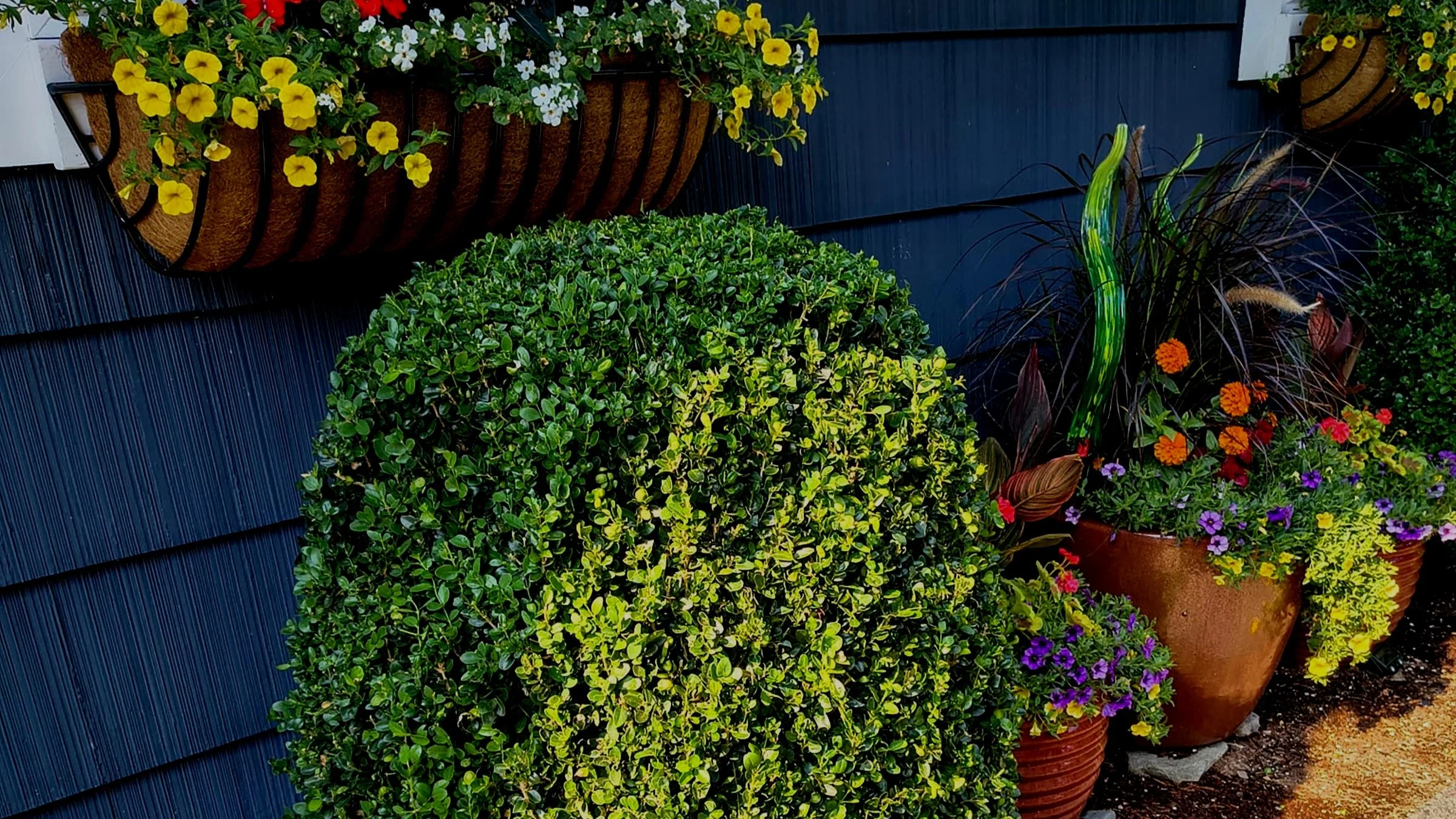
The other major type of pruning is what we call heading back – think of when you shear a hedge or top of a plant to control its size. This works with many, but please do not top your larger trees that have leaders. We have reached the end of the ideal time to do this with evergreens, so do this sooner rather than later. Clip the Laurel, the Boxwood, the Arborvitae, anything that needs that yearly shearing to stay tidy and to your liking. Doing this too late does not allow enough time for new growth to emerge and harden off before the first frost comes. Here is to hoping that does not happen for months!
Deadheading: To many of us the garden is all about flower power, especially during spring and summer. So why not maximize your flowers and have your specimens bloom as long as possible? For both annuals and perennials, deadheading every week or two not only keeps them aesthetically pleasing to the eye but it also tells those plants to produce more flowers soon. Many modern annuals are self-deadheading these days which lightens the load, and modern flavors of perennials do very nicely at repeat flowering all summer long. If you let them go to seed they will always be there the next season, but if you deadhead they will bloom again and again in many cases. So do some gentle snipping here and there and your reward is more color week after week, all summer long until fall frost.
Completing needed projects in a timely manner really does save time in the long run and prevent other issues from popping up down the road. Try to tackle some of these ideas soon and remember that experts at your local garden center are always there to help you with any questions. Please remember that the work of the gardener is always meaningful and your plants truly appreciate your efforts even if they can’t tell you so. Well actually, they do kind of let you know by thriving, blooming, multiplying and behaving in your outdoor oasis. Happy summer gardening!