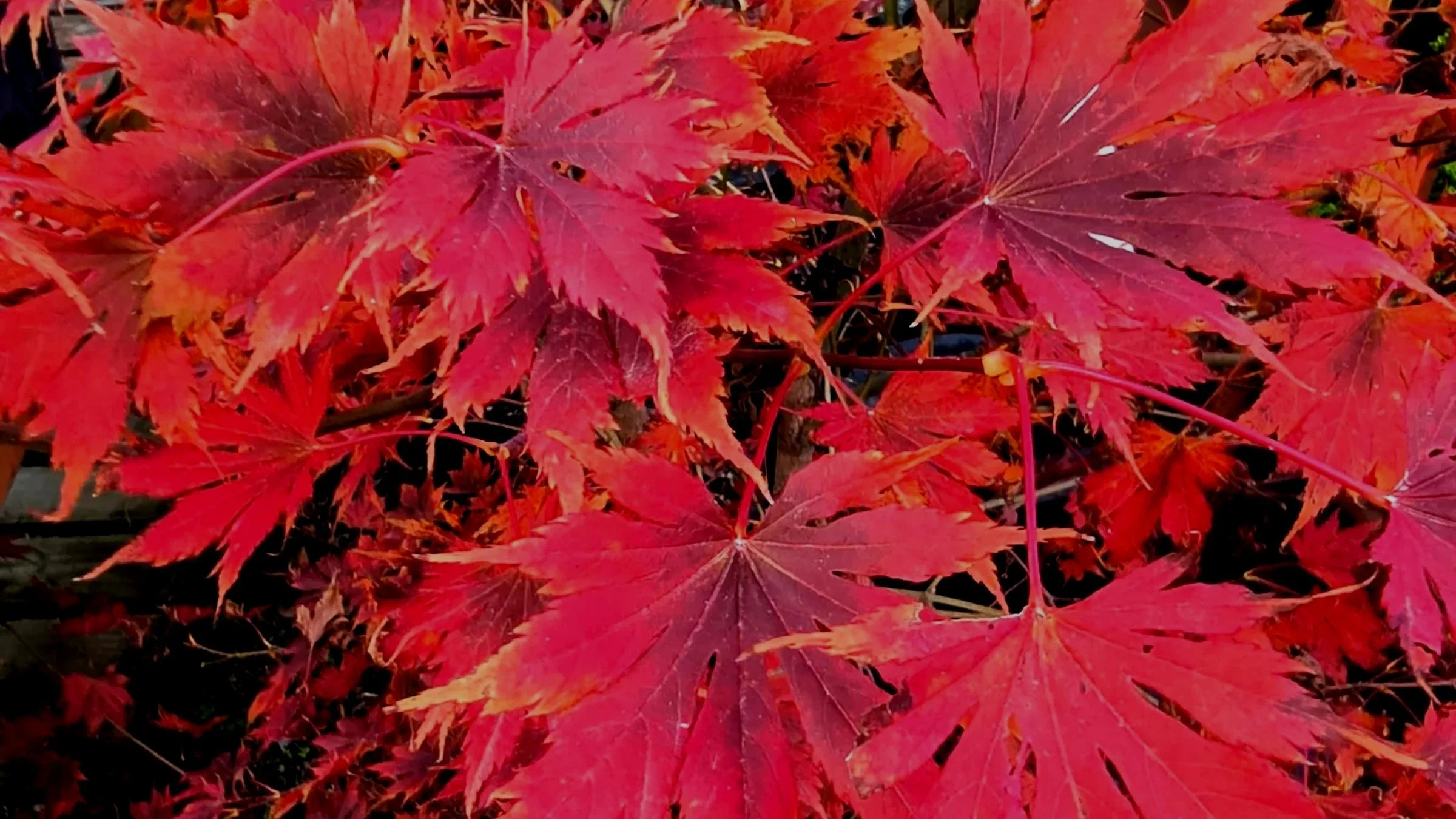
Fall is my favorite season every year, as a native Washingtonian I crave to see the temperatures drop and some rain falling to green things back up a bit. It is the magical season for deciduous plants to brighten our days with glowing golds, oranges and reds before going dormant for the winter season. I sincerely hope that I have convinced all of you over my 30 years of doing this that adding deciduous treasures into the landscape helps create the ultimate year around garden – not everything has to be evergreen! Not only do we get to enjoy the color, but that fallen foliage then blankets our garden beds, adding protection to the soil surface and nutrients as it decomposes over the winter season.
Before I discuss a few of my fall favs, I will first mention summer watering practices and how it connects to the colors of autumn. This time of year I always head up Highway 2 towards Stevens Pass for a fall walkabout, camera in hand, admiring the wonders of nature on some random trail. I hope many of you enjoy hiking and the outdoors as well, but it really brings up one question I seem to get asked year after year… Why does my yard turn brown to light yellow tones and not the bright gold, orange and red I see in our native habitats? The answer is simple, it is almost always about water.
Many gardeners (especially those with irrigation systems) water too much, particularly in September to early October. Mother Nature gives us a dry summer each and every year, so it is definitely important to water, the question becomes how much. Newly planted? Water it! Hot spots and slopes? Water them! But if the sprinklers continue to run into the fall, saturating the soil, nothing hardens off and changes color. Check for soil moisture first before watering as soil should be dry down at least 3 to 4-inches before it needs more. Established trees and shrubs need far less than you think, especially now that it is cooling off. One easy example is a useful native that many incorporate into their homes, the Vine Maple (Acer circinatum). The slopes of the Cascade Mountains are lit up with these each and every fall, yet in town I often see them lacking any pop of color whatsoever. It is now the time to turn the irrigation off (or down substantially) and let Mother Nature run its course before winter.
As far as plants go, I have talked about many good ones over the years that will glow yellow, orange, red or all of the above. There are a bazillion excellent deciduous tree and shrub options that light up the fall, but there are also some great perennials (like Peonies) that also turn color later in the season before winter dormancy that are worth mentioning. Perennials can add late bloom (Agastache, Echinacea, Aster and many more) and then also display copious amounts of seeds (Gaillardia, Knautia, Rudbeckia and many more) for birds to snack on. One perfect fall perennial to me is Plumbago (Ceratostigma plumbagoides), a lovely ground hugger that is blooming cobalt blue this month AND sporting glowing red leaves at the same time! In addition, Perennial ornamental grasses are close to full “plume”, with blades aglow and feathery plumes emerging. Speaking as a grass lover, they are some of the best plants for providing texture, motion, sound AND color in the garden right now.
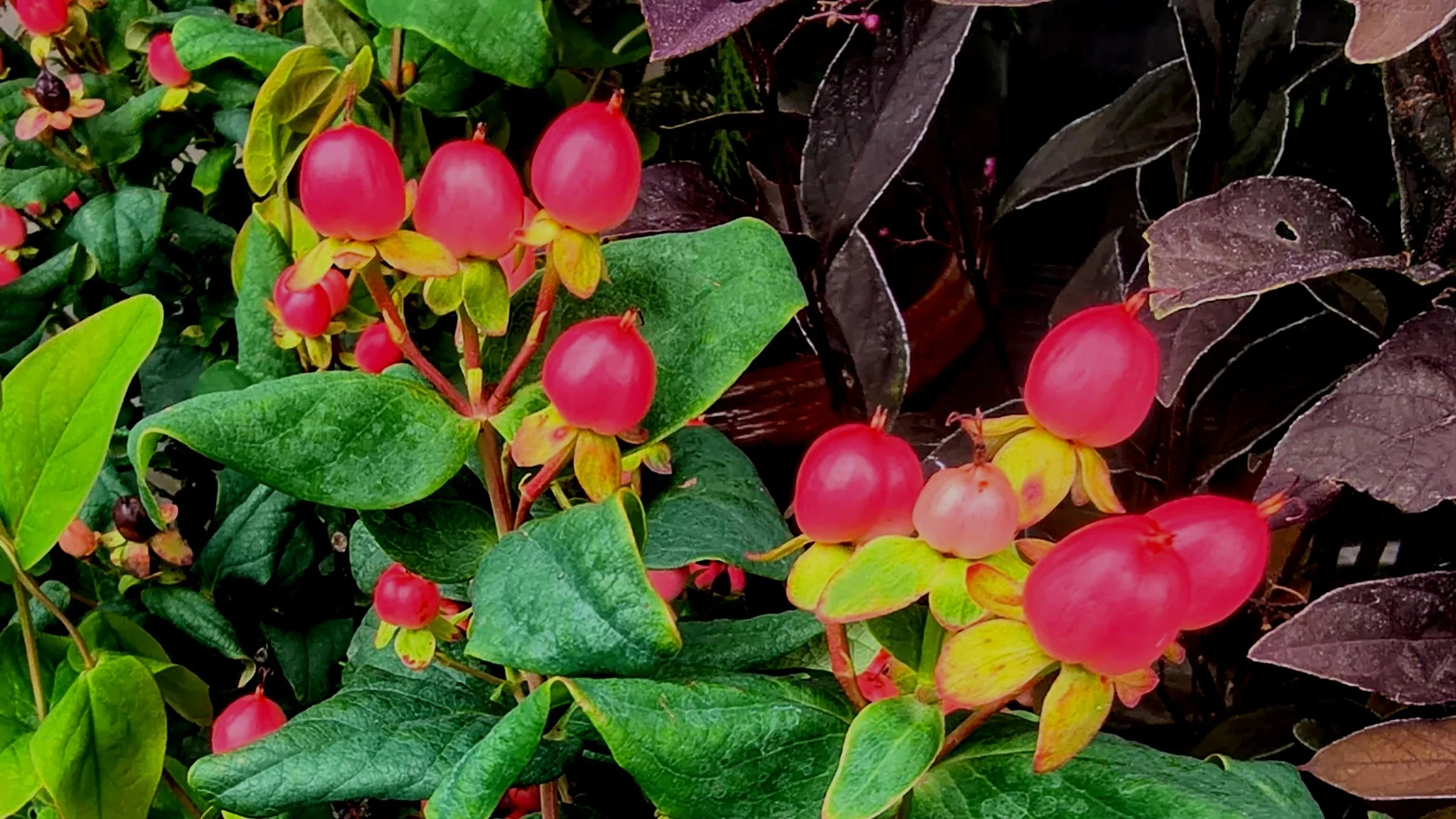
One more thing before I get into deciduous beauties… berries. I know many people are like me and not only love watching birds forage about in fall, but also like the added visual interest of ornamental berries on plants. There are some lovely options out there that scream fall, like Chokecherries (Aronia sp.), Cotoneaster, Floral Berry (Hypericum), Beauty Berry (Callicarpa) and many more. I must highlight one tree, the Crabapple (Malus sp.), and NOT the old disease ridden ones from 30 years ago, suckers and all. Modern crabapples like ‘Royal Raindrops’, ‘Golden Raindrops’, ‘Ivory Spear’, ‘Raspberry Spear’, ‘Ruby Dayze’ and others are not only disease-free and sucker proof, but they also glow with both fall color and quarter-inch fruits for birds - think little Christmas lights dangling. Speaking of Christmas lights, maybe one more tree then, the Korean Dogwood (Cornus kousa) which not only deepens to a burgundy red in fall, but also shows off bright red strawberry-like fruits for additional autumn interest.
Well after all that, I get to finally focus on deciduous plants that are all about fall color. Below are a few of the best - not the only ones, but I am running out of room. I would encourage you to explore cultivar options with any of these trees and shrubs as all of them are simply stunning in the fall!
Shrubs: Enkianthus, Fothergilla, Burning Bush (Euonymus alatus), Bush Honeysuckle (Diervilla), Smoke Tree (Cotinus), Barberry (Berberis) tall and dwarf, Spiraea in its many forms, Viburnum of all kinds, Ninebarks (Physocarpus) and many more! In particular I would single out Viburnum since not only do they glow red in the fall, but flavors like 'Pink Dawn' will also sport fragrant flowers from fall through winter as a bonus.
Trees: Witch Hazel (Hamamelis), Paperbark Maple (Acer griseum), Japanese Maples of any kind (Acer palmatum), Ginkgo tall and dwarf, Black Gum (Nyssa sylvatica), Liquidamber (especially the new ‘Firehouse’ variety), Serviceberry (Amelanchier), Persian Ironwood (Parrotia) and many more. I would highlight Witch Hazel in particular as they get stunning fall color and bloom over winter in orange, red or yellow, depending on the variety. Also Ginkgo are very unique with their fan-shaped prehistoric foliage that matures to as golden yellow color in fall as anything I have seen.
Autumn has arrived in the PNW, transitioning our landscapes into the annual tradition of fall colors. I would ask you to pause and admire the work of Mother Nature as she paints our gardens in golden yellows, pumpkin oranges, scarlet reds and every color in between. A visit to the local garden center this time of year should present many examples of superior fall color specimens. Remember that a properly designed landscape encompasses all kinds of plants, including deciduous shrubs and trees, to go with all those evergreens and perennials. I invite you to join me at the nursery for free talk on fall color and winter bloomers on Saturday, October 3rd at 10 AM. In the meantime, admire the colors of fall, both in the garden and in our native habitats, as Mother Nature is quite the artist extraordinaire indeed.