One plant I have been itching to write about for some time is Viburnum, a genus of wonderfully diverse shrubs/small trees that are extremely useful in our local gardens. I often mention specimens that shine in multiple seasons, and with Viburnums this rings true once again. Both evergreen and deciduous types are available, all with excellent foliage, berries and flowers. The bonus with the deciduous versions is that they add stunning fall color as well.
I will describe a few of my favorites below, but know that these plants come in all sorts of shapes and sizes. From taller specimens to bushier shrubs and even selections suitable for hedging, the world of the Viburnum is quite varied indeed. Almost all enjoy more sun than shade and are very easily cultivated in our region. Two cautions come to mind to be aware of with Viburnums… First is drainage, make sure it is adequate and the soil is not heavy clay. The second is a pesky little insect called Viburnum Leaf Beetle. These are easily sprayed for these days with totally natural products like Neem Oil or Spinosad, but certainly watch for potential leaf damage in the spring.
In terms of pruning, like with all shrubs and trees, the key is understanding if a plant blooms on new wood or old wood. This simple fact dictates both the timing and technique. In the world of Viburnums, the vast majority bloom on old wood. This simply means that the previous season’s growth develops flower buds, so pruning after bloom is the way to go. Cutting them back in late summer, fall, winter or early spring (before flowering) means minimal blooms. Enjoy the showy flowers first, then whip out the pruning weapons and have at it!
I will never ask you learn Latin, but in all honesty plants are nicely organized by this method. Below is a number of species that we use locally, not all of them by any means but hopefully some useful ones for a variety of landscape uses.
Viburnum davidii: This is what many call “David Viburnum”, a lovely evergreen type that many gardeners are familiar with. These thrive in full to partial sun and grow to about 2 to 3-feet tall and 3 to 4-feet wide. White flower clusters emerge in spring and then develop into lovely turquoise-blue berries for additional fall interest. An easy one to mass along the foundation or walkways.
Viburnum tinus: Also known as Laurustinus, this evergreen specie comes in a few forms depending on the use. They all make great foundation plants or a lovely clipped hedge as well. These thrive in sun and bloom profusely in late winter into spring, then often bloom again in late summer to fall as well. Bluish berries will develop once the flowers fade. Perhaps you are familiar with the compact variety many call ‘Spring Bouquet’. Personally I prefer newer flavors like ‘Spirit' or ‘Shades of Pink', both heavy flowering and super tidy. These will all grow into the 4 to 5-foot tall and wide range, but again can be clipped after spring bloom.
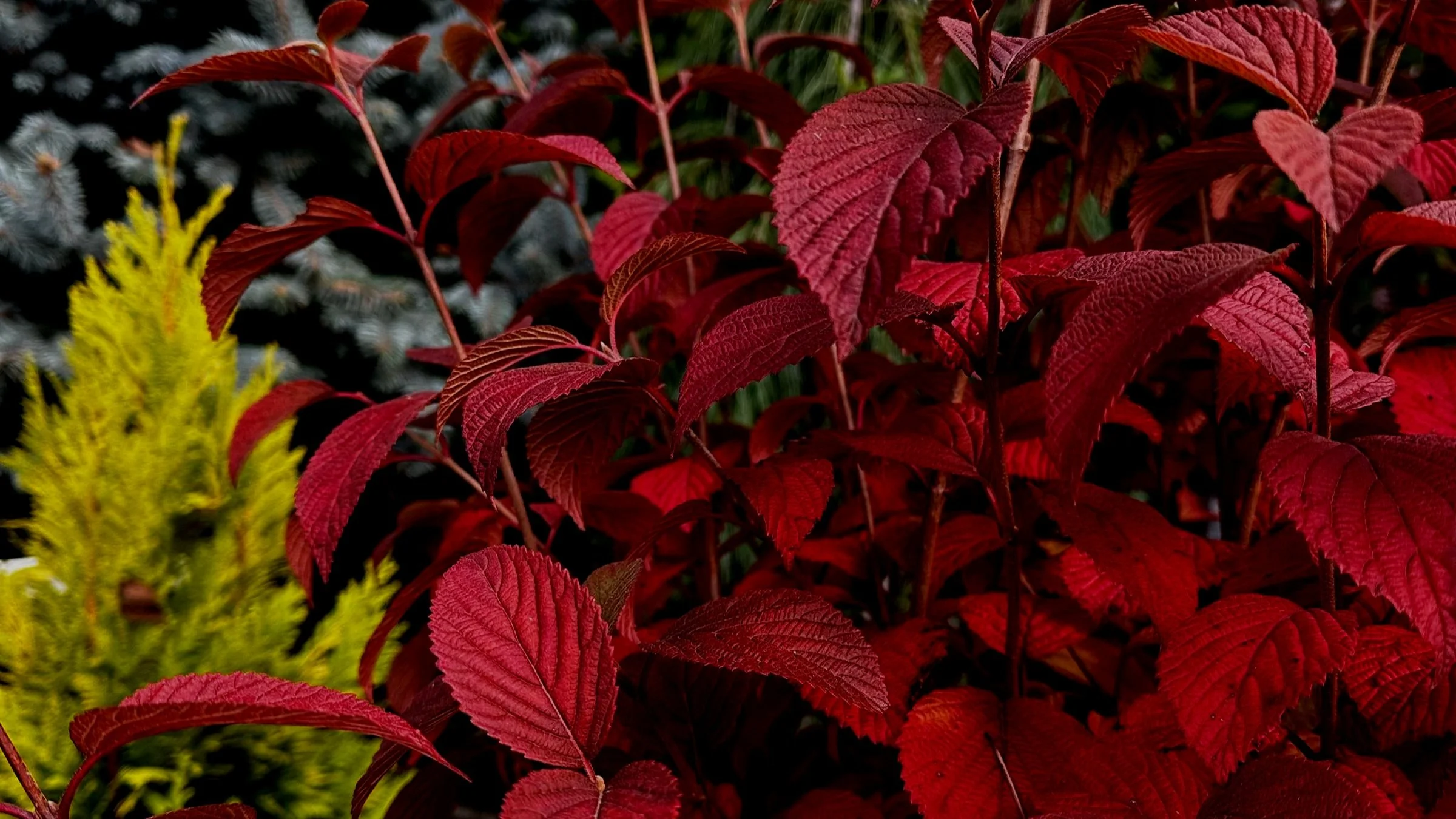
Viburnum x bodnantense: I refer to this as "Pink Dawn Viburnum” myself, as that is the cultivar that is most commonly seen. These are starting to bloom right now with bright pink, intensely fragrant flowers and will continue to do so off and on all through the winter into spring on bare wood. They boast lovely green foliage in the growing season that glows a deep reddish-burgundy in the fall before dropping and revealing the flowers. This a larger growing multi-trunk specimen for sun - the perfect focal point specimen when something about 10 to 12-feet tall is needed. All in all, this is one spectacular multi-season plant of interest!
Vibrunum plicatum: This is a larger group of deciduous options we call "Doublefile Viburnums”. These all offer plentiful mid to late spring blooms, lovely layered branching structure and vibrant fall colors for growing in sun or partial shade. Almost all forms exhibit white lacecap style flowers that sit in rows (or files – hence the name) in pairs along the branches. There are also pink forms around like ‘Mary Milton’ (a double pink) and ‘Molly Schroeder’ (a darker pink). All of these attain some size in the garden as focal points, reaching roughly 8-feet tall and a bit wider. You might also explore the varieties ‘Summer Snowflake’ (blooms in spring and repeats over the summer!) and ‘Popcorn’ (a lovely more double white rounded flower) as well. Perhaps one more if you can find it, ‘Kilimanjaro' is an option that gives the height but is much narrower if your space is limited.
Viburnum trilobum: This is one I planted years ago and love! We call this “Highbush Cranberry” or “American Cranberry”, and no it is not a real cranberry. This larger growing deciduous specie matures in the 12 to 15-feet tall and wide neighborhood and sports white flowers in spring. But this is all about fall, stunning deep reddish-burgundy fall color is accompanied by copious amounts of bright red berries for the birds to enjoy. There are some named flavors like ‘Wentworth’ out there and a dwarf version called ‘Bailey’s Compact’ if smaller is needed.
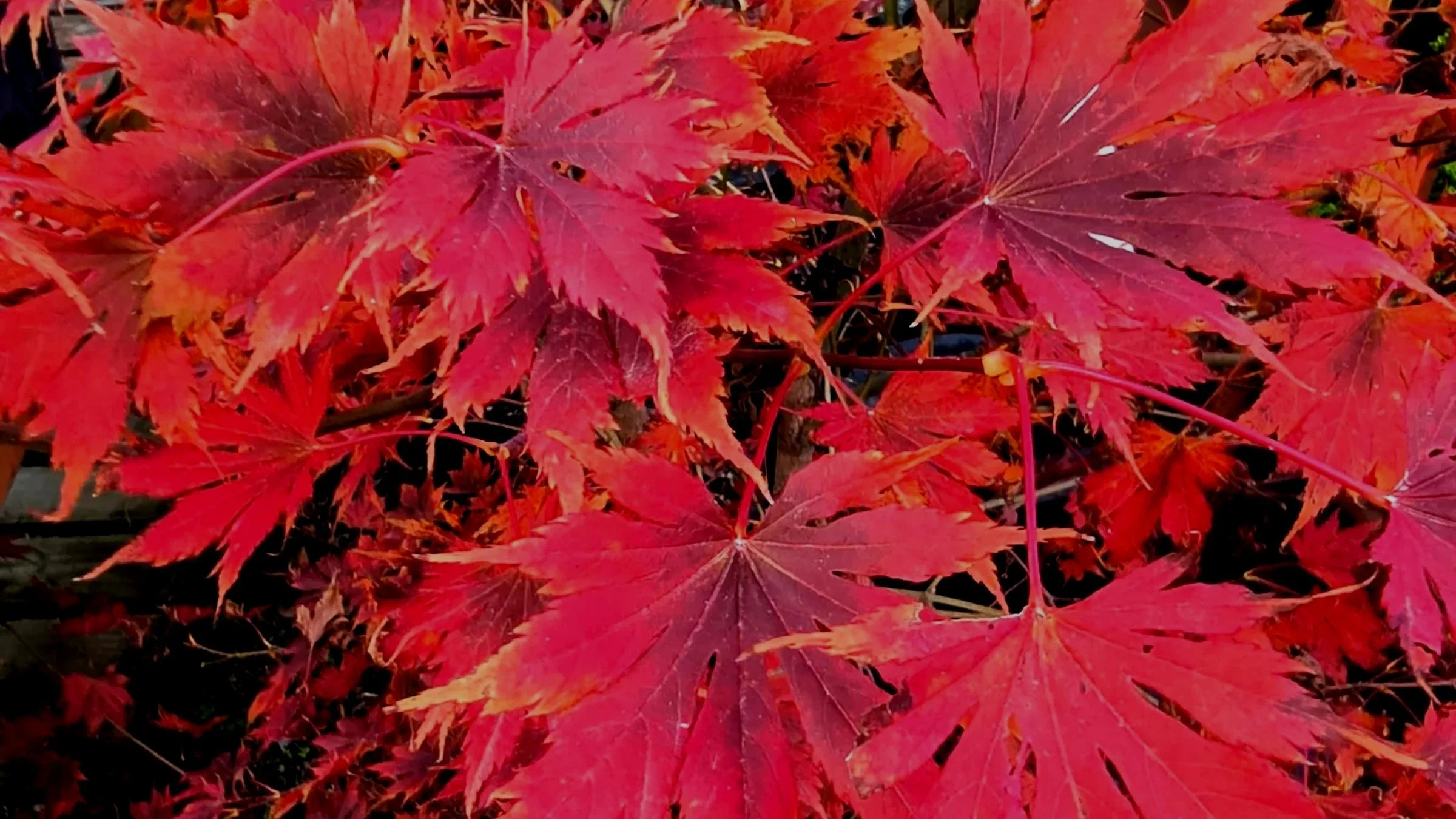
Viburnum opulus: Snowball Bush anyone? This common type is widely planted in our area and offers both rounded white snowball flowers in spring and striking red foliage in autumn. Snowball Bush is most prunable (remember only after bloom!) to control size, but if left alone it will achieve tree status. I would count on a 10 to 12-foot tall specimen if managed or if let go naturally, a plant that may reach upwards of 20-feet tall. There are a few forms of this around to pick from, but most commonly we see the Eastern Snowball, or Viburnum opulus ‘'Sterile’ if you want to speak some Latin.
I could go on and on like I usually do, but here are a couple more worthy of investigation and consideration. If you like fragrance, check out the Korean Spice Viburnum (Viburnum carlesii) and Burkwood Viburnum (Viburnum x burkwoodii), both excellent choices. Many others like ‘Brandywine’, ‘Blueberry Muffin’ and 'Red Balloon’ are members of other species in the genus Viburnum, all with unbelievably stunning berries this time of year.
I sincerely hope that I have reminded you (or helped you discover) the world of the genus Viburnum. These were just a sampling of the many that can be cultivated, somewhat of a “wetting of the appetite" as they say. Surely I will circle back to even more worthy types at some point down the road as they are just as stunning in spring and summer as they are in autumn. Remember fall is not only a great time to plant, but also to gaze upon the colors of autumn and take advantage of sales at local garden centers. I encourage you to visit one soon, speak with a Certified Professional Horticulturist if needed and allow them to help you select the right Viburnums (or other goodies) for your landscape. The world of plants is so richly diverse and this holds true for the genus Viburnum as well. There are striking types to choose from so explore your options and add this stunning plant into your garden.