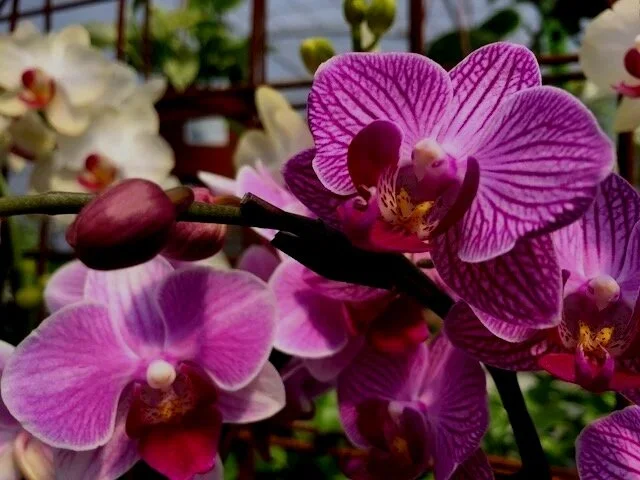
We LOVE Phalaenopsis Orchids, and with the right care tips, you will too! Phalaenopsis Orchids are one of many species of Orchids, it’s totally the most common though! Chances are if you live on Earth, you’ve seen them; sometimes they are referred to as “Moth Orchids”. Here at Sunnyside we carry other species as well, including Ludisia (aka jewels), Vanilla, Vanda, Dendrobium, Miltonia (aka pansy), Mediniia (aka philippine) and Oncidium (aka: the dancing lady) are just a few! Did you know that there are 4 times MORE Orchid species than mammals? Yeah! I KNOW, RIGHT?!
Anyways, let's get to the care of these amazing beauties! When you purchase or are given an Orchid, they are typically in bloom and most commonly are not in the correct pot or substrate. Personally, I like to wait until the last bud/bloom falls off before repotting, however you can repot immediately if it suits you, just be careful not to damage any of the roots in the process or it could cut your bloom time short. Orchids need air, moisture and they love bark! They are epiphytes and are found in their natural habitat growing up in the trees. Isn’t that wild? When I repot my Orchids, I like to find a pot that fits the roots snuggly, but you can increase the pot size by 2-inches to 3-inches in diameter if you so choose. Use a pot with holes or slits throughout it. There is no difference between ceramic or plastic other than if your Orchid starts to lean it could fall over in plastic. Once you have your pot, place a small layer of sphagnum moss at the bottom, 1 to 2-inches or so, then some Orchid bark on top and place your Orchid in the center. Continue to layer the moss and bark until you reach the top of the container and finish with moss. Sphagnum moss is just as important as the bark because it holds more moisture than any other moss in the world, this is how it will hydrate and keep up its needed humidity! For continued care; you want to let the moss dry out between waterings, keep the leaves clean, dust free and then fertilize with an organic Orchid bloom fertilizer every other watering when there are no buds/flowers present. Do not fertilize your Orchid while it’s flowering; this can cause it to drop all buds.
Getting your Phalaenopsis to re-bloom can be a struggle if you keep them in the middle of your home or office. They need the drop in temperature for them to re-bloom. Here in Washington, we can get our Phals’ to re-bloom with minimal effort if you have them in a window that gets cooler with the seasons. Here at the greenhouse (where our temps rarely fall below 70°F) when our Orchids are no longer in bloom we re-pot them (or make them into a Kokedama; we will discuss these next month!) and then place them into our cooler greenhouse (temps about 50°F to 55°F) until they produce their flower spikes. At home, because most of my Phals’ are not in a cool window, I place them in my garage for their cool time; you will need supplemental light if you do not have windows in your garage. Otherwise, any place that can give them a 20°F drop in temp for about a month will work! Don’t let them drop to 40°F or lower for long periods as this can cause severe cold damage. Once you have a flower spike, you can bring them back into their warmer environment where they will continue to flower for you for weeks (maybe even months!)