Over eons, the kingdom of plants has stretched across the globe and filled almost all climates with stellar botanical treasures, even continuing to evolve to this day. The variations in attributes offered by plants is extraordinary when you think about it, and we are lucky as PNW gardeners to be able to choose from this varied array of worthy hardy plants for our local gardens. Having said that, we all come in different shapes and sizes wielding specific tastes, sometimes sharing likes while other times perhaps not so much, if you know what I mean. Some gardeners go for flower power, others may gravitate towards colorful foliage or some may even seek out fragrance. To me, when we find a specimen that offers flower, foliage and fragrance we have a true winner.
One example of this is Daphne, a lovely shrub option for us here in the PNW. Daphnes (of many kinds) can be grown locally, many of them borrowed from distant climes of similar soil and temperature. Breeders have made vast improvements to plants like Daphne over the years, making them even more desirable to plant enthusiasts. From longer bloom times to new colors to vastly better variegated foliage, modern flavors (and some classics as well) present gardeners with a number of worthwhile species and varieties.
There are a few things to keep in mind when cultivating Daphnes in our region, and at the top of the list is drainage. A Daphne (of any kind) simply must have great drainage or you will not have success, period, drop the mic, end of story. I have seen many a Daphne decline in my day, including some in my own garden, but it always goes back to drainage. Avoid heavy clay soils and ensure water (especially in winter) is not saturating the roots. When you dig a hole to plant one, be sure that there is no clay - not just a foot down, but more like two-feet or more down. Add copious amounts of compost as an amendment, mixing maybe 1/3 compost with 2/3 native soil. A second tip with Daphne is to be super careful not to plant them too deep. They are going to let you know pretty quickly if soil is buried up their stems, or even mulch applied too high over the crown. I can still hear them screaming at me from years ago on their way to my yard waste bin. Third is watering, please do not overwater them. We have enough soil moisture and rainfall in our neck of the woods (newsflash!) to keep them thriving, except summer. During our dry spell each summer, newly planted varieties should be checked a couple of times a week. Established specimens will need much less, maybe one watering each week or two. Trust me when I say that I have seen many a Daphne succumb to over-watering, yet I have rarely seen one decline from lack of watering in our region.
I will mention a few of my favs soon below, but please make sure to select the right one for the right location. Most will thrive in part sun to part shade, while only a few will tolerate all day, absolute full sun. Daphne should only be pruned after bloom, meaning late spring with most. This allows new growth to harden off over summer and fall with flower buds intact, producing a truly floriferous display the following year. Cutting them back in summer and fall will greatly reduce the buds and blooms, if not totally eliminate them for the upcoming season.
Now we can talk choice, as there some lovely and useful Daphne selections worth pondering. A few of the best species are listed below and should offer you fragrance, longevity of bloom and superior foliage.
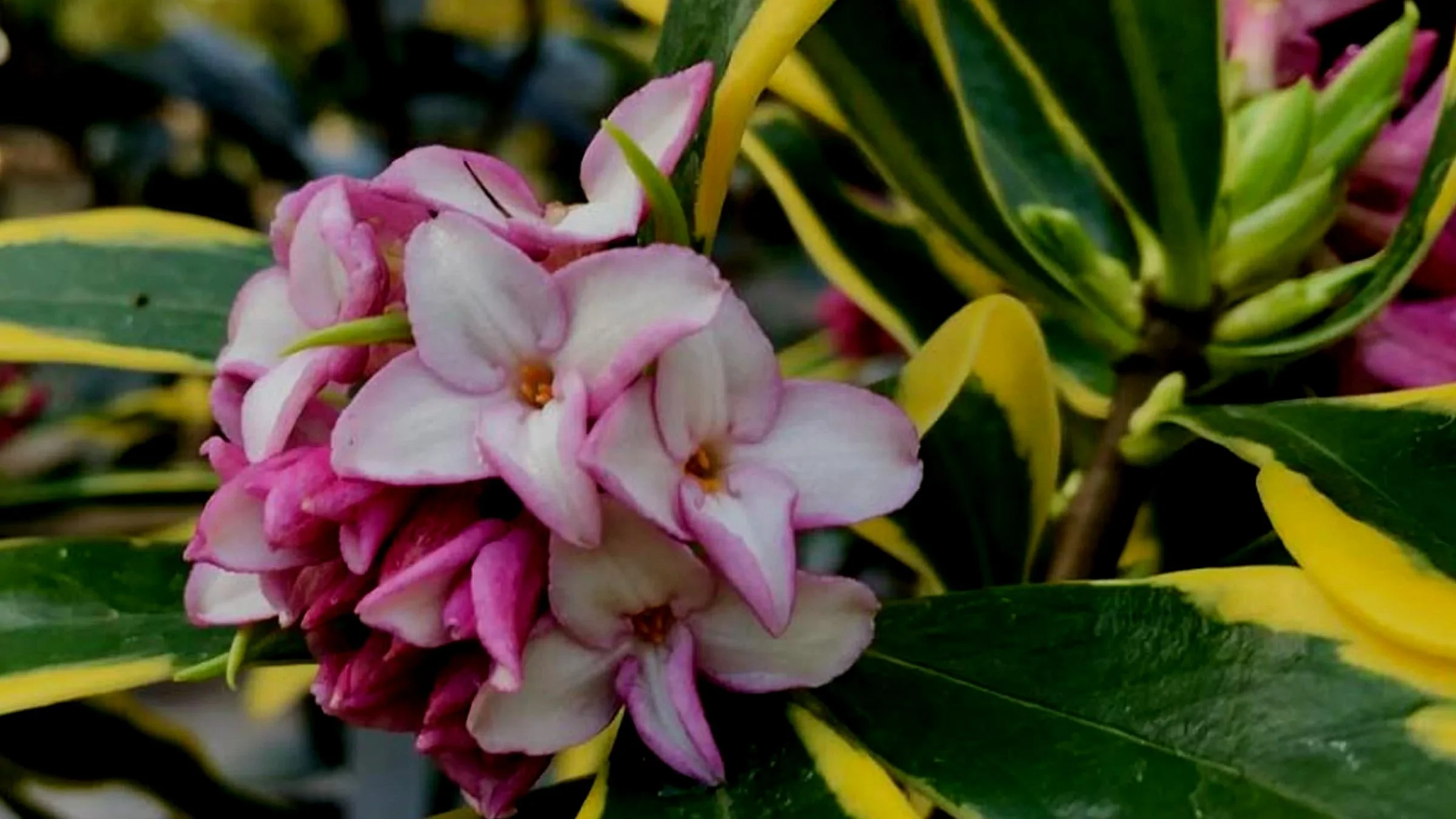
Daphne odora: These are the classic “Winter Daphne” that we see around, boasting heavy fragrance and lovely pinky white flowers each year from February to April. There are green leaf versions available, but most have been bred to display striking variegated foliage. Think of it this way; when your Daphne is not in bloom, the foliage offers interest, allowing you to contrast with other foliage in the garden. Look for modern cultivars with superior variegated leaves like ‘Banana Split’, ‘White Lightning’, ‘Marianni’ and others. I might also suggest one called ‘Sweet Amethyst’ as well, granted it only has green foliage but its unusual purplish-lilac flowers really pop with color. Garden size on all of these are about 3 to 4-feet tall and wide. They do best with half a day of sun, preferably morning sun or a dappled woodland location. The perfect plant for under the window – crack that window open and breathe in the beauty!
Daphne transatlantica: These are some of the most popular for those aiming for longevity of flower. The most available one is called 'Eternal Fragrance’ and sports lovely green foliage, blooming heavily each spring and then repeating throughout the summer and fall. I have had this one growing for years and there is a gap of only about November until February without flowers, the rest of the year I both see and smell it. Variegated versions like ‘Summer Ice’ (silvery white/green) and ‘Moon Canyon’ (bright yellow/green) add interesting variegated foliage and still bloom for months. All of these kind of resemble a rounded boxwood in shape with smallish leaves, are easily sheared after bloom, and mature at about 3 to 4-feet tall and wide in the garden. This species can still do part sun to part shade, but it will also take full afternoon sun in our climate.
Hybrid Daphne: Some of the most useful and impactful modern Daphnes are crossed varieties, like ‘Perfume Princess’. This hybrid (D. odora x D. bholua) might be the most resilient style of Daphne to date, blooming in late winter all the way through spring. Either a distinct pink or white form can be found, both guaranteed to smell up the garden for months. These have green leaves with no variegation and should be treated just like the Daphne odora mentioned above. In my opinion, they can take a little more sun as well.
‘Lawrence Crocker’ Daphne: I think this hybrid deserves a special place in our discussion. Perhaps you, like me, have tried to grow “Rock Daphne” (D. cneorum) before. And like me, perhaps have failed seven times… but who is counting? This low grower is super water sensitive and should only be tried on a slope in a sandy rockery, if you ask me. ‘Lawrence Crocker’ is a much better hybrid that was introduced many moons ago from right down in the Siskiyou range in Southern Oregon. It thrives in sun, stays under a foot tall and develops into a lovely compact, mounding specimen. Purplish-pink, super fragrant flowers are produced heavily in mid-spring and continue through most of the summer months. Slow and steady is the way with this one!
There are many more worthwhile Daphnes out there, but my hope is to try to whet your appetite, as they say. A visit to the local garden center this spring to see many of these should be planned so that you can marvel at both their flowers and intoxicating fragrances in person. Speak with a Certified Professional Horticulturist about Daphne, allowing them help you find the perfect one(s) for your own gardening oasis. Keep them on the dry side and they will surely give you years of enjoyment for both the eyes and the nose.