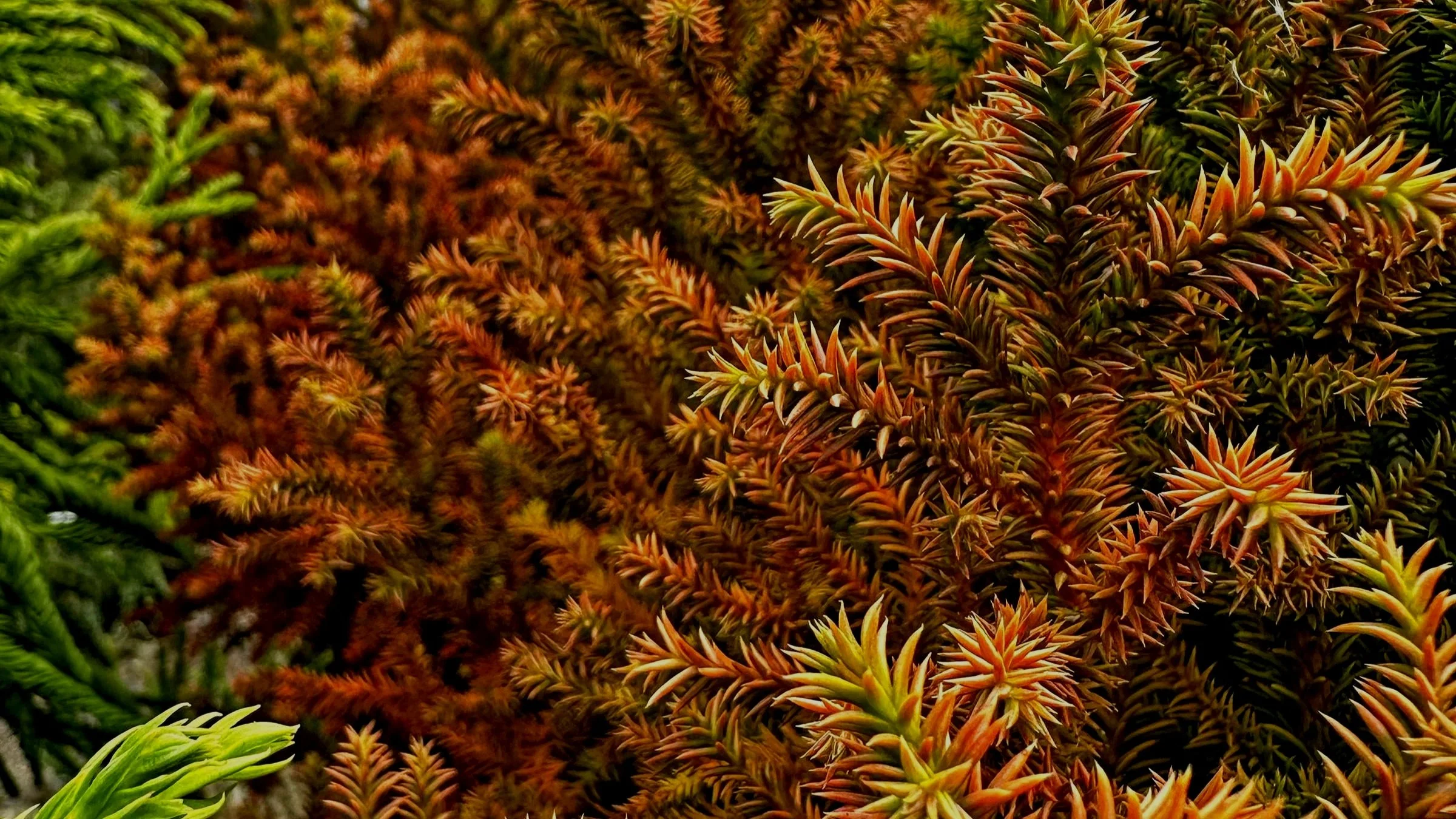
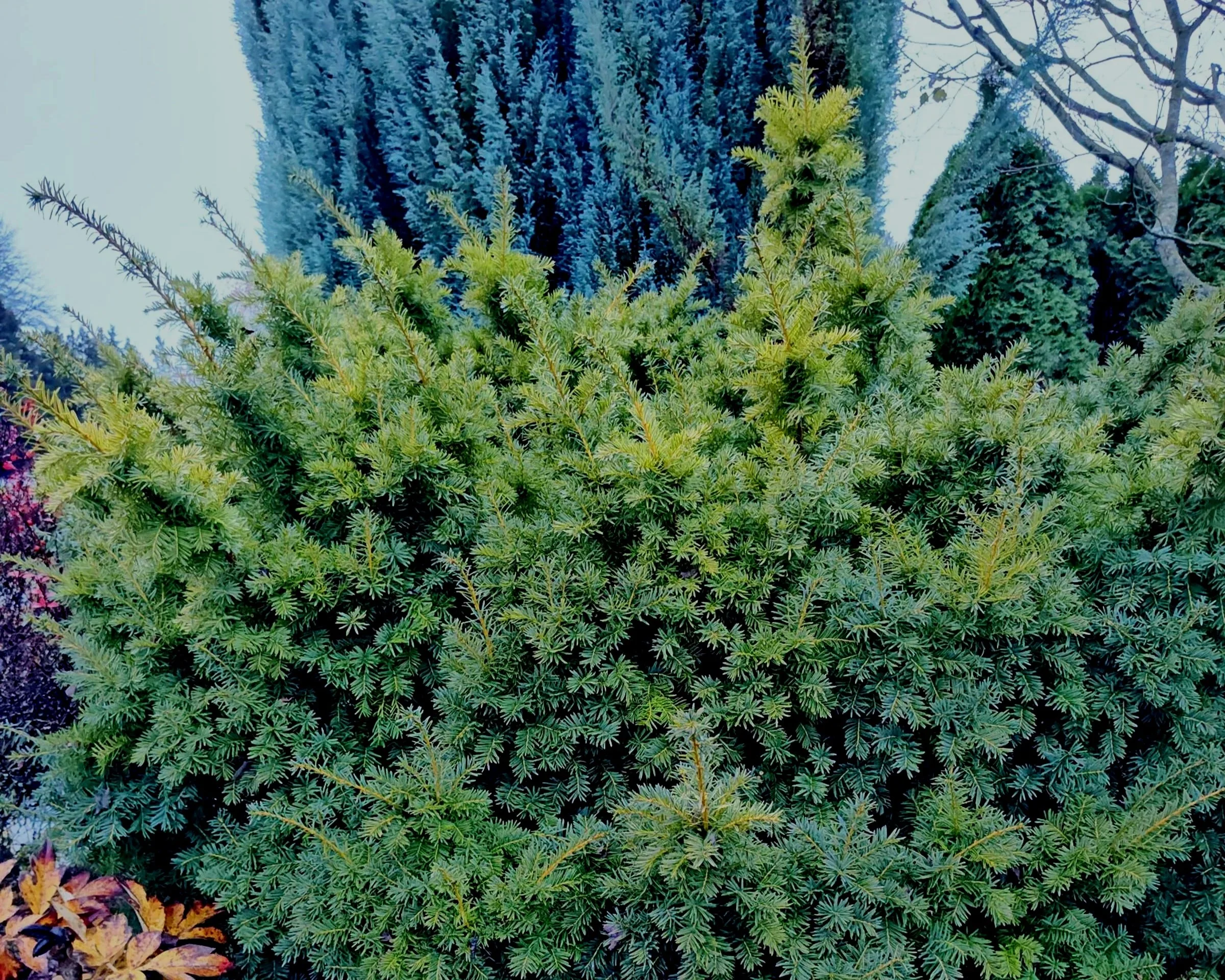
Let the Trilogy of Conifers continue with the finale! Two weeks ago I discussed some basics on conifers to ponder and then last week we went with some beyond blue selections. For this week we move onto flavors, large and small, that boast bright yellow or white variegation. As I have stated in this forum many times, I love me some yellow anything and this topic exemplifies exactly why. With all of the greens we inherit locally in our region, pops of bold yellow and bright white really stand out. Creating those visual focal points with contrasting colors and textures is ideal for landscape design, adding year-round impact and “wows” as your friends walkabout your landscape.
As a color, yellow is all about positivity and energy to most – the perfect complement to the never-say-die attitude of the PNW gardener. It has come to symbolize warm and fuzzy feelings like joy, happiness and enlightenment. Yes, there is the caution side of yellow (think road signs and that yellow light at the intersection), but we are all about plants in this space and not traffic… right? So I am sticking with the positivity interpretation as the bright yellows catch my fancy, without any doubt. With white, visions of cleanliness, purity and peace come to mind. Both colors can brighten landscapes, especially in partial shade. Picture that dark green landscape corner, then imagine something with bright foliage to liven it up. That is exactly what I am talking about!
Some folks may think yellowy plants look like they need food, and perhaps with some I might agree. But the vast majority of yellow variegated conifers do not and instead offer brighter cultivar options versus more green. Many of the species sporting yellow and/or white foliage do not need full sun, if fact they get a little tired and/or tip-burned in full sun in our warm summers. The trick is finding the perfect spot to maximize foliage color without burning. Morning sun is always safe for any, as is the typical PNW woodland mixed sun and shade. Afternoon sun will also work for most, but be sure to ask about the specific cultivar and its sun tolerance before planting it in all-day sun exposure.
As with the blue varieties we talked about last week, there is a lot to choose from both large and small. From miniature little growers to weepers to tidy dwarfs, a bright and cheery garden gem can be found for almost any spot in the landscape. Here are a few I would ponder and, again like last week, some investigation and internet time will show you even more options and pictures.
Hinoki Cypress (Chamaecyparis obtusa): These are some of the best options in all shapes and sizes, from tall stately growers to little miniatures and everything in between. Hinokis are known for their drought tolerance and low maintenance attributes, yet they add great texture and color. I personally have a problem collecting these, and not just yellow ones mind you, but plenty of green as well. There are a bunch that add a touch of yellow, including miniatures like ‘Butter Ball’ (2-feet tall by 2-feet wide) and dwarfs like ‘Nana Lutea’ (5-feet tall by 4-feet wide). A fabulous intermediate choice is ‘Melody’ (8-feet tall by 5-feet wide) that simply glows in partial shade. If you want to go big, ‘Goldilocks’ (20-feet tall by 15-feet wide) is the best yellow I have seen to date, a striking large grower with a strong central leader and uniform shape. If you prefer white variegation, the old school ‘Mariesii' (5-feet tall by 4-feet wide) variety is the way to go in partial to full sun.
Yews (Taxus sp.): Yews of all kinds are wonderfully sturdy plants and specific flavors will give you lower/bushy or conversely upright and narrow growth habits. For lower options full of color, the Dwarf Japanese Golden Yew (‘Nana Aurescens’) grows to just 2-feet tall and 8-feet wide, and each year a lovely yellow flush of needles glows on the older deep green foliage in either shade or sun. ‘Dwarf Bright Gold’ (6-feet tall by 12-feet wide) is another Japanese-type Yew that will eat up some space, making a lovely hedge with seriously bright yellow spring growth – like put your sunglasses on yellow. I have an old one of these in my own yard and will confirm, if extra yellow is your thing, this one is hard to beat! If you are needing something tall and narrower, the English/Irish-type Yews are excellent options. ‘Bultnick Orange Beauty' (8-feet tall by 1-foot wide) is the perfect colorful focal point or container specimen, sporting almost orangey-amber color in the winter even. Another great choice, ‘Goldener Zwerg’ (6-feet tall by 3-feet wide), is a bit smaller boasting lots of yellow and a nice tidy form. Keep in mind that Yews are some of the easiest conifers to shear and prune as well.
Eastern Hemlocks (Tsuga canadensis): Canadian Hemlocks make lovely understory trees, thriving in most locations including all day sun. For yellow color with improved sun tolerance, ‘Golden Duchess’ (4-feet tall by 5-feet wide) or ‘Golden Duke’ (12-feet tall by 5-feet wide) will work nicely, glowing limey-green in deep shade or a nice bright yellow when given a half day of sun. The white-tipped Hemlocks are super cool to me as well, especially ‘Moon Frost’ (6-feet tall by 6-feet wide) or ‘Summer Snow’ (10-feet tall by 8-feet wide). I went with ‘Moon Frost’ for my own garden (something a little smaller), but either one is perfect for shade. Keep in mind that a light prune on these annually really brings the color out – all the fresh tips are pure white and the inner older foliage glows light green.
Cedars and Arborvitae (Thuja): There are a number of great varieties of both these landscape staples, but for some serious yellow I will point out two… If you want to go low, grab the Arborvitae ‘Golden Child’ (2-feet tall by 2-feet wide) as it stays super rounded and tidy and is extremely resistant to scorching, even in full sun. For a taller grower, ‘Forever Goldy’ (20-feet tall by 12-feet wide) packs some serious yellow, is drought tolerant, and makes a wonderful screen or focal point. Both of these are easy to shear as well.
Golden Pines (Pinus sp.): First and foremost with these, the ultimate yellow conifer of any kind for a collector is a Lodge Pole Pine called ‘Chief Joseph’ (8-feet tall by 4-feet wide), which has simply stunning yellow winter color. Sometimes these are harder to find and they grow slowly, so many enthusiasts go with ‘Carstens Wintergold’ (3-feet tall by 4-feet wide), an easy variety of Mugo Pine that is a bit more available. Both of these love sun, great drainage and are superior yellows in the world of Pines. They are also green in the spring, summer and fall, but once cold temperatures arrive, bring on the yellow to pop in the winter landscape.
I could go on and on about so many other worthy conifers… Junipers like ‘All Gold’, ‘Mother Lode’, 'Gold Strike’ or 'Sea of Gold’ work nicely in hot sun. Great Firs like ‘Golden Spreader’ (a dwarf Nordmann Fir) or ‘Golden Glow’ (a dwarf Korean Fir) are super fun. Even some striking Japanese Cedars (Cryptomeria japonica) are out there like ‘Golden Promise’ (one I have and LOVE) or ‘Twinkle Toes’ (which is super miniature and even suitable for bonsai culture.)
Always remember that a well-balanced landscape should contain a plethora of both foliage and flowers. Consider adding more coniferous evergreens, especially ones with bright variegation. Explore your options by visiting your local garden center to see all that is possible and speaking with any Certified Professional Horticulturist about your needs. Allow them to guide you towards success! Some bright yellows and whites can really liven up a garden and, when intermingled with our plentiful greens, add some serious interest throughout the year. Combining the varying colors and textures of conifers like these will help to add both sturdy visual excitement and make your garden the envy of the neighborhood.