Winter may have just begun, but it has been a strange one for us thus far. We were blessed with a few frosts last week, but really have had minimal cold weather invade our corner of the PNW. No arctic blast came in November, just copious amounts of our signature liquid sunshine. I know I speak for everyone when I convey best wishes to all those who battled the unbelievable floods in our region. Record rainfall, plus unseasonably warm temperatures, plus the snowpack melt equaled unparalleled water. Personally I have faith that native Washingtonians are as hardy as any plant, and that we will bounce back as strong as ever. In the meantime, keep the kindness flowing and let us all ring in the new year with maximum compassion and perseverance!
In our northern climate, landscape plants require the seasons, including this current “dormant” period over winter before re-awakening to strut their stuff once again in spring. It is essentially the circle of plant life, and as plants have evolved over eons this is one way that they have adapted to nearly every corner of our planet. There are plenty of tropical treasures we can admire from afar, perhaps drooling a bit as we wish they would thrive in our own landscape paradise. I would counter that there are plenty of worthwhile, reliably hardy treasures that we can utilize which are much safer, handling those cold snaps that inevitably come down on us at some point each and every winter.
Locally, most perennials have gone dormant and deciduous trees and shrubs have dropped their foliage. But in my yard, I am seeing some things just a little out of whack. Here are a few things you may be noticing too…
I was chuckling filling my yard waste this last week as I found Salvias and Hardy Fuchsias in full bloom. These are two perennials I would NEVER cut back this time of year, wait until late March or early April. When you see green nodes swelling on the woody stems, simply cut them back to your desired height and off you go. In the meantime, enjoy the extended flowering season. This is the first time in my 55 years that I have Hellebores blooming with Salvia and Hardy Fuchsias, very strange indeed.
Roses are always interesting in our climate and if yours are like mine, they are still full of foliage and flowering as well. Grafted (or budded) roses should always be protected at the graft with a pile of mulch during cold spells and leave the growth alone until President’s Day weekend or so. At that point, cut them back for spring, stripping ALL foliage off and starting them over.
Some Hydrangea buds are swelling here and there, but again, avoid pruning until March. These plants have softer wood and may be damaged by coming frosts, so consider some frost cloth protection if buds do open up with foliage too early.
Perennials like Calla Lily (Zantedeschia aethiopica) are looking like it is April in my garden, fresh foliage everywhere. Candytuft is in full bloom still. My assorted Coneflowers (Echinacea sp.) are still green and waiting to be cut back for winter. Jacob’s Ladder (Poelemonium), Plumbago (Ceratostigma) and other perennials seem to think it is spring already.
Winter blooming shrubs like Sweetbox (Sarcococca sp.) and Witch Hazel (Hamamelis) are in full bloom in my yard, filling the air with fragrance. But… this is WAY too early for me, about a month too soon compared to other years. They will be fine and any upcoming cold should not affect them for spring.
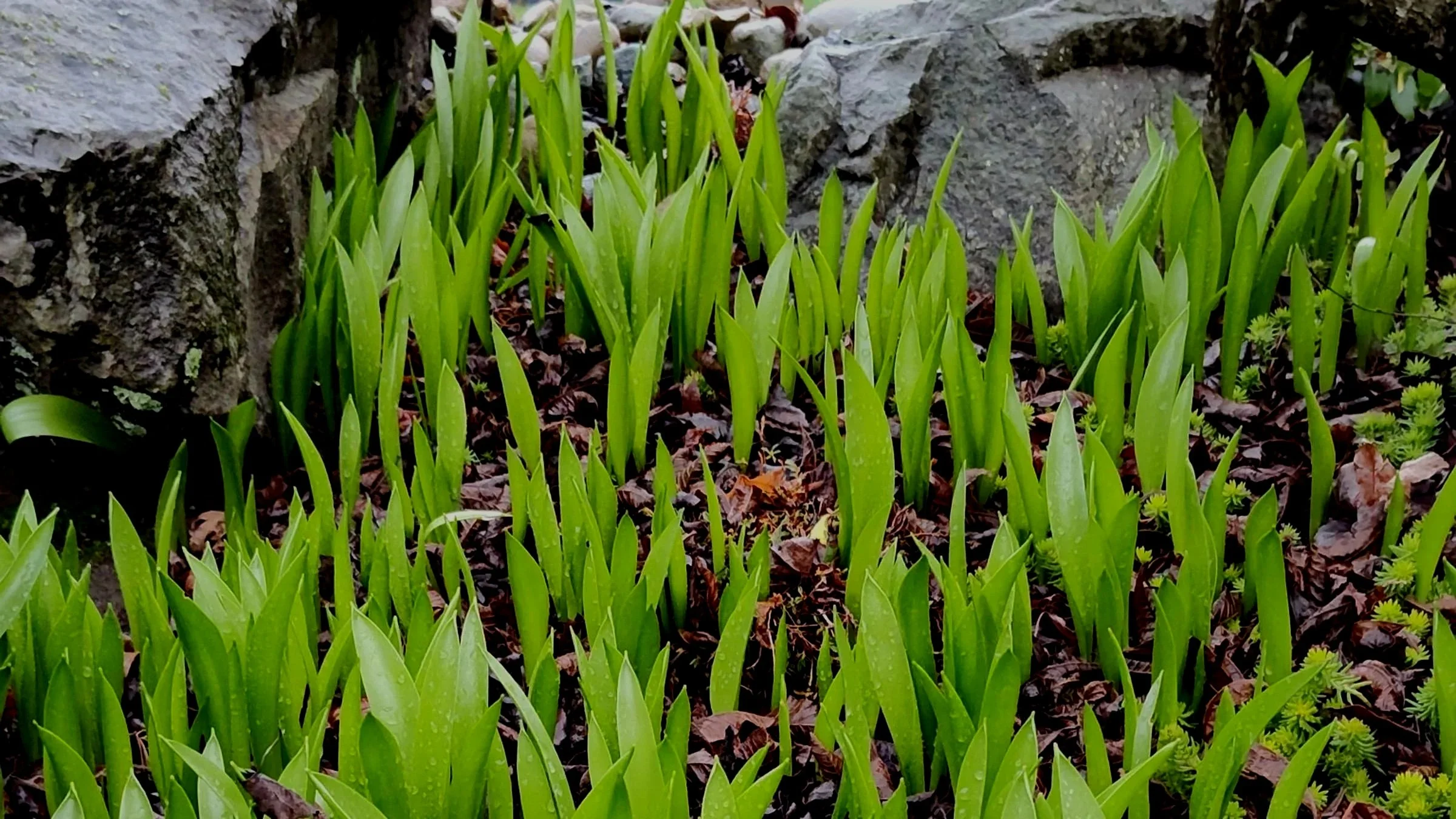
Bulbs are emerging as early as I have ever seen. Early Daffodils, Hyacinths, Aconites, Alliums, Crocus and Snowdrops are a few that are already popping up in my garden. Keep in mind that bulbs like these are super hardy and will not care about cold snaps to come, although they will probably bloom earlier than usual with the weather we are experiencing.
These are just a few of the strange observations I am seeing in my own landscape. Is our gardening world coming to an unsightly end? Of course not, but I think these are some things to watch for and perhaps even plan on a bit of added protection for when, at some point, we do get colder temps.
I wish I had a magical horticultural crystal ball and could simply ask it questions like “When is the first frost?” or “When will the last frost come?” It would be nice to know when that next polar vortex is expected to arrive, or when the bomb cyclone will make an appearance. In all seriousness, none of us can predict the weather very well, perhaps in generalities yes, but quantitatively it borders on impossible to say what will happen in a week, month or in March. Heck, ask me what will happen tomorrow and that is tough enough, right? As gardeners, all we can do is prepare and have the necessary knowledge and techniques in our arsenal ready to roll with Mother Nature as best we can.
I have proclaimed many times that to me gardening is the ultimate excursion in trial and error. But having said that, gardeners are a hardy crew and tend to roll with the punches. Watching the weather, particularly longer range forecasts, can help without question. Are they always correct? You know as well as I that they are not, but that does not diminish the fact that they do help. I used to teach a yearly class here at the nursery every November (that never had the highest attendance) called “Putting the Garden to Bed for Winter.” We covered topics like mulching tender plants, what specimens should be brought inside or into the garage to survive and some other plants that might need a bit more protection during cold snaps. I might have to bring this one back at some point, but for now it is all about preparedness.
I implore you to walk around the yard to see what is happening – even in these darker days of early winter. When the cold finally does arrive, some frost cloth will help or some additional mulch. Maybe moving that container specimen to a more protected spot can help it survive a cold spell. A visit to the local garden center can assist too, asking a Certified Professional Horticulturist about some of these considerations as well as what to protect versus what not to worry about. We all seek success, but also have to roll with some failures – it is okay and you are not alone! As we navigate this world of gardening, we should all support each other and learn together. She made that mistake. He made that one. Share your successes with gardening friends, but more importantly any failures. We are all sauntering down the pathway to gardening bliss, so let us join hands, smile, share our successes and failures and then ultimately persevere. Anything less would be uncivilized.