Now that winter has officially arrived, I thought it would be the perfect time to pontificate on sticks. Sticks? What is he talking about? Think of it this way… We are blessed to live in the paradise we call Washington, the “Evergreen” State, filled with majestic green conifers like Douglas Fir, Western Red Cedar and Western Hemlock. Not to mention the plethora of stunning evergreen Rhododendrons, Azaleas, Camellias and other broadleaved shrubs we utilize in our local landscapes. All of these shades of green provide the ideal backdrop for both local native habitats and our personal garden settings, but it is up to us as gardeners to use this to our advantage. Creating contrast utilizing other colors and variegation (like we talked about with conifers in December) is a vital landscape design principal. To take it a step further, especially in winter, other traits of deciduous botanical treasures like interesting barks, pronounced branching and attractive silhouettes can still help any garden pop.
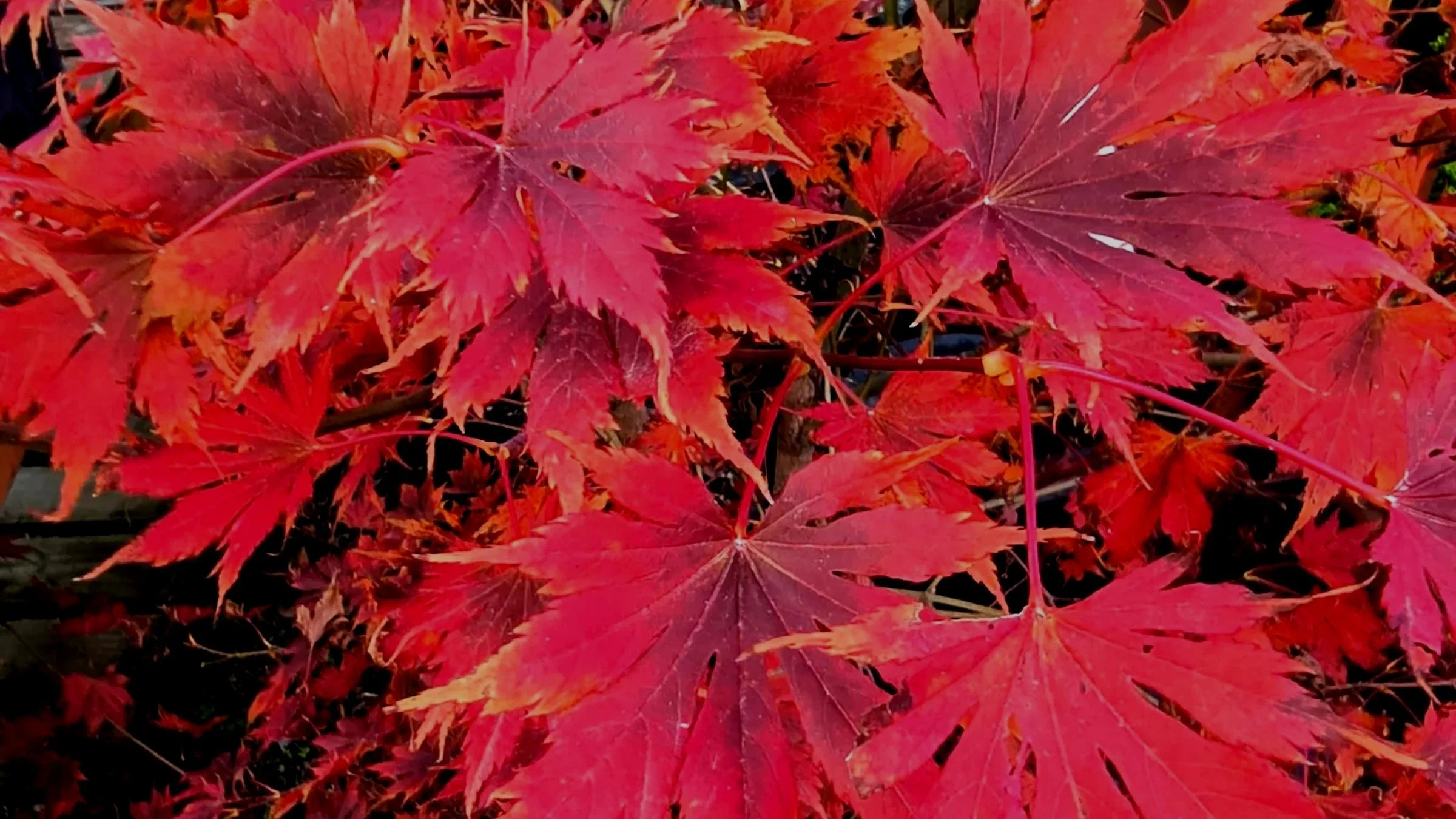
I think if any of us peek around our gardens, evergreens of all kinds speak up time and time again. But this should not diminish our love for deciduous trees and shrubs by any means. Finding that balance of both is crucial, resulting in a stunning landscape full of interest throughout the seasons. As I walkabout my own yard, plants like Lace Leaf Japanese Maples, Ninebark, Blueberries, deciduous Azaleas, Elderberry, Twig Dogwood, Witch Hazel, Climbing Hydrangea and so many other non-evergreen specimens catch my eye. Even common Hydrangeas (of many kinds) are still there, taking up space, yearning to leaf-out once more come spring. Each of us may gravitate towards certain plants or specific colors, but look around and discover that there are plenty of other worthwhile options that will work well in your own oasis.
There are a great deal of plants I could pontificate on for this topic, so lets do our best to cover some of the highlights. Admittedly these recommendations are just a place to start, even though bare this time of year, they all still say winter interest to me…
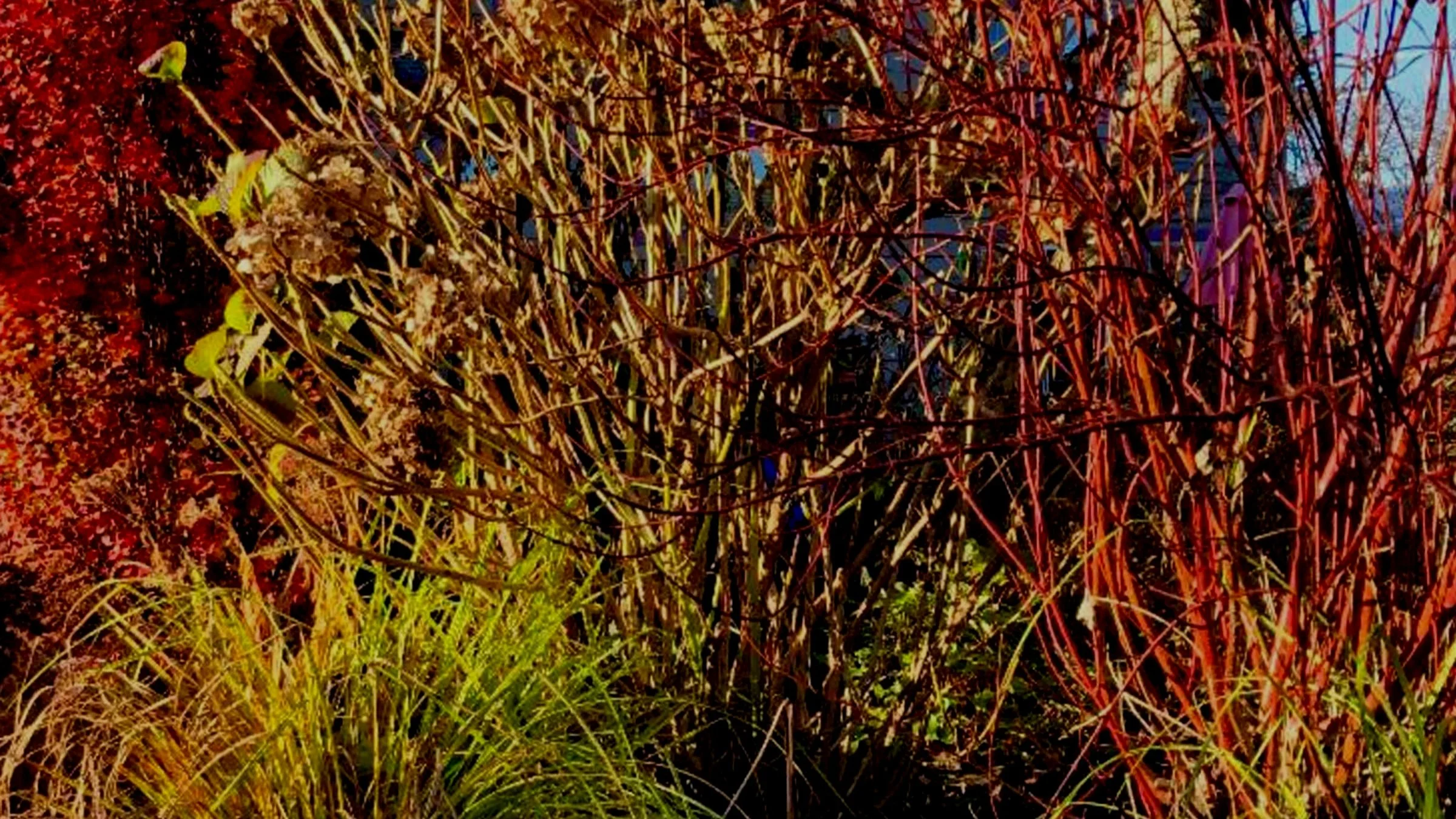
Colorful Barks: Many trees and shrubs exhibit bright bark color, which is particularly noticeable over these dormant months in the garden. Take the Coral Bark Maple (Acer palmatum cvs.) for example, available in many named cultivars (‘Sango kaku’, ‘Winter Flame’, ‘Winter Orange’, ‘Winter Red’, ‘Aka kawa hime’ and others) of varying garden sizes, displaying bright coral bark throughout. This color is always most intense on the newer wood, eventually fading into more greys with age on the trunk and older wood. A close relative to these is the Vine Maple (Acer circinatum), a PNW native that comes in an interesting form called ‘Pacific Fire’ with bright coral to orange wood. Many locals utilize Birch, in particular ‘Himalayan White Birch’ (Betula utilis var. Jacquemontii) with its lovely white bark. In the sea of shrub options, Twig Dogwoods (Cornus stolonifera and Cornus sericea), another PNW native, are super easy to grow and take wet/boggy conditions well. Flavors of these can be found with bright red, orangey or yellow twigs, along with green or variegated foliage in many cases. If you are lucky enough to have one growing, another native Pacific Madrone (Arbutus menziesii) keeps its leaves and also shows some subtle orangey-red bark color as well. Many locals use its close relative the Strawberry Tree (Arbutus unedo), with its nice bark, fall bloom and small strawberry-like fruits that hang on them this time of year.
Peeling Barks: Some of the trees above may have a bit of peeling bark, but these others are more known for this trait… Perhaps the peeling poster-child, Paperbark Maple (Acer griseum) is a gorgeous yet manageably sized shade tree with excellent fall color and all kinds of fun exfoliating brown bark. Flowering Cherries (Prunus serrula) grown on true Tibetan stock are super showy, sporting beautiful spring flowers and shiny mahogany bark with time. One of my favorite Birches is ‘River Birch’ (Betula nigra), a beautiful plant that can be grown as a single-trunk tree or multi-stem more native looking specimen. These display white to brown to even salmon-pink tints on the bark. There are a number of good shrubs with peeling bark as well… Oakleaf Hydrangeas (Hydrangea quercifolia) not only bloom all summer long but they get great fall color and display nice peeling bark over winter. Same with the Climbing Hydrangea (Hydrangea anomala petiolaris), a useful vine that clings to wood or concrete and makes just as nice of a ground-cover in all honesty. I simply love the Ninebarks (Physocarpus opulifolius) that I have planted over the years in my gardens – great foliage color, late spring bloom and excellent winter bark/branching to enjoy as a bonus. Crape Myrtles (Lagerstroemia indica cvs) are vastly underutilized locally - they add great bark peel and color, almost like a Eucalyptus from the land down under. I might add one more must have, Stewartia, a show-stopping tree for all seasons. Bark peels in strips of grey, reddish-brown and orange, intensifying with age. Three main species are useful locally; Japanese (Stewartia pseudocamellia), Korean (Stewartia koreana) and Tall (Stewartia monadelpha) – all with summer bloom and excellent fall color.
I could go on and on as there are many more examples for winter bark interest worthy of consideration, but adding in some branching to this discussion is pertinent as well. Every garden should have at least one Lace Leaf Japanese Maple, and a properly pruned one adds winter attraction for sure. The many other weeping-style plants are both interesting and striking when sited properly, specimens like Contorted Filbert or Corkscrew Willow are perfect examples of twisting and contorted wood that is spectacular. Even deciduous conifers like Larch, Swamp Cypress and Dawn Redwood may be bare over the winter months, but their fissured and twisting bark can add some serious pop to any garden. The point is this: visit the local garden center and explore these options and the many other worthwhile winter plants that are out there for you to enjoy.
Apologies, but as a reminder, Old Man Winter has arrived in the PNW. Do not fret, the promise of spring is just around the corner. As we put the darkest day of the year in our rear view mirror, more and more light will grace us day after day. Remember that winter does not have to bring that sense of boringness to the landscape, there are plenty of plant treasures out there to brighten these grey days. Embrace winter bark color, branching, blooms, foliage and even fragrance that surrounds us during the season of the sticks. A dormant deciduous specimen can be just as interesting as an evergreen one in many cases, and having a mix of both creates that inviting year-around garden we all desire. By appreciating the color, pattern and structure of plants in the season of the sticks, you are welcoming in the exquisite variety that Mother Nature intended for us all.