
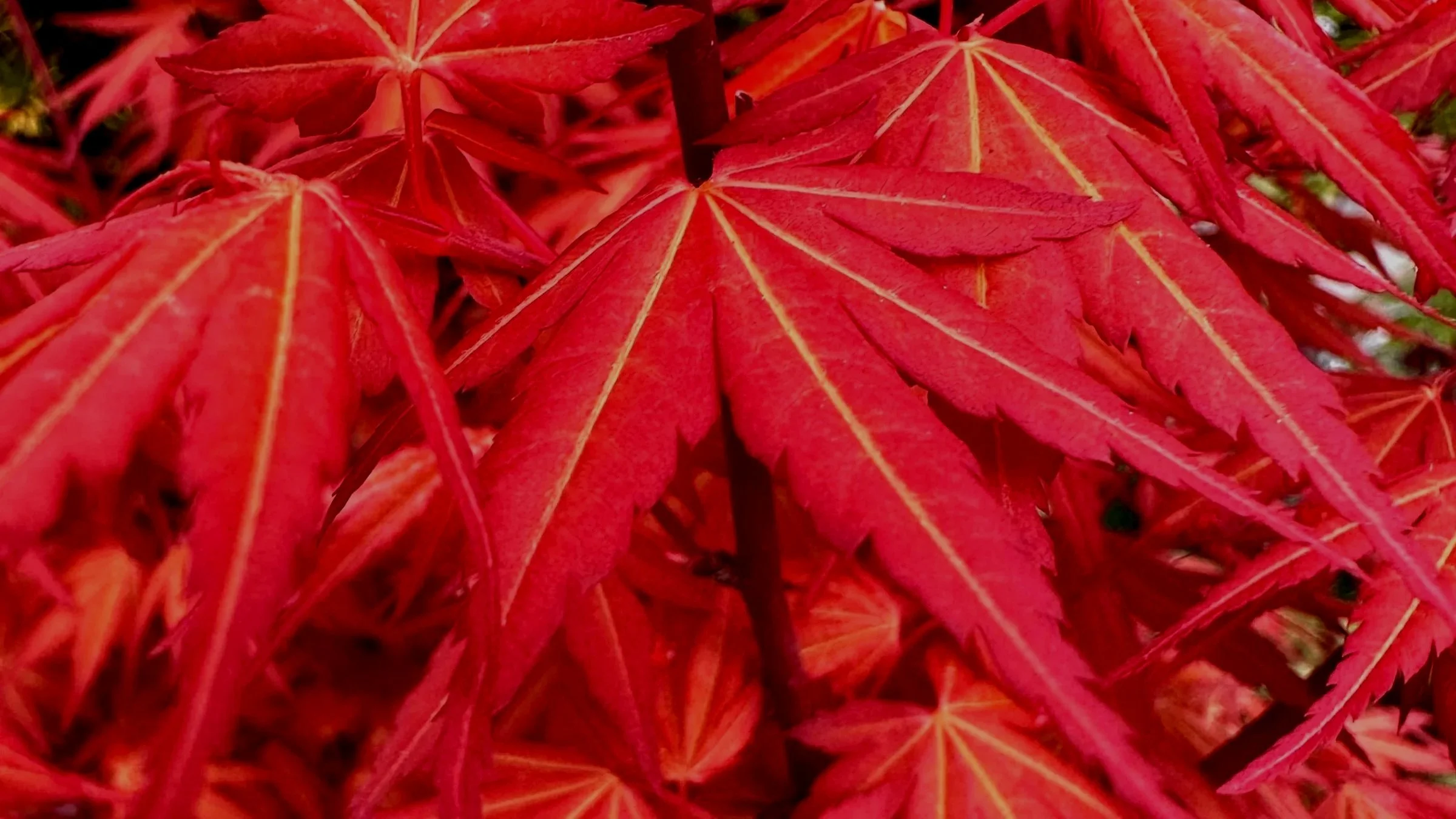
As promised last week, I am continuing on with even more maple mojo this week. We went through the Jack Frost Collection and now it is time for the Pacific Rim Collection - both from the fabulous wholesale grower Iseli Nursery in Oregon. After a couple decades of selecting, breeding and evaluating cultivar after cultivar, these folks have brought us some very unique flavors of hybrid maples to choose from.
Before I get into the collection, I wanted to throw one big reminder out about Japanese Maples in general… Drainage is of the utmost importance, so ensure that you are not planting one above clay or in soils that do not drain sufficiently. Poor drainage will inevitably lead to a devastating disease that lurks everywhere in our region, a fungal issue that lives in the ground water level called Verticillium Wilt. In our wetter winter time, this ground water level comes up and typically mixes with the root system, allowing this fungus to infect trees. Unfortunately there is no cure for this issue, no magical tonic or potion that we can go to battle with. This fungus can affect a number of plants in our region and conversely there are many plants that are not affected by it whatsoever, but maples are among the unlucky ones. I fought this in my own Everett yard years ago and in the wake of watching a couple of Coral Bark Maples decline after being planted with love, I finally raised the proverbial white flag and went with a Dogwood instead - which has been beautifully thriving for some 20 years now without skipping a beat.
Many wonder if they have had this issue or exactly how to diagnose it. A soil sample can be sent to an analytical lab and be tested for the presence of the Verticllium fungi. I would also suggest watching your trees carefully in spring as they leaf out. This disease typically infects one section or branch, then another, and so it progresses. An infected limb will try to leaf out and will almost look like you lit a match to it, wilting like it is thirsty when you know full well it cannot be in early spring. Sometimes cutting that section out may slow the progression, but not very often. If you do saw or prune on an infected specimen, be sure to sterilize your tools before moving to another tree (which is honestly a good tip when doing any pruning). You can also look at the cross section of a dead limb, hopefully at least 1 to 2-inches in caliper, and see a distinct blackish bullseye pattern in the tissue. This is the vascular system of the tree that has been infected, essentially cutting off circulation from the root system to the crown. Please do not think this is a reason not to cultivate maples! My point is this… know your soil and pay attention to drainage as this is a "no win” scenario for many plants, including Japanese Maples.
Now that the dark side of maples has been addressed, we can get onto the fun part, the unbelievably cool members of the Pacific Rim Collection.
‘Wabi Sabi’: First, this has to be one of the best names for a maple! A stunning weeping lace leaf variety with green foliage, bright red seeds and a blend of gold, orange and red colors in the fall. This one matures to about 7-feet tall and 10-feet wide over time. ‘Wabi Sabi’ is a wonderful specimen option for a sunny or partially shaded garden spot. Whether cascading over some rocks on a hillside, raised up on a berm or simply anchoring a landscape bed as a focal point, this variety provides great color, texture throughout the growing season and lovely branching for winter interest. The height can be dictated by pruning but be sure to allow adequate room for some spread so that its character can be highlighted.
‘Origami’: I have one growing in a pot at home and I am loving it. Delicate little green foliage turns a beautiful orange to yellow color in autumn. This tidy grower has more of a rounded globe shape with sturdy branching, growing to about 8-feet tall and wide. Its unique foliage resembles little paper cranes (hence the name), bright green in spring maturing to darker green over summer, highlighted by a flush of new growth. I am planning on enjoying this one in a pot for a number of years, then into the ground somewhere… if I can find room. The manageable growth on this dwarf tree makes it ideal for a number of uses in either sun or partial shade.
‘First Flame’: This larger and faster grower offers any garden superior color in spring, summer and autumn. An excellent choice for sunny or partially shaded sites where something more like 20-feet and 15-feet wide is desired. I know I am talking fall here, but the spring foliage of ‘First Flame’ is a site to behold - a flaming orangey-red that is one of the best I have seen. Colors transition into green by summer but retain lovely red hints in the heat. This narrower vase-shaped beauty finally glows with a blend of colors in fall. When you combine the smaller foliage, multi-season color and tidy shape, this popular variety is hard to beat.
‘Final Fire’: Another larger grower with a bit more rounded form that matures to about 20-feet tall and 15-feet wide. This outstanding hybrid has more of a pastel spring foliage color – a mix of yellow and light green with hints of pink. The leaves transition into a crisp green for the summer months and then the real show begins. First come the orange tones, gradually turning to a wine color and then finally dazzling with a fire engine red hue. Another variety with sturdy branching, excellent foliage and superior hardiness. Give this one some room in full sun or partial shade and you will soon be looking forward to the fall ‘Final Fire’ show in your own garden oasis.
‘Cascadia’: An extremely unique maple for PNW gardeners to utilize! This one displays lace leaf type foliage on a broader busy tree/large shrub that does not weep like typical lace leaf maple flavors. Intricately dissected leaves emerge a lovely green in spring and hold their color nicely in sun or part shade until the fall show begins when it evolves into a stunning golden-orange before winter. Manageable size (7-feet tall by 10-feet wide) combined with a sturdy branching structure make this one another landscape winner, a true specimen/focal point that speaks of an Asian influenced aesthetic.
I could go on and on about maples, continuing to highlight worthy types both old and new. Many local garden centers continue to have a nice selection, even if they are going dormant soon for the winter. Keep in mind that it is still an ideal time to plant, allowing new garden companions to get established and be ready to rock for spring. Whether you are a fellow maple addict like me or just looking for outstanding specimen options for your garden, the Pacific Rim Collection provides some very useful varieties, each with distinct foliage, habit and color throughout the seasons.
