I thought it might be fun to delve into something extra fun and a little different this week... the world of bog plants. Some of us have ponds (or bogs) in our landscapes and are able to add fun wetland plants of many kinds, while others are able to grow them in containers instead. Either way, bog plants help balance the ecosystem and are both showy and whimsical - totally unique treasures that can be cultivated by any plant enthusiast, with a few tips.
We are blessed in the PNW to have many native plants worthy of admiration, and this of course includes many bog and wetland species. I am going to focus more on carnivorous-type bog plants today, but numerous others are certainly useful for our ponds and/or bogs. May is always a great month to seek out water plants in general, essentially giving your water garden a once-a-year makeover. There is a plethora of hardy things to choose from, as well as some really striking tropical goodies, that can provide serious seasonal pop.
Before I get into some specific plants to try, a discussion on soil comes first and foremost. Like with all plants, the right soil mix means everything as quality soil grows superior plants, without question. For bog plants, a very specific blend of 50% peat moss and 50% fine perlite is ideal. They love nutrient-deprived soil – nothing fancy is needed. Here at Sunnyside Nursery we make our own since this is not something we have found in any pre-packaged national brand. This mixture is ideal to retain acidity and proper moisture, allowing specimens to thrive. Kind of like houseplants, bog plants should be a touch root-bound and never planted swimming in soil, if you know what I mean. But when we create a bog garden in a container, or transplant individual ones, this mix should always be used for best success. As far as fertilizing, this should be absolutely avoided. Slow and steady is the way of the carnivorous bog plants and they eat their food as needed. Here is my horticultural math formula for these: soil + some fresh flies to eat = happy plants... simple as that!
Watering is the other major factor with bog plants. They obviously must be in water, but perhaps not in the way you think. Totally submerging them is not the way to go as they do not care for water over their crowns, just boggy conditions underneath. Gauging the proper level in your bog or container is a necessity. I think it is easier when planting them in the ground, but for containers this could be a bit trickier. Holes should be drilled in the sides of the pot, allowing water to accumulate, but also allowing for the proper level for your plants. These well-placed holes (towards the top of the pot’s rim) will allow the excess water to drain off as needed. That way when you water (or Mother Nature does it for you) there is no chance of submerging the crowns, you are always good to go.
The various types of plants we are delving into today all enjoy full sun to partial shade. They will struggle in low light locations, so make sure your bog (or pot) has adequate sunshine. Giving them an annual cleaning each spring is ideal (like we do with our perennial plants in the ground) removing any tired foliage and making room for fresh growth. Monitoring plants through the season and removing spent blooms and yellowing foliage will continue to keep your bog plants looking as sharp as possible.
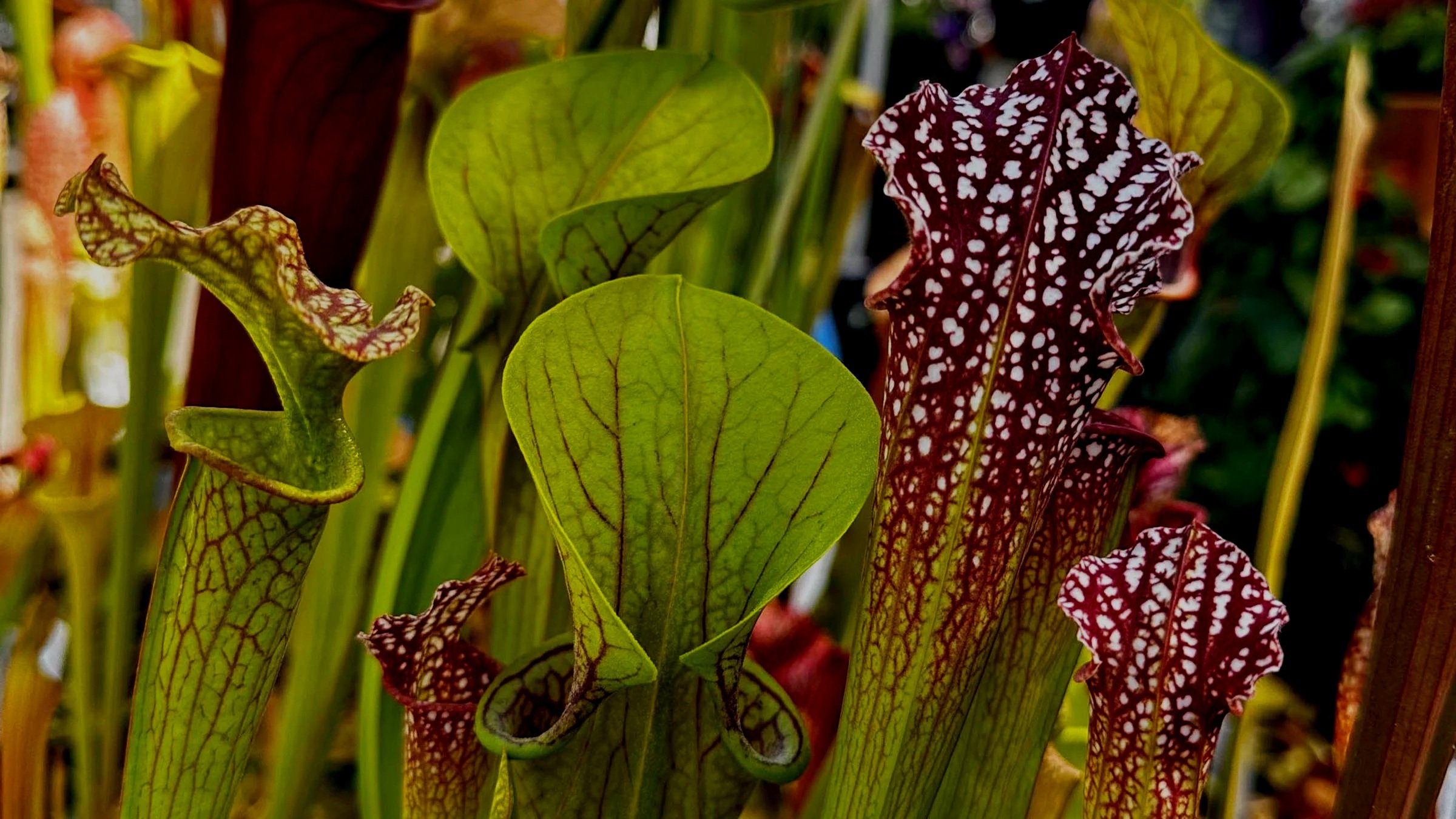
Pitcher Plants: The strange somewhat-tubular leaves of these are both brightly colored and irresistible to our little insect friends. Colors and heights can vary depending on the specific species or named cultivar, so explore your options. These are very hardy (most to Zone 5 and many are native to our region), particularly the members of the genus Sarracenia. Bugs are attracted to them both by the bold colors they display and also their secretions. They will not bite you (trust me), but do an excellent job munching up those pesky flies. As a bonus, a well-placed planting on the patio or deck will greatly diminish mosquitos as well!
Venus Flytraps: I think many are familiar with these, perhaps more for indoors, but they are plenty hardy for outdoor cultivation as well. These are hardy to Zone 5 outside and make another fun option for bog plant enthusiasts. Just like the others above, they do not need fertilizer, just a fresh feast of insects to digest and turn into food. These stay under a foot tall and boast the classic “toothed” look in their traps, which clamp down to form a well evolved insect cage. They may look sharp but are not to us humans. One of the quicker moving plants, they can be really fun to grow with kids in particular. As a Dad myself, my 11-year-old is fascinated with these for sure. Keep in mind that these grow new shoots from the center, so the exterior portions may naturally die off. Also keep in mind that it takes about 2 weeks to digest a bug. They are in the family of Sundews (Dionaea), and yes, other Sundews make equally cool carnivorous bog plants.
Butterworts: These are super fun to grow indoors, NOT outdoors, as they will not make it through our winters. The foliage of these is pretty cool – when each emerges it really looks like a rosette, almost sedum-like, and lays flat on the soil. They are covered with sticky traps and do nicely for catching those pesky bugs indoors, even mosquitos and fungus gnats. Sometimes called “Pings” from their Latin name (Pinguicala), all of them love bright indirect light and ample moisture. Be sure to use distilled water with these – the extra minerals in tap water can be tough and never mist as it may wash off their sticky traps.
I invite you to discover the world of carnivorous bog plants and take advantage of both their unique beauty and purpose. A visit to the local garden center will hopefully show you some fun selections and speaking with a Certified Professional Horticulturist will help you grow them successfully. I have not met a human yet that enjoys breeding flies, so let these blood sucking plants take care of them for you! There is something almost therapeutic about watching those little flies investigate and then get snatched up. Placing these in pots, especially on decks or patios, not only helps diminish your insect issues but also creates a conversation piece with visitors. You will hear “Oooooo, what are those?” from friends and family for sure. Remember that they are exotic looking but much simpler to grow than you think. So go ahead, have some fun and get your bog on!