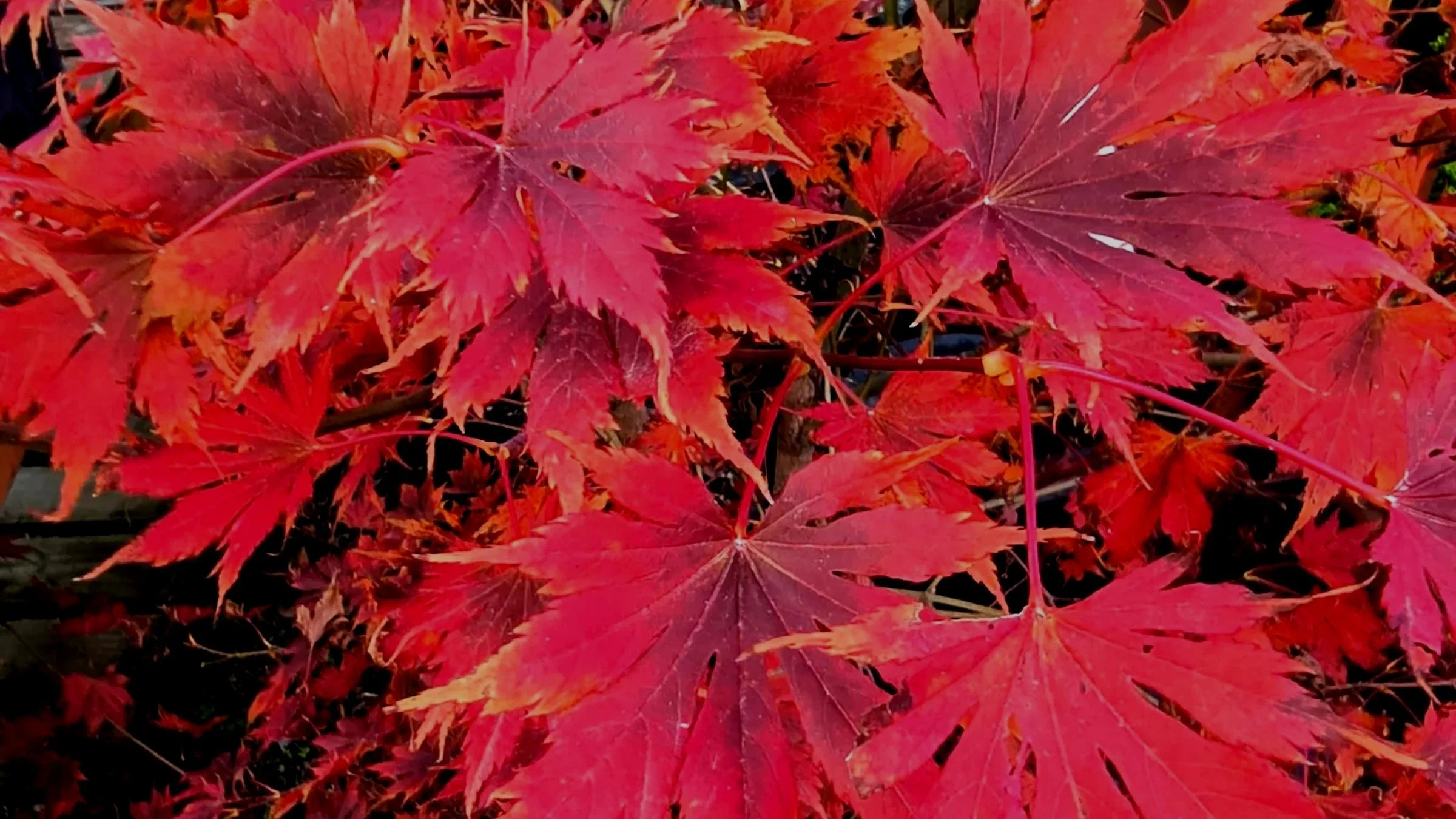
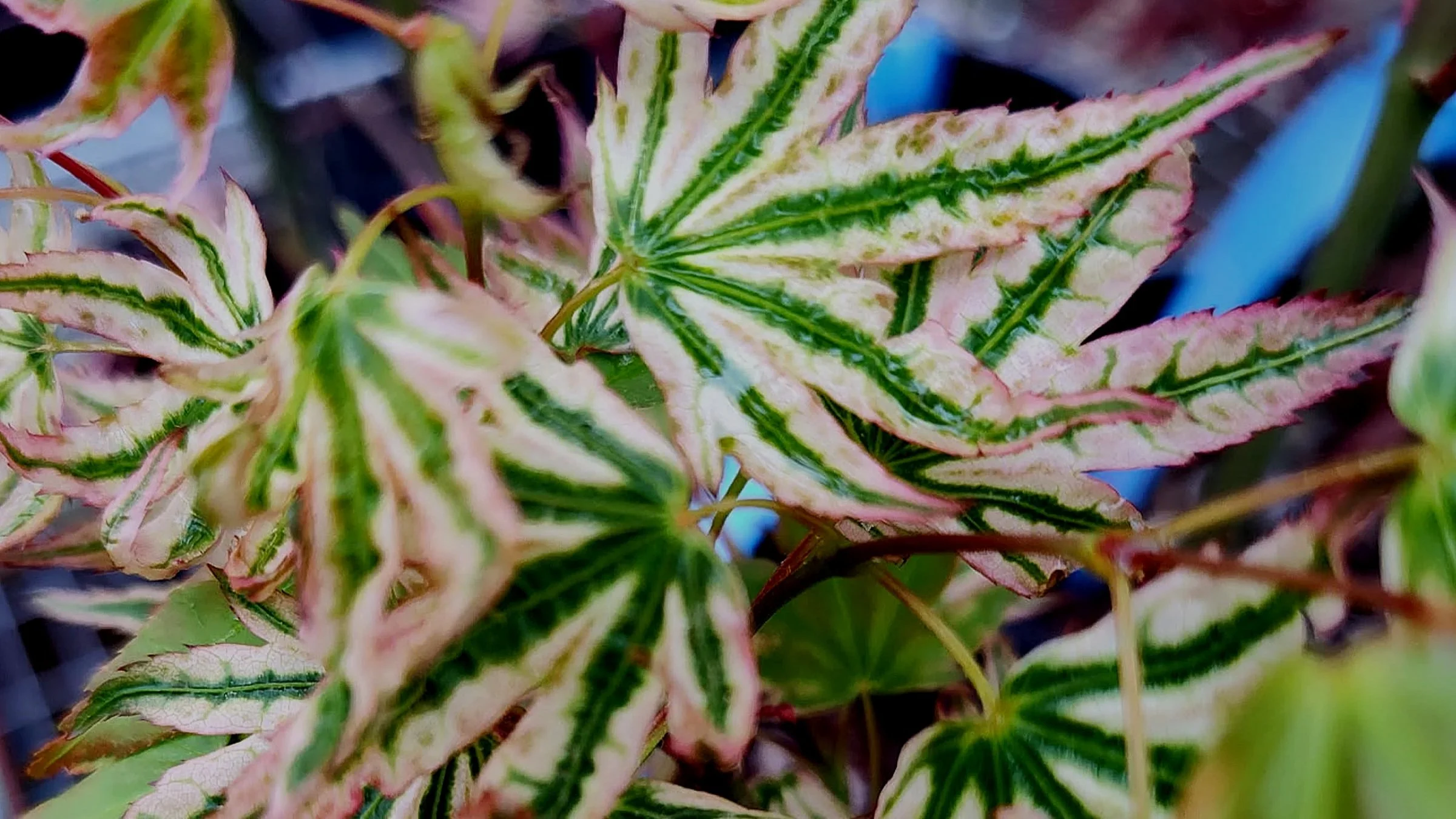
Ikandi
If I look back to the beginnings of my own plant addiction many moons ago, Japanese Maples (along with dwarf conifers) caught my fancy first and drew me instantly into the realm of botanical creatures. To me Japanese Maples are among the best trees for all seasons as the vast array of cultivars available offers so many unique selections. They grace us with sparkling spring foliage color, shade and structure for the garden in the summer, stunning fall color each and every autumn and then finally attractive winter branching and silhouettes to admire. Today I thought the subject of “reticulation”, in its full spring glory, is perfectly suited for this time of year.
So what is “reticulation”? First, this is absolutely different than what many of us think of as typical variegation. We have all seen variegated forms of nearly every shrub, tree and perennial around. There are numerous worthy variegated Japanese maples as well, but think of variegation as more random. Not every leaf will ever have identical color, and even year to year the colors/amounts of variegation can vary substantially. Variegated forms of any plant may also revert back to their original form, an event I have witnessed on many plants in my own yard over the years. Reticulation, on the other hand, is a consistent trait that does not vary as much, meaning the same glorious color combinations are on every leaf, top to bottom, year after year.
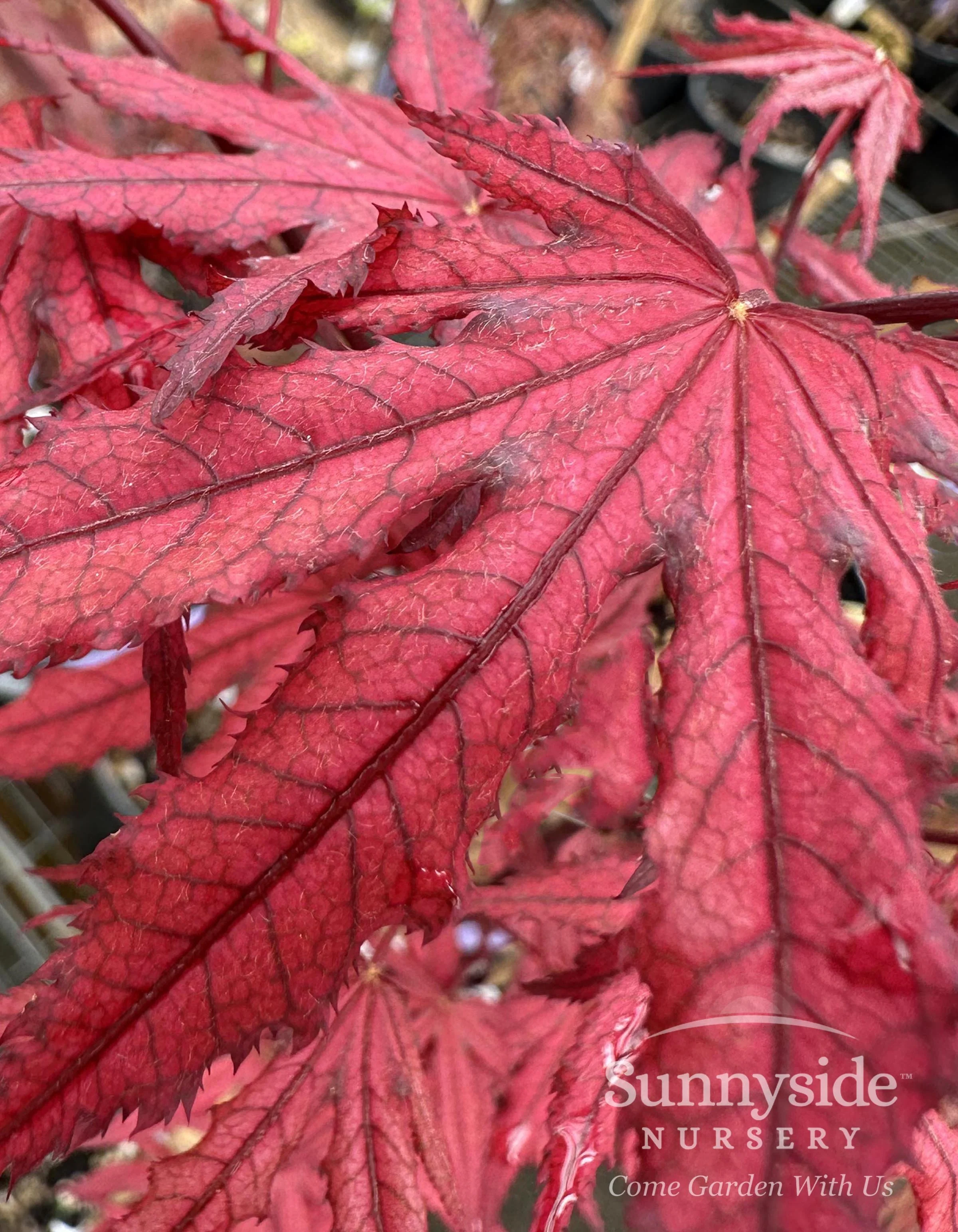
Amagi Shigure
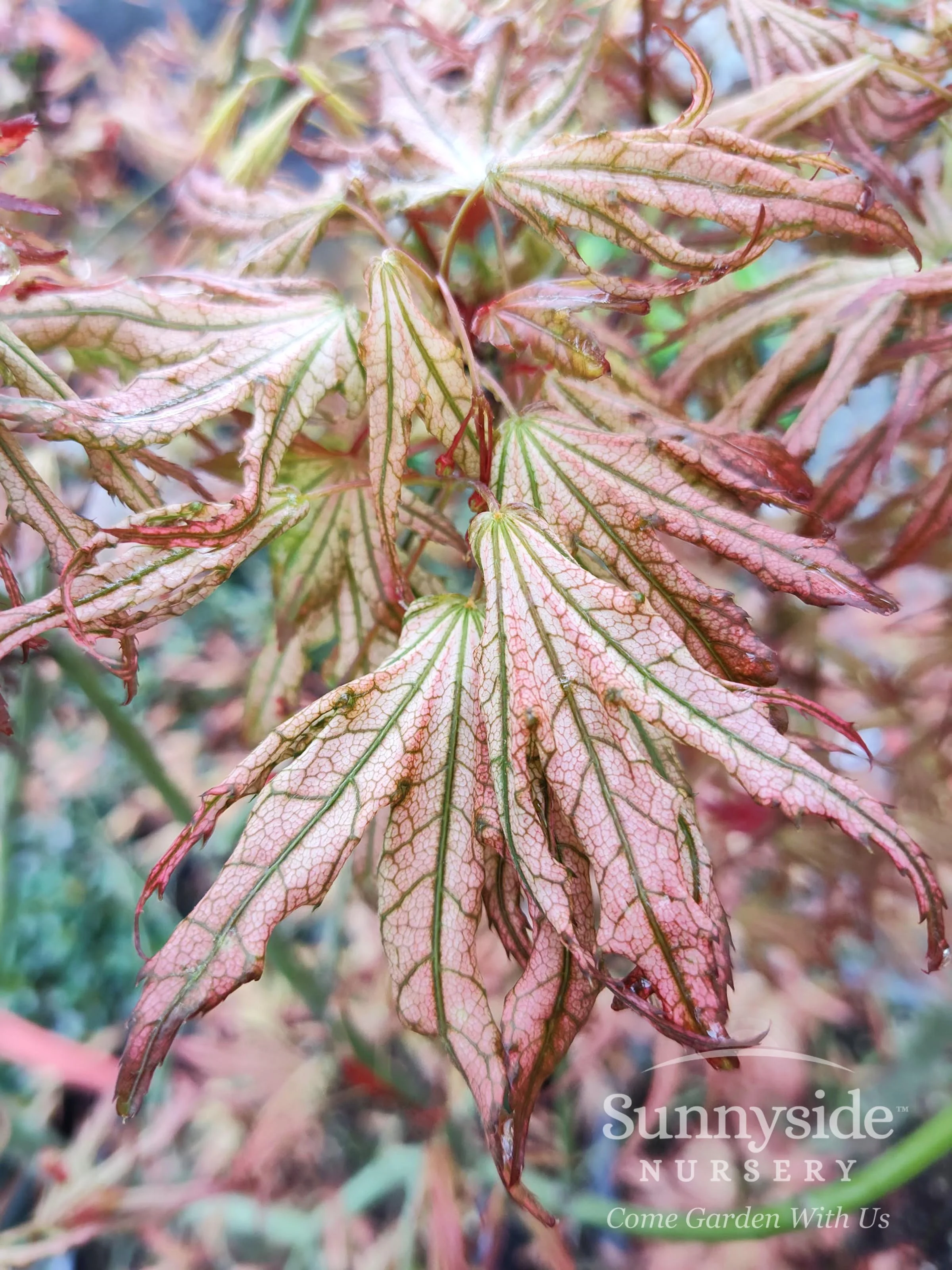
In spring, reticulated maples seem to glow. As they leaf out the colors are unbelievably striking, with each named flavor (or variety if you like) boasting a distinct combination. Think of it as plant artwork, a painting on each and every leaf that displays patterns of veins, almost a net-like overlay. This spring color evolves into more subtle tones with the onset of summer, but still remains beautiful with bright new growth. Then finally in fall they glow with the colors of autumn, each variety again known for its specific coloration. The point is simply this, a reticulated maple will offer three distinct seasons of foliage color, adding some serious interest to any garden. Breeders spend considerable time crossing varieties and looking for stable and attractive reticulated selections. Once they are discovered and deemed worthy, they are grafted onto Acer palmatum rootstock and off they go into retail nurseries.
There are a couple of flavors I will mention below that will take afternoon sun in our area, but this type of maple is perfect for a few specific locations… Keep in mind that the proper amount of sun always brings out the best foliage colors, while too much sun will create burning in the heat of the summer. Like many maples, reticulated ones make lovely container specimens if you are out of room like I am. Whether you plant them in pots or the ground, a morning sun or afternoon shade site is ideal. Many of us also have woodland settings and these trees make perfect understory trees with the sun kissing them here and there as it crosses the sky. Picture some of these bright foliage maples mixed in with all of the greens we are blessed with here in Washington, really popping out with their spring color and continuing on through the fall.
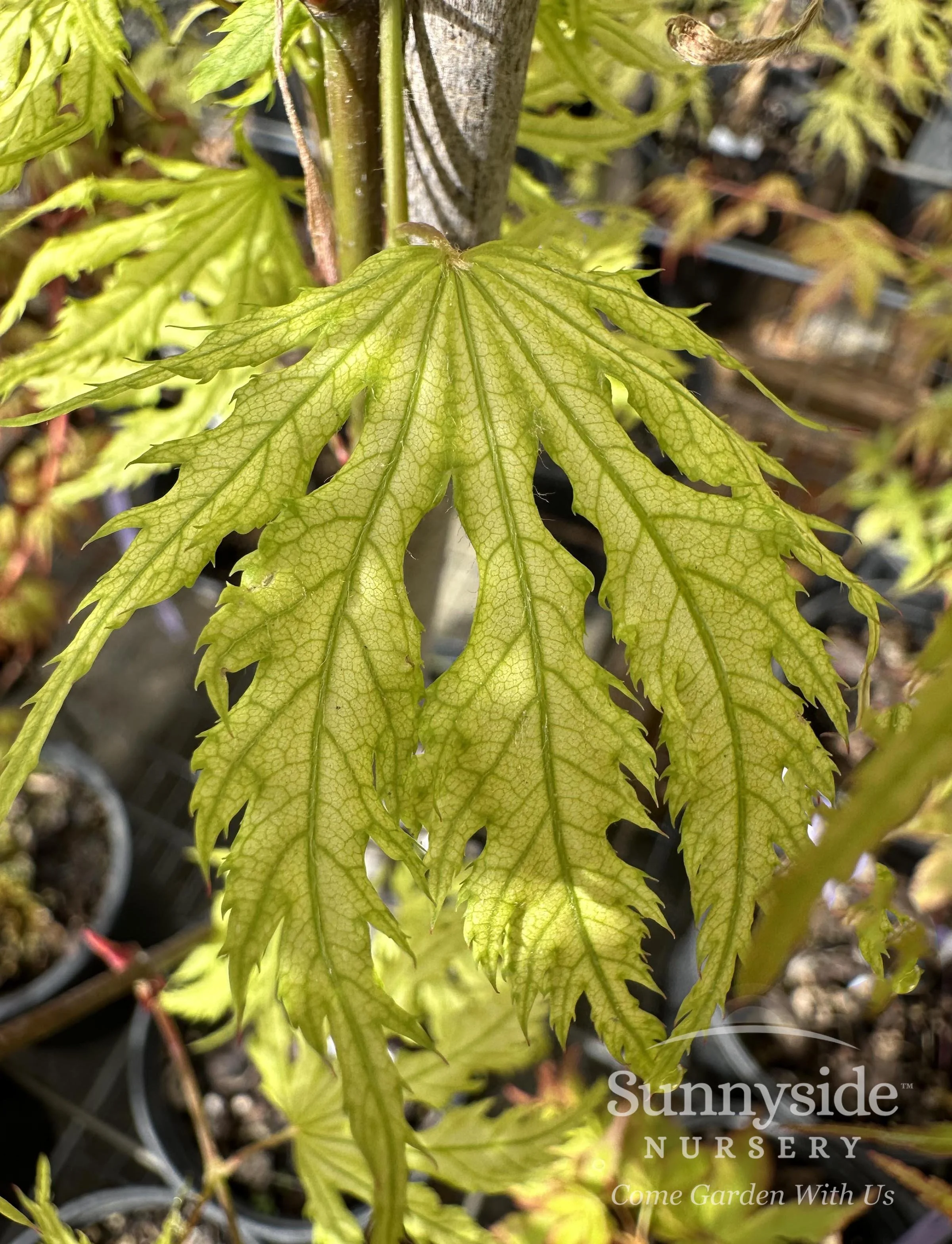
Sister Ghost
Here are a few distinct maples to seek out and hopefully some that can be found at your local garden center. As you will see with many of these varieties, they are so intricately striped and colored that you may find them just as irresistible as I do.
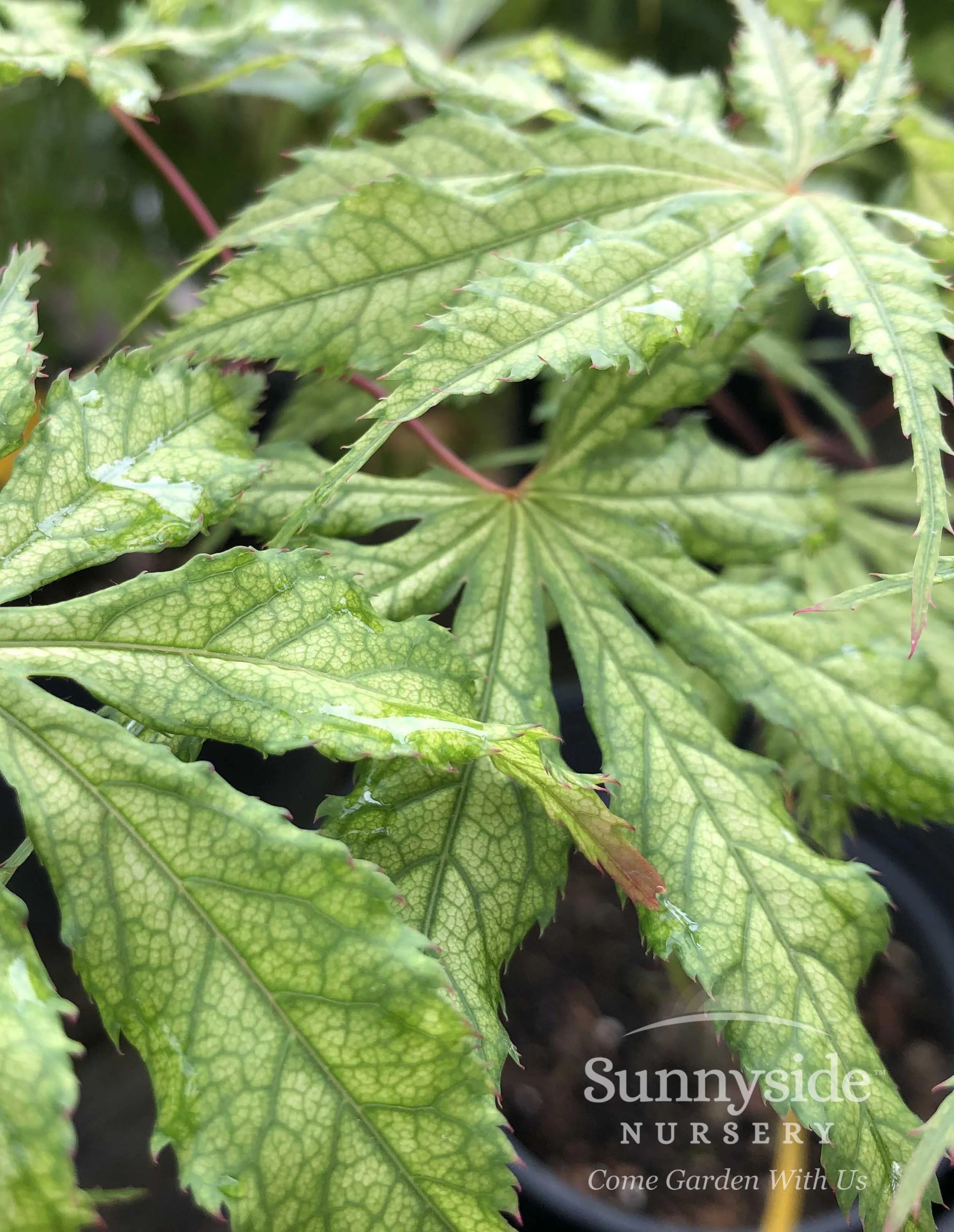
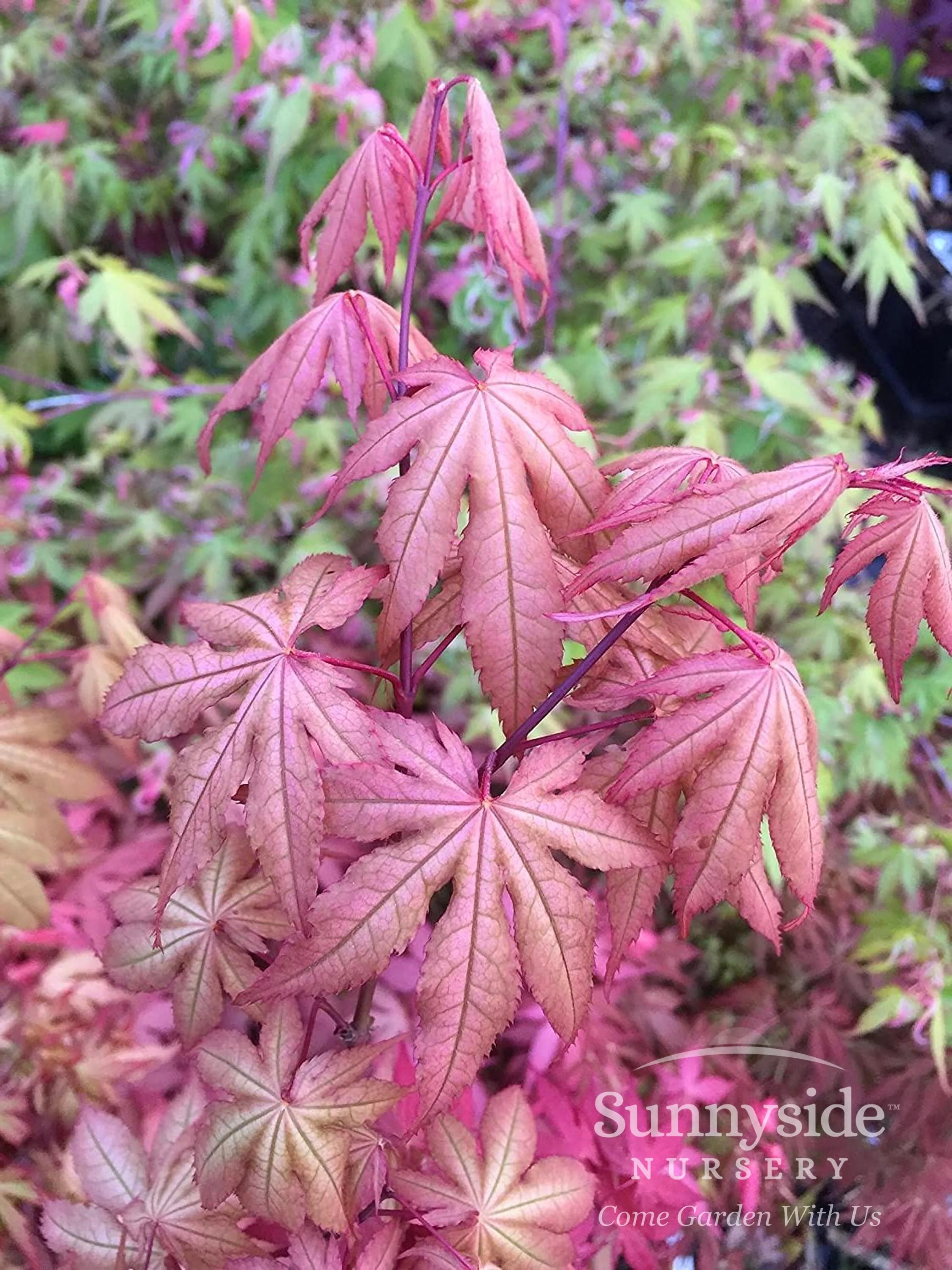
‘The Ghost Series’: There are a number of excellent members of this more modern series of reticulated maples. Flavors like ‘First Ghost’, ‘Baby Ghost’, ‘Purple Ghost’, ‘Uncle Ghost’, ‘Amber Ghost’, ‘Grandma Ghost’, 'Sister Ghost’, ‘Ghost Dancer’ and others all offer distinct color and habit choices. These all thrive in partial shade to shade (except ‘Purple Ghost’, which will take more sun) and are even suitable container specimens as well. Check individual types for height and spread, but all are very manageable in size and very landscape worthy.
Mikazuki
‘Mikazuki’: This is one we call the “Crescent Moon” maple and its foliage sure does pop. It is the perfect specimen tree for morning sun and afternoon shade, maturing to about 12-feet tall and 8-feet wide. Spring offers a combination of pink, red and purple colors and then glows with cream, light green and dark green in summer, finally turning to a golden-orange in the fall.
‘Amaji shigure’: This outstanding variety pops with bright pinky-red spring foliage highlighted with deep purple veins. Color softens in summer to a lighter pink, cream and green, then turning in autumn to a brighter orangey-red color. Specimens typically reach about 12-feet tall and 10-feet wide in the garden over time.
‘Ikandi’: This one always makes me smile with its name, perhaps Japanese looking but actually pronounced “Eye Candy.” This is perhaps the pinkest of all the reticulated maples - solid pink in spring, then adding more green and white throughout the season. New growth in summer is solid green (which is reticulated the following year, I promise!) and finally fall bursts with reddish-orange. These should not exceed 12-feet tall and 8-feet wide or so, perhaps a little less bushy than others.
Grandma Ghost
‘Strawberry Spring’: This striking newer variety glows with strawberry-pink color each spring mixed with deep green veins. As the season progresses, the pink fades into white and green shades with pure pink new growth in summer. For autumn, shades of orange and red light up the landscape. This is a smaller grower as well, maybe 8-feet tall and 6-feet wide in a garden setting.
‘Frosted Purple’: This one is a sport-off of ‘Purple Ghost’ (in the Ghost series described above) that offers even more deep purple with pink veins coloring in spring - quite striking indeed. The reticulation holds nicely into summer and bright red new foliage adds even more color. Finally in fall, shades of red to reddish-purple predominate. Trees should reach about 15-feet tall and 10-feet wide over time.
So many more are out there to entice us maple addicts! Seek out flavors like ‘Ko Yuki’, ‘Yama Nishiki’, ‘Phantom Flame’, ‘Nebula’, ‘Tiger Rose' and numerous others. I challenge anyone to look at a picture of any of these leaves and not give into temptation!
Amber Ghost
As I stated at the beginning, I am a certified maple addict and have coined the contagious (and fictitious) syndrome called "Acer palmatumitis” (the Latin designation for Japanese Maple is Acer palmatum) - the addiction to all things Japanese Maple. The most notable symptom for any patient is to exclaim “But I have room for one more!” In all seriousness, maples are super fun and offer a myriad of choices in color, habit and foliage. I invite you to join me for my talk on Japanese Maples at Sunnyside Nursery this Saturday, April 28th at 10 AM. We will discuss all things maple, show off some unique cultivars, and focus on the best selections for spring color. A visit to any garden center this time of year should open your eyes to some fun and unique maple options. Speak with a Certified Professional Horticulturist about your specific needs and allow them to assist you in choosing the perfect specimen(s) that matches both your location and color preferences. The world of Japanese maples is amazing and with all the choices available there is certainly a maple (or 10 of them ☺) to make any gardener smile in awe. Don’t worry about catching “Acer plamatumitis”, it is not a debilitating disease by any means, but rather a passion that all maple lovers share with their gardening friends.