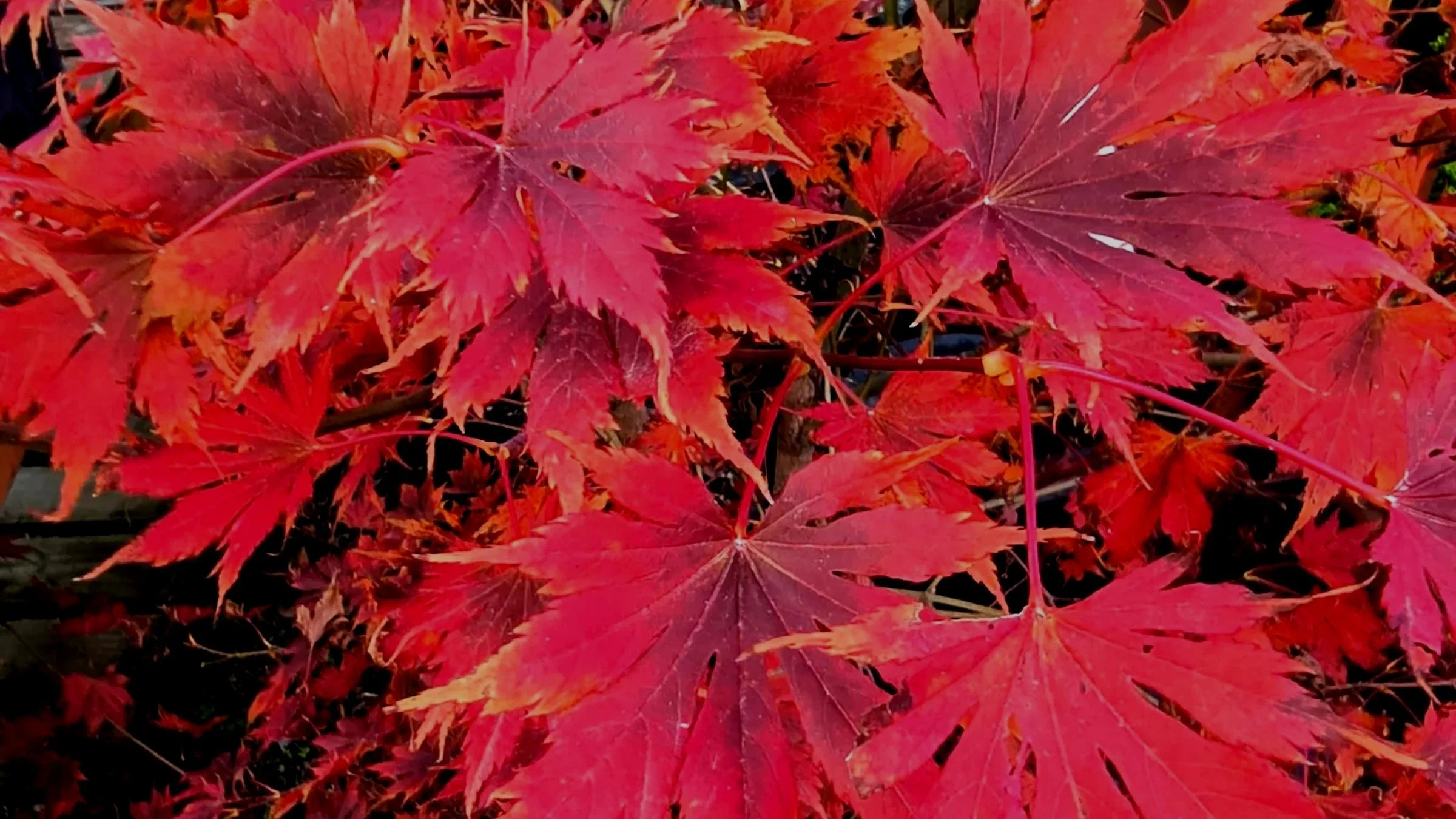
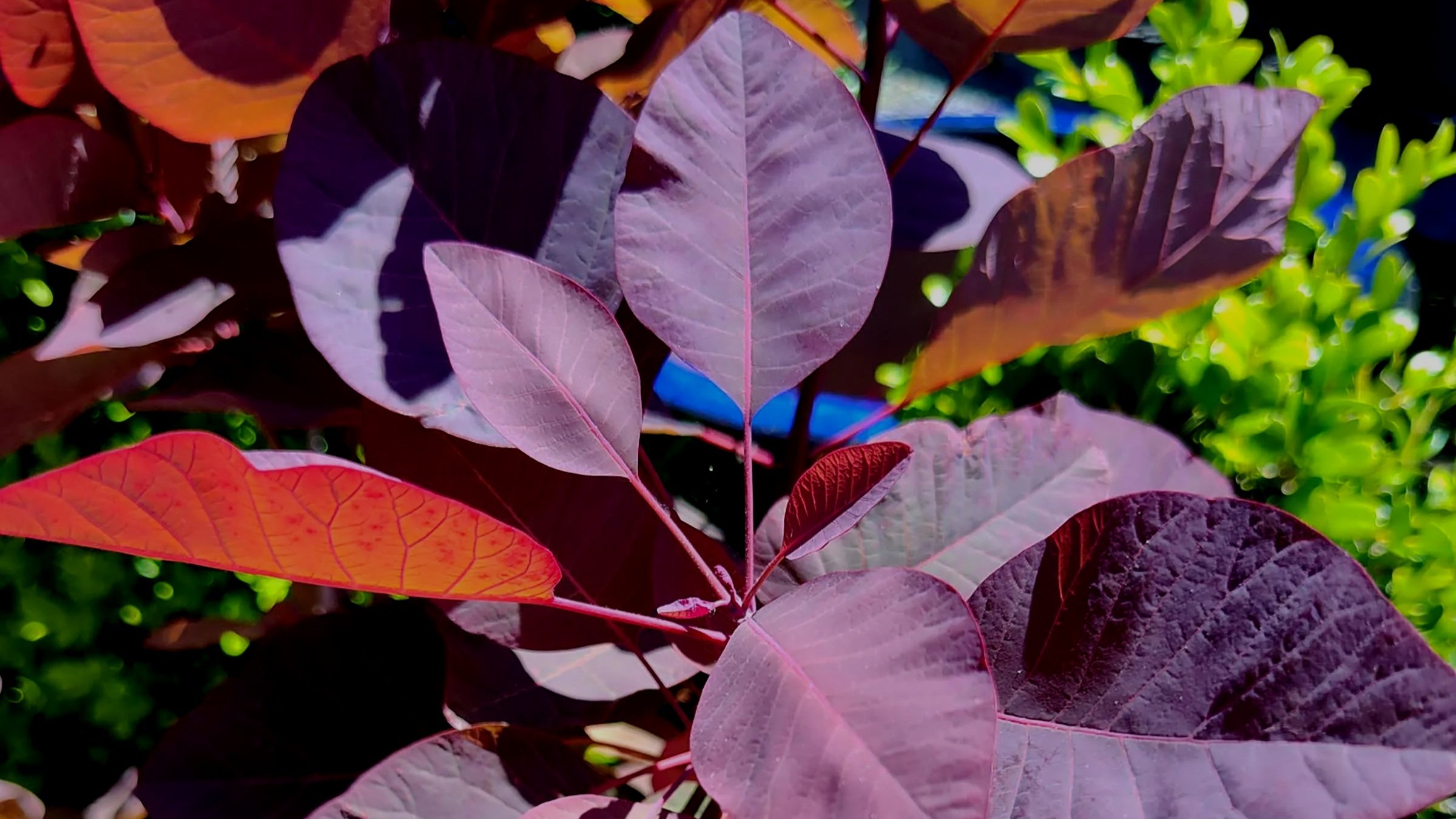
The kingdom of plants offers seemingly endless treasures for us plant addicts to admire, collect and then cultivate. Stunning shrubs, stately conifers, magnificent trees, climbing vines, creeping ground-covers, perky perennials and stunning tropicals, just to name a few. One plant that always catches my eye this time of year is the Smoke Tree (Cotinus sp.), a lovely specimen for flower, foliage and fall color. These can mature into lovely focal points, foundation plants, or can even be clipped into an excellent hedge.
Now before I pontificate on Cotinus, I want to clarify a couple things… First off, like with most plants, there are a number of specific species in the genus Cotinus. We have the American version (Cotinus obovatus), native to many regions in the Southeastern United States, and the European version (Cotinus coggygria) which is perhaps even more useful in our PNW landscapes with a more manageable growth habit, not to mention all of the striking cultivars we can typically find around our area. There are roughly seven species of this plant worldwide, but these two (and mainly the European version) are the ones that we utilize locally. Secondly, this is one of those plants that I might say “tree” when you would say “bush”. We can call them either one and in all honesty your pruners (and sometimes the variety) will dictate whether you are growing a “shrub” or “tree”. I have seen them 20-feet tall when left alone and I have also seen them 4-feet tall as a shrub – and yes, both versions look great! This is all about choice, so it is up to you (or Edward Scissorhands perhaps) as to what look you are striving to achieve. Also, now is a great time to feed them (if needed), with the most crucial time being in late winter.
I think referring to a few basics is always helpful when talking plants, so keep in mind these facts when considering your Smoke Tree… They are deciduous, which means no foliage in the winter, but more importantly it means they will bring you stunning fall colors. You will see them transform into brilliant shades of oranges, yellows, scarlets and purples, depending on the variety. Remember that a great garden is not made up of just evergreen plants, so embrace deciduous treasures as well! These leaf out each spring and grow rapidly, setting buds on the new shoots and revealing their smoky plume blooms in late spring to early summer. The flowers can be maximized by doing a little pruning in late winter to early spring – simply cut back long shoots to create the desired shape for your location. This is where your preferred choice comes in… is a “shrub” desired or a “tree” needed? Prune hard and you will have a more compact shrub year after year, with less blooms. Leave them alone and they will reach for the sky, maturing into a larger tree-like specimen. A single-trunk Smoke Tree can be had, but to me these are much better grown in multi-stem form (the way they would naturally grow), so thinning out some interior growth and setting a nice uniform shape is ideal.
Smoke Trees love sunny, well drained garden locations. This does not necessarily mean all day sun, but typically the more heat and sun the more vibrant the purple coloring. When planted in more shade they will still grow, but the foliage color will not be as vibrant or long-lasting – they would fade into more of a green-purple color. Golden types are great for spots with a bit more shade (like half day sun) as they will glow in partial shady conditions with a limey-yellow color and be more vibrant yellow in full sun. All varieties are super hardy, with ratings for winter down way below zero, and they are also somewhat drought tolerant. Our friend Mr. Deer even tends to leave them be in the garden. I guess in an indirect way what I am saying is that these are easy – a very low-maintenance garden specimen that will give you a lifetime of enjoyment.
Smoke Trees continue to be bred and some newer flavors available to gardeners are worthy of consideration. However, that does not mean the classic varieties go away - I say consider both! As we get into some specific suggestions below, the perfect choice for you boils down to eventual size, foliage color and even bloom. I am always honest, and yes they have very unusual airy flower clusters, but I would grow this plant just for the foliage!
‘Lilla’: This striking dwarf version of ‘Royal Purple’ growing to about 4 to 6-feet tall and wide. These glow shades of orange, coral and red in fall and sport pale pink to lavender flower clusters in late spring to early summer.
‘Winecraft Black’: This newer intro from Proven Winners is excellent, growing to more like 10-feet tall and 8-feet wide. They produce pinky-red flowers in early summer and display deep purple-black foliage than turns to a reddish-orange in fall.
‘Winecraft Gold’: This new gold version from Proven Winners is quite showy, growing to about 6-feet tall and wide. Foliage emerges an orangey-yellow, turning gold then chartreuse in summer and finally a blend of orange, red and coral in autumn. White flower plumes age to pink in mid-summer.
‘Veleveteeny’: This is the “mini me” version, growing to only 4-feet tall and wide as a shrub. Foliage emerges deep purple, then glows purple and green over summer, then bright red for fall. Its small size great for small landscapes or even pots and soft mauve-pink blooms in summer are a nice bonus.
‘Royal Purple’: This is the ultimate classic flavor that we see most often, maturing larger to about 15-feet tall by 12-feet wide. Its foliage has a deep purple spring color, reddish-purple summer color and finally a reddish-scarlet color in fall. Larger rosy flower puffs arrive in summer.
‘Golden Spirit’: This classic golden version grows to about 8-feet tall by 6’-feet wide. In autumn, it fires up shades of coral, red and orange. These will take full sun without burning if watered, otherwise they glow in partial shade. Plants leaf out lime, mature to bright gold in summer and flowers are pale pink airy plumes.
‘Grace’: This is an older hybrid of Cotinus coogygria with wine red foliage in spring, plum red in summer and finally orangey-red in fall. It shows perhaps the most variety in color and also sports deep pink flower plumes and a faster growth rate to tree size, 15-feet tall and 12-feet wide.
When considering the combination of foliage, flower and form, Smoke Trees are hard to beat for the garden. The intense spring and summer foliage contrasts nicely with all our native greens and their hazy poof-like blooms and exquisite fall color combine to make these wonderful landscape specimens for our area. Stop into your local garden center, speak with a Certified Professional Horticulturist and examine your options. From a tidy little dwarf to larger growers, remember that you can always prune to make them behave. Whether you like bright gold foliage, deep purple, or a mix of subtle greens to purple, there is a perfect variety for everyone out there. So go on and plant one, and then you can officially “smoke em’ if you got ‘em!”