With the onset of summer in the PNW, the perfect time to talk about the many kinds of Hydrangeas we can cultivate is upon us! When it comes down to summer bloomers, nothing in the world of shrubs can beat the flower power of a Hydrangea. They are beginning to strut their stuff now and will continue to provide color throughout the summer until the fall frost shows up. From old-fashioned classics to the newer generation of repeat bloomers, there is without a doubt a Hydrangea to match any gardener’s tastes.
Now before I get into some of the newer introductions, I want to make one simple point: I have not met a Hydrangea that I did not care for! Sometimes new is great, but then again some older classics pack just as much impact. As more and more flavors hit the market, why is this one better than another or why is that one THE best? It all comes down to personal taste, but breeders are trying to do us gardeners a favor… Many are now adding purplish foliage interest which helps provide more sun tolerance, and the vast majority bloom on new AND old wood. That to me is the single greatest benefit as it makes pruning a piece of cake. We no longer have to grow ginormous specimens, leaving them alone so that they will bloom each summer. Now we can prune newer varieties back each March, keeping them tidy and compact without sacrificing bloom, and then simply dead-head spent flowers in the summer which just means more growth, more buds, and more blooms. Now that is what I am talking about!
Before I mention some recommendations for 2026, let’s talk about the major groups of Hydrangeas that we tend to utilize locally and their attributes. For this week I am delving into H. macrophylla and H. quercifolia, but stay tuned for more (H. paniculata and H. arborsecens) next week!
Hydrangea macrophylla: These are the Bigleaf Hydrangeas that many gardeners are familiar with in our region. They can be mophead (round) or lacecap (flat and airy) in flower form and the vast majority will change color depending on the pH of the garden soil. Acidity brings blues and purples while alkalinity produces pinks and reds. Any gardener can play mad scientist and experiment with their soil pH, thus dialing in on the perfect shade of color year to year. These Hydrangeas are best grown in morning sun and afternoon shade, but many will do nicely in more sun if watered properly.
Hydrangea quercifolia: These are Oak Leaf Hydrangeas, offering a little different option for foliage. They do nicely in partial to full sun and sport cone-shaped panicle flowers that open white and typically turn shades of pink to red. The big difference here is the foliage, shaped like an oak leaf and turning stunning shades of colors in the fall. They also have peeling brownish bark to add some winter interest. Keep in mind that these bloom on old wood so a light prune each March is adequate, cutting them back hard will result in plenty of nice foliage but less flower power for that summer.
For me personally it is super gratifying to shop the finest regional growers, acquiring worthy plants for our patrons. There are far too many options out there for Hydrangeas (if that is possible) and each and every year more worthy introductions become available. Breeders across the country are producing fabulous cultivars with both striking foliage and sturdy flowers. As you consider which ones may work for your very own outdoor spaces, perhaps contemplate a few of these newer options that caught my eye this year…
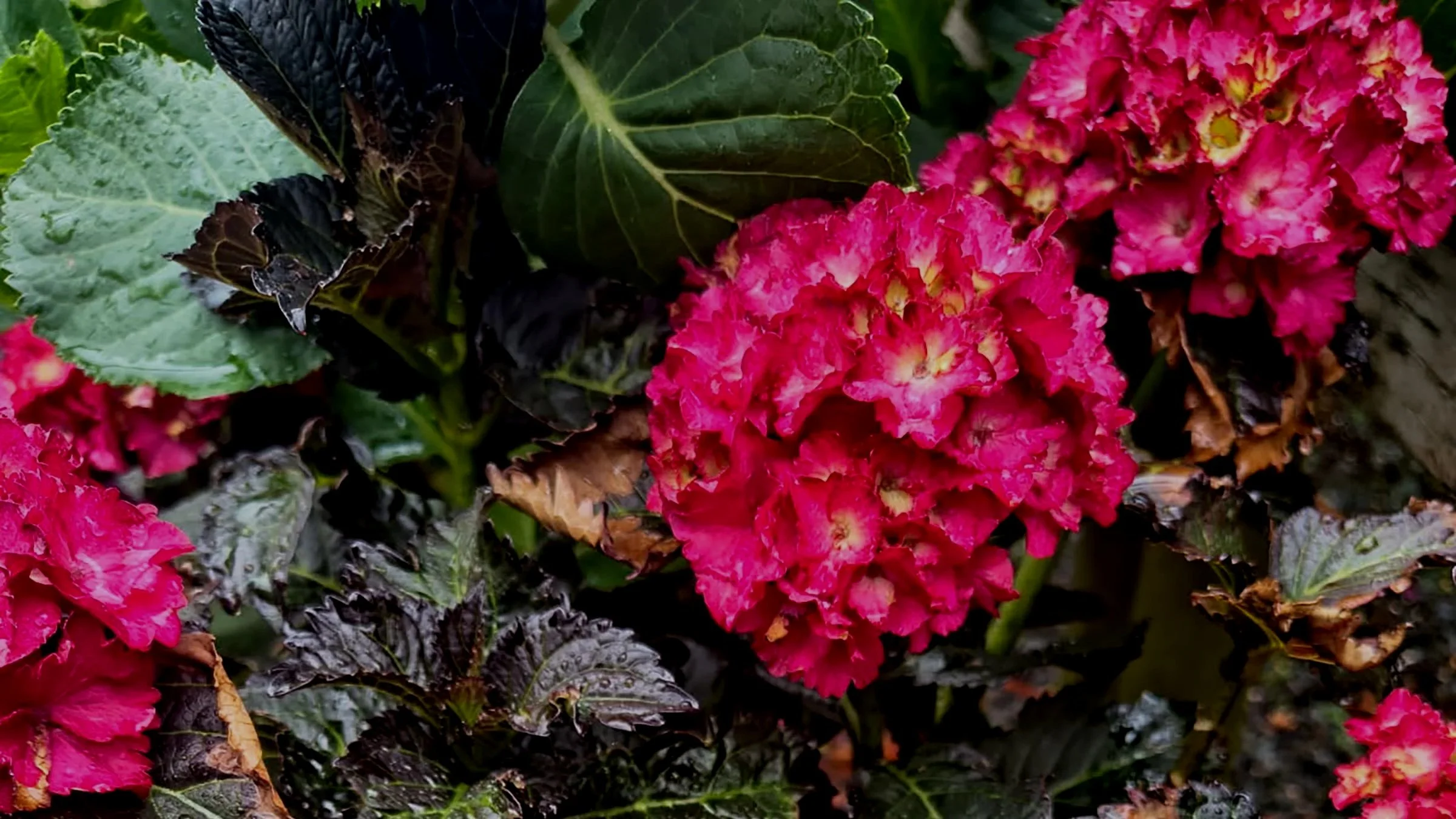
‘Hanalei Bay’: As the newest member of the ‘Seaside Serenade Series’ from Monrovia, this mophead variety provides stunning blackish-purple foliage and hot magenta colored flowers with greenish centers when planted in a sunny location. Has super compact growth, only 3-feet tall and 4-feet wide.
‘Dreamcloud’: This the latest member of the 'Endless Summer Collection’ from Bailey Nurseries, the origin of re-blooming Hydrangeas. Its mophead flowers are pure white with a touch of lime, perfect for brightening up those partial shade (morning sun only is best) locations. As they age, tones of pink or blue will come on depending on the soil pH. Has a tidy habit of 4-feet tall and wide.
‘Hi-Series’: The breeders of the ‘Hi-Series’ have done an excellent job, producing compact bigleaf type plants with vivid flower options and thick sturdy stems. For 2026, ‘Hi-Fire’ brings an electric red and ‘Hi-Sun’ offers white with a touch of green. Super easy to grow and prune, maturing to about 5-feet tall and wide and re-blooming all summer long.
‘Pink Dynamo’: This one is not technically new for 2026, but it continues to amaze me with both its foliage and flower. These offer deep purplish foliage for sun and hot pink lacecap flowers all summer long. This is also what we call a “Mountain Hydrangea” (H. serrata), even hardier than other varieties with lovely fall colors as a bonus. Grows compact, only 3-feet tall and wide.
‘Fairytrail Series’: More editions came out in this series from Proven Winners for 2026, what we call “Cascading Hydrangeas”. In all honesty, a most interesting plant that is a little different. These are old wood bloomers so don’t cut them back hard, and they also grow with more a more horizontal or trailing habit. Super fun for the garden border, they are also useful in containers and even hanging baskets. You will see some varietal options like ‘Bride’ (white), ‘Green’ (limey green), ‘Fresco’ (pink or blue tones) or simple ‘White’. All grow to about 4-feet tall and wide, love partial sun (afternoon shade) and sport long-lasting flowers all summer.
‘Glow Ball’: Brought to you by Proven Winners, this Oak Leaf selection brings a tidy habit, gorgeous red to burgundy fall foliage color and unique more-rounded white flowers that age to a bit of a lime color. A useful option for sun or partial shade that matures to about 4-feet tall and wide.
The summer season for Hydrangeas, of all kinds, has officially commenced! A visit to your local garden center this time of year should provide an almost overwhelming amount of options for both sunny and shady locations. Whether it is one of these new flavors that has caught your eye or a worthy classic variety, this is their time to shine. Speak with a Certified Professional Horticulturist about your needs and allow them to help you select the best Hydrangeas for your landscape. Keep them fed and watered regularly as their blooms will brighten up your garden all summer long. I invite to join me for a Hydrangea discussion here at Sunnyside Nursery on Saturday, July 11th at 10 AM. We will have some fun learning how to select, grow and maintain all kinds of these garden beauties. My hope is that you discover Hydrangeas and then feel confident utilizing these lovely shrubs for a truly “Hydrangea-licious” summer season!