I had some fun last week describing a few plants that fill our summer breezes with fragrance. In all honestly, I was going to move on to another topic but my brain simply could not. As soon as I sent the article out I found myself meandering around the nursery continually thinking about plants that I should have mentioned. Perhaps you can understand my dilemma, there are just way too many fragrant gems for the garden that are both useful and unique. And thus, like with most plants, there is always room for a few more!
First, let’s talk about a couple of larger growing plants - some may call them “trees” while others call them more of a “tall shrub”. These are perfect for focal points in the garden, specimens that will attain some size over time and exude color, foliage and fragrance in the summer.
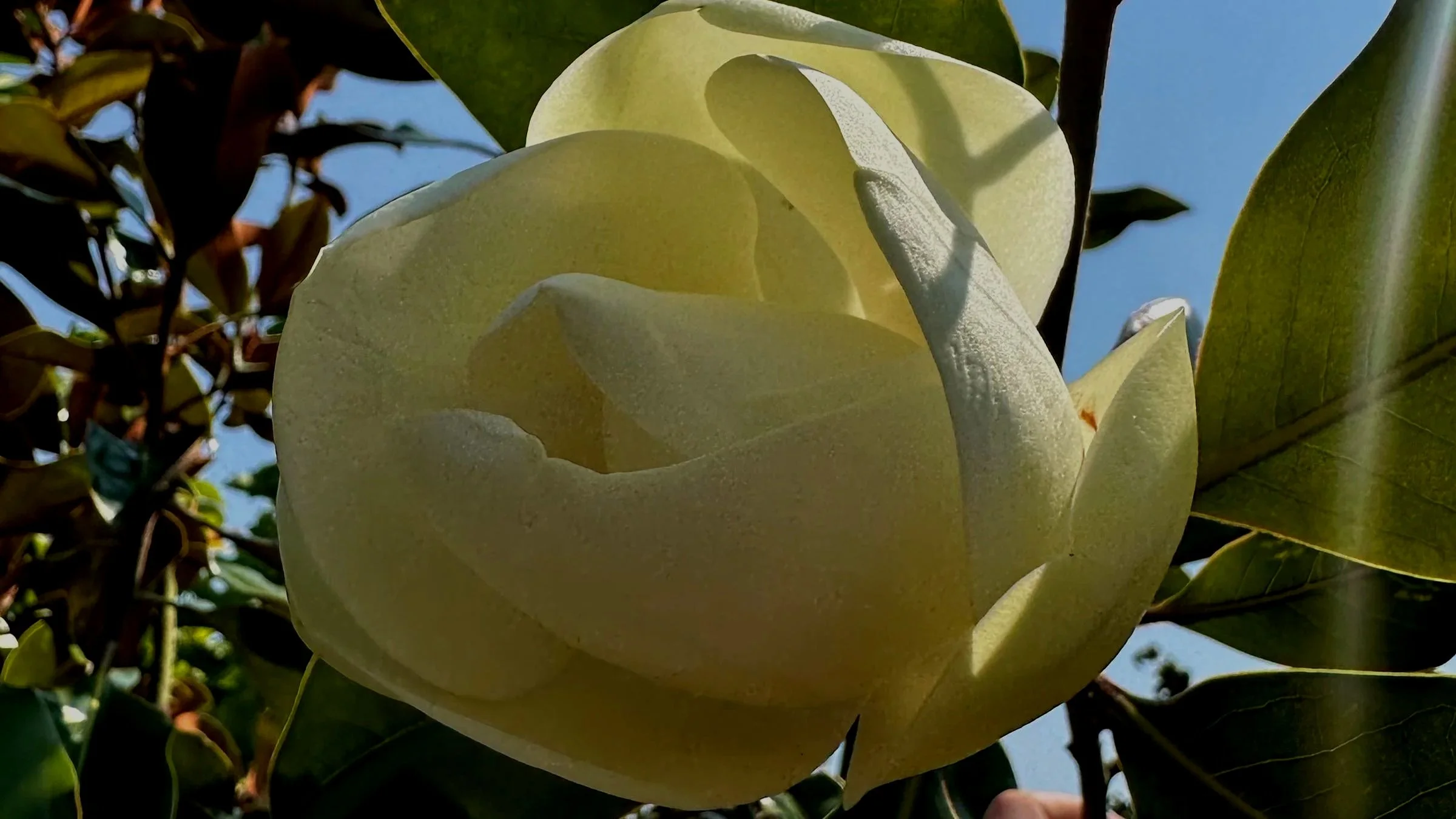
Evergreen Magnolias: Many designate these Southern Magnolias (Magnolia grandiflora) as they are much more common in the deep south, but they are plenty hardy to grow in our local gardens as well. These offer us big and bold everything; huge leathery leaves for year around interest and magnificent white cup-shaped blooms in the heat of the summer. Many are blooming (or about to) in our area and as they do the air is filled with their sweet smell mixed with hints of lemon and citronella. The blooms are always a beautiful creamy white with interesting structure in the center.
This time of year Mags (as I call them) are dropping a few of their older leaves, which is completely normal. “Evergreen” plants, of any kind, will hold their leaves for three years at most and then drop as they are replaced with fresh seasonal growth. Mags bloom on new wood, so if you are going to prune yours I would only do so coming out of winter, NOT in summer as you will cut the flower buds off!
This type of Magnolia can be found in several named forms with varying habits from dwarfs to big old monsters. Leaves are dark green on top but have rusty brown tones on the bottom, adding foliage interest to the sunny garden. Magnolias love food so be sure to feed yours at least once in April and again in July with an organic granular food of just about any kind. They also love water so ensure your tree stays irrigated in our drier summertime climate. This also brings up one bonus with Evergreen Magnolias, they can take heavier soils with even some clay, BUT it still must drain. Waterlogged sites will bring root rot over time, so when planting one dig a nice sized hole and amend with lots of compost to ensure that there is both water retention and adequate drainage, especially in the wetter winter months.
When choosing an Evergreen Magnolia be sure to examine your location and pick the right sized grower for you. The smallest one I have seen is 'Baby Grand’, a beautiful dwarf that matures to about 10-feet tall and wide with a compact, rounded form. Perhaps the most popular in our region is ‘Little Gem’, another smaller grower that matures to about 15 to 20-feet tall and wide. 'Teddy Bear’ is one of my personal favs, adding a little extra of the rusty brown on the leaves and attaining a lovely manageable upright habit of 20-feet tall and 12-feet wide. In addition, there are numerous excellent larger growers like ‘Bracken’s Brown’, ‘Victoria’, ‘Edith Bogue’ and many others if you are looking for a 30- to 40-foot-tall focal point. The mature size will vary on all but the deliciously fragrant summer blossoms will not!
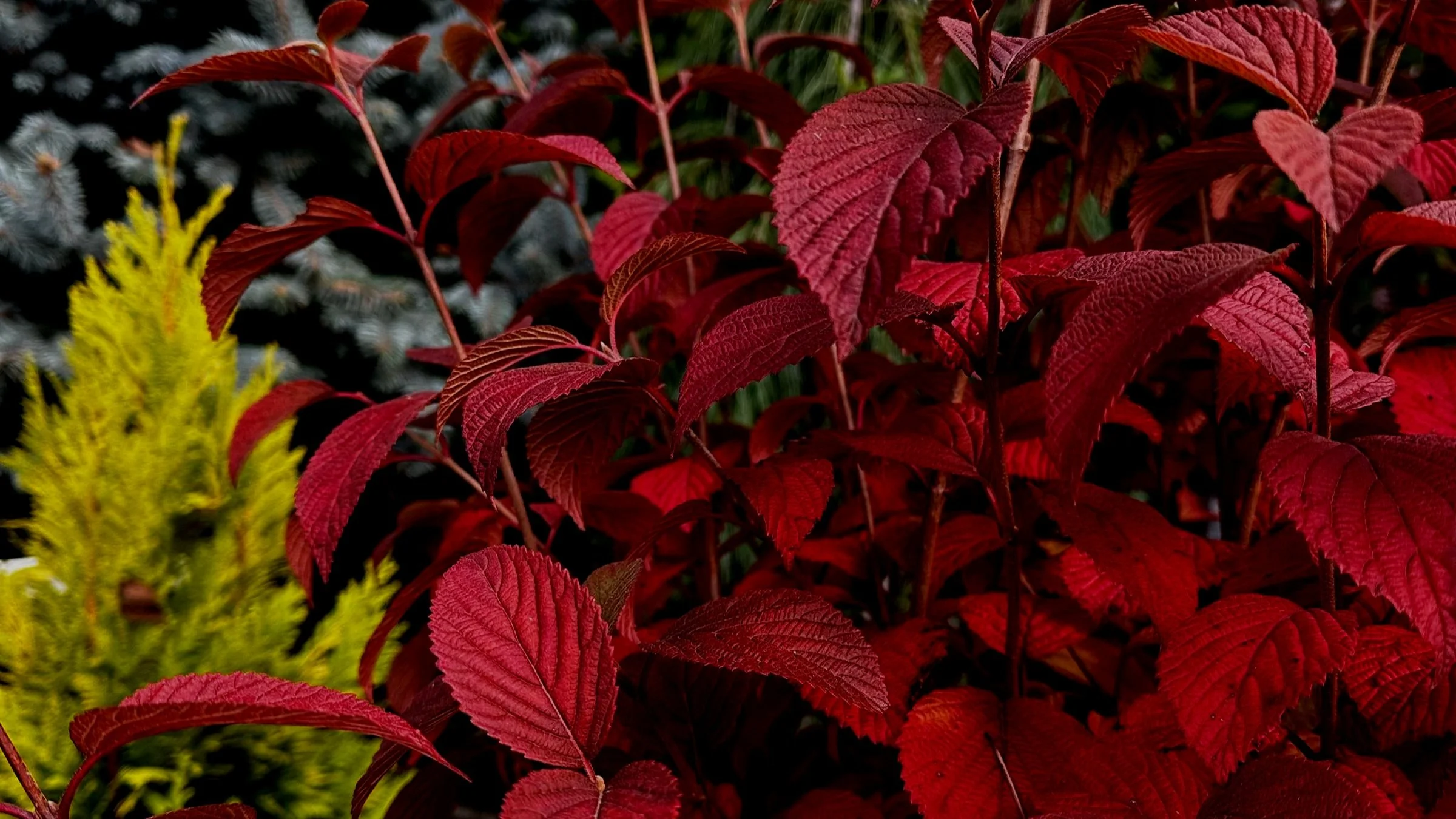
Seven Sons Flower: Another summer showstopper is Heptacodium miconioides, a botanical gift shared with us from China. This is a cool specimen plant that I wish I saw planted more often in our area. White flower clusters open in late summer, filling the air with the sweet smells of Jasmine. They appear to bloom twice as once its white flowers are pollinated by the bees, they drop and then develop into deep crimson bracts in the fall. Heptacodium are deciduous and turn lovely shades of yellow in autumn and then once naked for the winter, this plant reveals lovely structure and exquisite peeling tan bark for winter interest. These bloom on new wood so pruning in spring and then allowing the new growth to mature and bloom is the way to go.
Someone who craves cool plants can find these in our area for sure, especially a couple of tidier, more recent introductions. Proven Winners created a hybrid called ‘Temple of Bloom’, an ideal small, multi-trunked landscape tree that tops out in the 12-foot tall and wide range. The First Editions Breeding Program at Bailey Nursery also brings us the variety ‘Tianshan’, even more compact at 12-feet tall and 8-feet wide in multi-stem form. The flowers produced in August on both are irresistible to pollinators, especially butterflies and hummingbirds. As a bonus, browsing deer tend to leave these alone as well.
Abelia: Perhaps sometime I will dedicate an entire article to these lovely shrubs that combine great foliage and light pink to white summer blooms. I think many forms of this plant are utilized, mainly the specie Abelia grandiflora, often for its variegated leaves and long bloom season from late spring until fall. These are fabulous evergreen shrubs and the blooms often have a light scent. But if we are going for nose candy flowers, you need Abelia mosanensis, the Fragrant Ableia. This is not a common plant by any means, but Proven Winners has bred a flavor for the masses called ‘Sweet Emotion’. This lovely deciduous variety fills the air with hints of Jasmine from late spring to early summer. Fragrant Abelia grows to about 6-feet tall and wide in sun or part shade and offers lovely orange fall color as a bonus. These bloom on old wood so no winter pruning – focus on taming them (if needed) after they bloom in summer. They also offer resistance to both browsing deer and those nibbling pesky rabbits. As a preview, I am hearing about a new variety of these that will come in 2027 called ‘Sweet Emotion Blaze’, sporting darker flower color.
Bloomerang Lilac: Say what, a lilac for summer? Thanks to Proven Winners the answer is yes! These dwarf, shrubby Lilacs bloom just like we would expect in mid-spring, BUT then they grow, set more buds, and bloom again in mid to late summer! These deciduous beauties have nice fall foliage and come in a few colors, including purple and pink. All grow best in full sun and mature in the 6-foot tall and wide neighborhood. They do not require pruning, but if you do, keep in mind that they are old-wood bloomers, so only tidy them up immediately after their first bloom in spring. This will allow new growth to set even more flower buds and carry the color (and fragrance!) into fall.
Not that we need more plants… wait, of course we do! I could go on and on about many more, which just means that I will circle back to fragrance again and again in the future, as we all need some lovely smells in our lives. Honeysuckles, Wisteria, Star Jasmine, Sausage Vine, these options allow us to even go vertical with fragrance. I invite you to stop by your local garden center this time of year and see what catches your eye (or nose in this case) for summer. Don’t forget to breathe in the beauty of summer, especially by adding some fragrant goodies to your very own botanical collection.