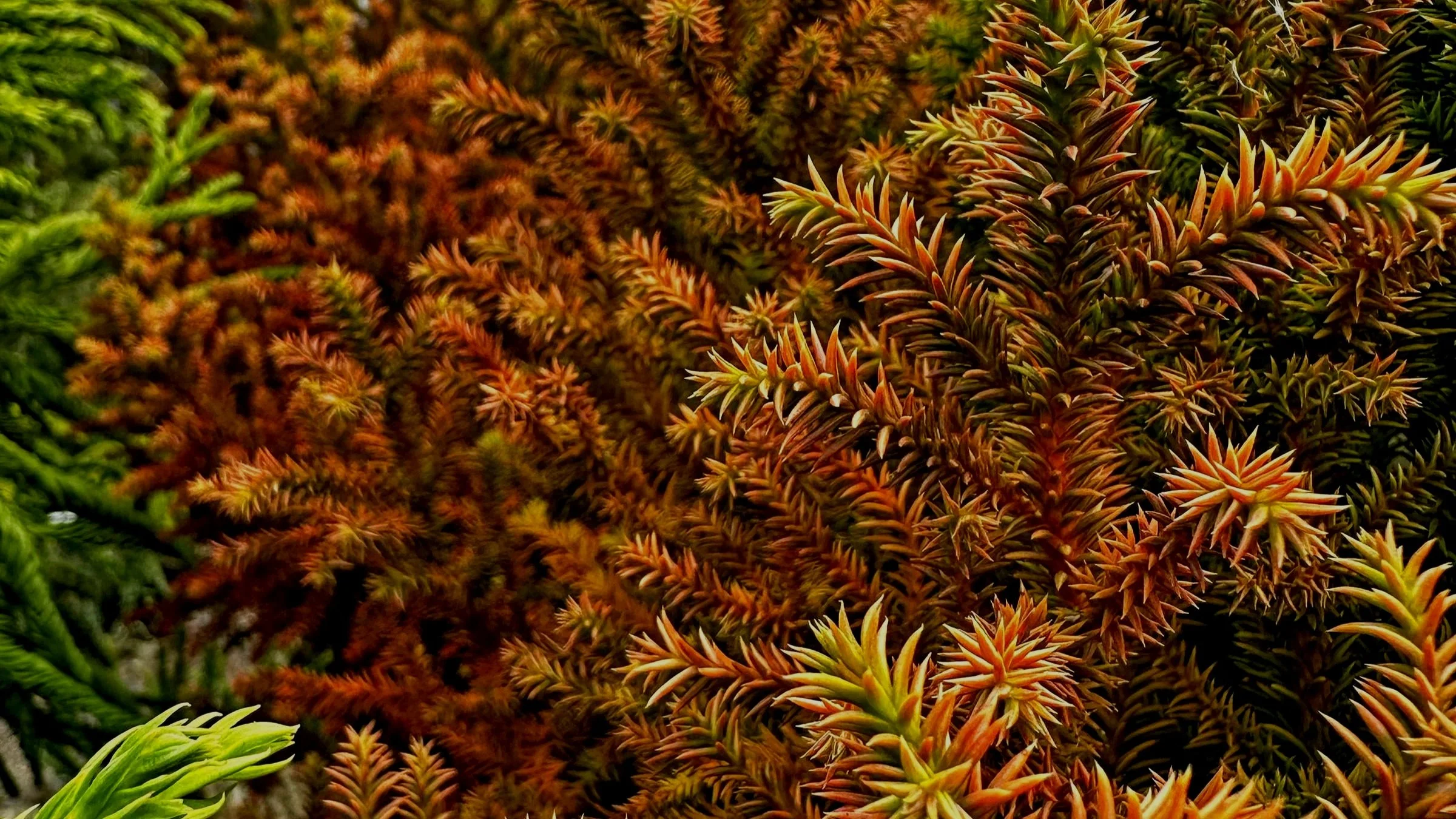
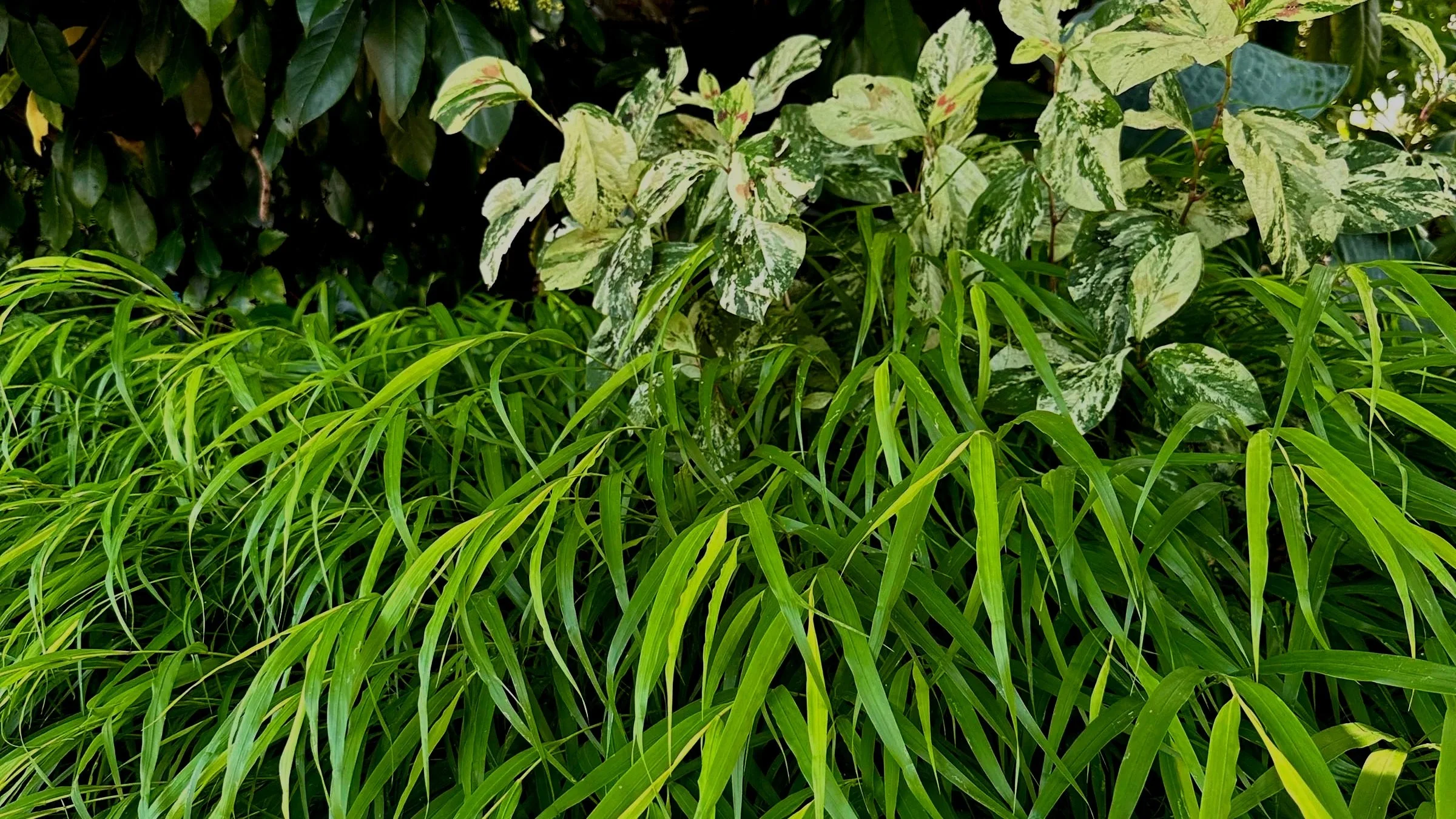
Evolution and Mother Nature have given us so many interesting plants over the eons. I mean seriously, just gaze upon any landscape and so much color pops out, both in flower and foliage. Serious gardens incorporate a wide variety of specimens in both sun and shade, creating a visually appealing conglomeration of plants and hardscape features filled with color, texture and motion. In the heat of summer I love some shade, as do many plants, so this week I will focus in on some shady characters of the plant world – specifically grasses that thrive in lower light conditions.
Some generalities exist in the realm of ornamental grasses as planting and care for them is truly easy. I would always check to see how much sun the specific location gets first, then decide if you require more of a “clump” habit or conversely need them to spread and “naturalize.” Often in a landscape, we need some space eaters that will gently fill in an area, while in other sites (or even in pots) we want something more in a clumping form. I would always use an organic starter fertilizer when planting (like Sure Start from E.B. Stone Organics) as this will help establish an extensive root system and thus exhibit better drought tolerance. Feeding is super easy as they don’t need much – perhaps a dose of organic All Purpose food in March and June each season at most. In all honesty, I don’t think I have fed many of mine in the past year, two, or three – once they get going, they are very self-sufficient indeed.
When incorporating grasses into the garden, keep in mind some landscape design principles. These plants ooze color, contrast and texture, and with shorter options for borders and taller ones for specimen use, a useful grass is out there for you. Some types will be perennial, meaning that they will light up the fall and then go dormant for the winter. Pruning of these needs to happen at some point before early March, as fresh growth will rejuvenate each year once they awaken in spring. Simply cut off all of the growth about 2 to 4-inches above ground and off they go. Other types are evergreen and can also be cleaned up, but we do this a little differently. If you have ever heard that cutting discolored blades in half works…it doesn’t. If your plant is truly tired, cut the entire plant back to only 4 to 6-inches in April, after frost. Be sure to feed them if you prune as this will help them flush and look sharp once more. Over the years I have grown many evergreen types and pruning does not need to happen every year – I typically find it is more like every three years or so to keep plants vibrant with fresh growth.
Grasses of many kinds have covered our planet for countless millennia, reaching nearly every niche across the globe including in the shade. From dappled shade to brighter shade, there are lots of colors, heights and habits out there to choose from.
Northern Sea Oats (Chasmanthium): This useful perennial species is one of my favorites, particularly in autumn. Limey-green blades reach 2 to 3-feet each season, then turn lovely coppery-brown tones in fall. Noticeable seeds on stalks emerge in late summer, resembling flat oats. These plants will take some wet and shade, even growing in heavier soils. Super hardy and super easy – my kind of plant!
Mondo Grass (Ophiopogon): There are quite a few options here as these little evergreen beauties can be found in green, black or variegated forms. I utilize Black Mondo Grass the most, as it adds lovely contrast in any shade garden with its deep foliage color. This is a naturalizing type – we plant a few and let them mature into a lovely patch, like a ground cover. They are short in stature (6 to 8-inches tall) and flower with pinky-white stalks. Metallic purplish berries add even more visual interest in fall as well. In our climate they can take some sun, but I think the best color is attained with morning sun only at most. I can also pass along a new flavor of these will be introduced this fall called ‘Inky Whiskers’, a mini version growing only 4-inches tall and wide.
Japanese Forest Grass (Hakonechloa): If there was a poster-child for shady characters, this is the one. These are a must have for any shade garden to me, adding bright color and graceful texture to any landscape. Forest Grass can be found green, or variegated yellow, or even variegated white, all turning lovely red to burgundy with fall frost. Forest Grass are perennials and naturalize nicely, creating a ground cover or border edge look with a serious pop of color. Plants grow to about 12 to 18-inches and spread slowly with time. Varieties like ‘Lime Zest’ (white/green), ‘Aureola’ (green/yellow striped), ‘All Gold’ (solid limey-yellow-green) and ‘Beni Kaze’ (solid green) are out there to choose from. They all love moist, well-drained soil and are sure to please any local gardener.
Tufted Hair Grass (Deschampsia): These useful perennials form tidy clumps in the shade and sport attractive seed heads each fall. This is another one that perhaps looks best planted in mass to form almost a taller ground cover or border planting. These clumping plants stay about 12-inches tall and wide and are easy to cut back once a year. I like the variety ‘Northern Light’ which sports touches of pink variegation with green and cream, especially in spring and again in fall. These are also a bit more drought tolerant but still need some soil moisture in our drier summer months.
Sedges (Carex): These represent a massive group of grasses, including some evergreen, some perennial and even some native species. I think that most gardeners use the evergreen forms a bit more, but all should be kept in mind. The best perennial variety that I have used is ‘Bowle’s Golden’, a lovely 2-foot tall grower will all kinds of yellow and spring seeds, simply glowing in one of my shade gardens. Several useful evergreen ones exist for shady borders and pots as well like ‘Everlillo' (yellow/green) and ‘Everlime’ (dark green/lime green). I use both of these in my own garden and although the rabbits help prune them for me, they are quite striking in mass. Other evergreen types are out there, with all growing in the 16-inch tall and 24-inch wide range over time.
I have always used ornamental grasses throughout my own yard, including in shady spots, as they tend to be most resilient creatures indeed. More importantly they add texture and color, and many produce fall “plumage” - seedy blooms displayed in the autumn. Other grassy looking plants like Liriope (“Lily Turf” – evergreen with nice flowers) and Acorus (“Sweet Flag” – evergreen and bold yellow) add even more naturalizing options. Local garden centers stock a wide range of grasses this time of year, including those that are best grown in shade. I can imagine a gentle breeze blowing, closing my eyes listening to the rustling of the grass gently swaying in the wind. Whether short little clumpers or taller specimens are your thing, my hope is that you find them irresistible like I do.
I want to invite you to join me for a free class on ornamental grasses this Saturday, August 22nd at 10 AM at Sunnyside. We will talk shady characters for sure, but also some sunny specimens as well!