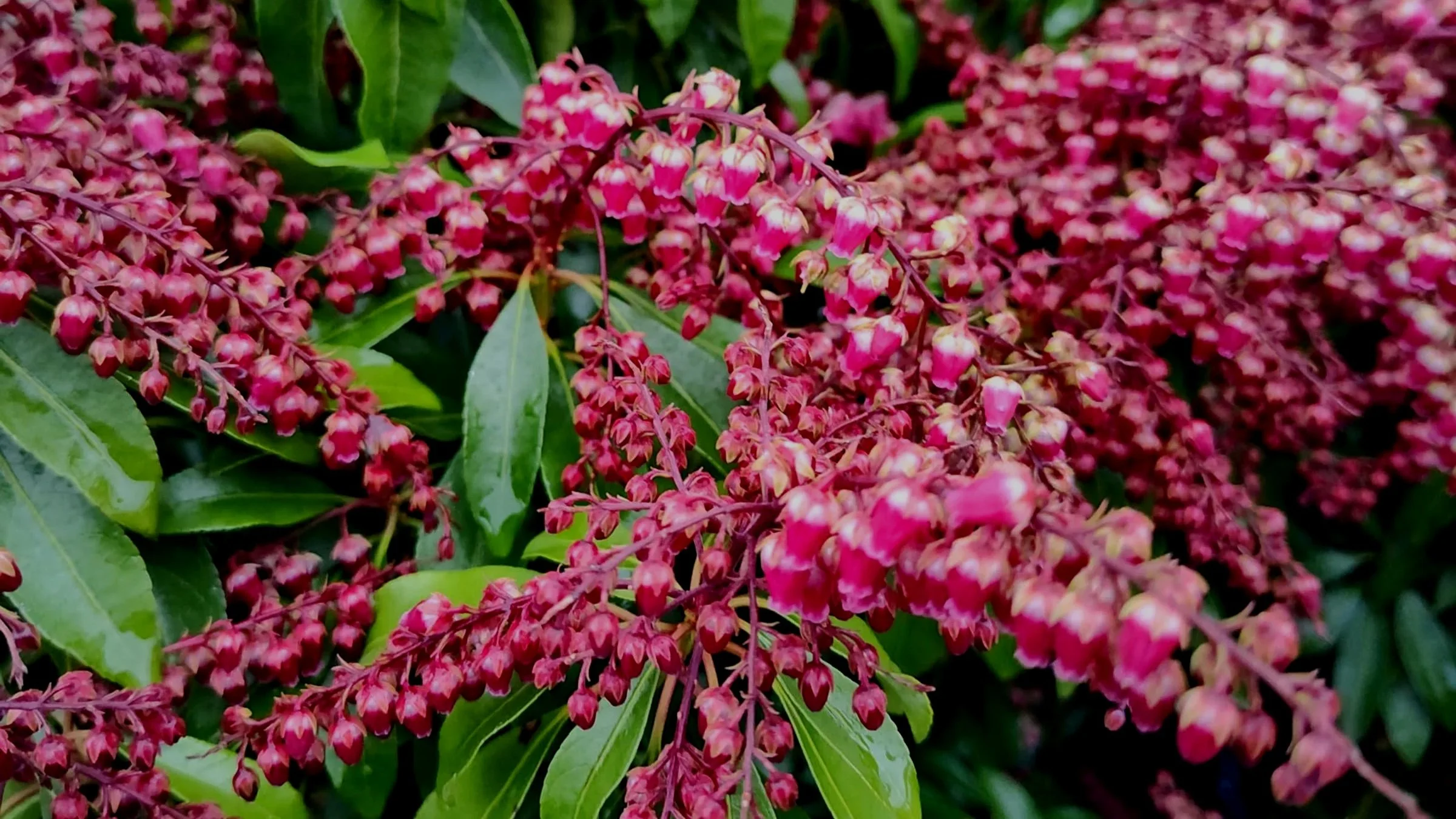
We are truly blessed here in the PNW with so many useful and attractive spring blooming botanical treasures. These early bloomers help wake us gardeners up from our long winter slumber as they grace our landscape with much needed color coming out of winter. One fabulous shrub many of us utilize locally is what is called Lily of the Valley, or Pieris japonica, a stunning early spring blooming specimen. These are always one of the first evergreen shrubs to bloom, a perfect flower to help get our pollinating friends moving about on those warmer almost-spring days. The varieties of these available offer a plethora of choices.
Lily of the Valley shrubs are perfectly suited to our climate, enjoying both our mild seasons and acidic soils. Pieris will thrive in full to partial sun (honestly just about anywhere), except they will lack bloom in deep dark shade. If you ask me, a woodland garden or eastern exposure spot (morning sun/afternoon shade) is ideal, especially with variegated forms. But again, as long as they are watered in our drier summer months, full sun works just as nicely. They do need decent drainage (like Rhododendrons, Azaleas and Camellias) so be sure to amend with compost when planting and ensure that a problematic clay layer is not too shallow.
An organic Rhododendron-type fertilizer is perfect for feeding either existing specimens and newly planted ones as well. A nice dose spread at the base once in March and then again in June is ideal. The June feeding is especially important in my opinion, as Pieris is the perfect example of an old-wood blooming shrub (just like Rhododendrons and Azaleas). Each summer they will be setting their flower buds for the following year, so having that fertilizer boost available will only make your floral display more stunning. If you really want to up your gardening game, add some ‘Ultrabloom' (pure phosphorus goodness) from E.B. Stone Organics in June as well - the same with many old-wood blooming plants This also brings up watering… Pieris do not need copious amounts of water by any means, but they are certainly not drought tolerant. If plants like these are nutrient starved or drought stressed, the first thing they will do is abort flower bud production. Feeding them and ensuring that they are adequately watered will maximize your flower power each and every spring.
If you are going to prune yours, recall one of my pruning rules: “prune after bloom”, on all flavors of Pieris. Tackling this project right after flowering is finished will not only deadhead the plant, but will allow the colorful leaves to emerge and then finally result in flower bud development. If you cut them later in summer, fall or winter, you are essentially cutting your flowers off, so remember that “prune after bloom” is the way to go.
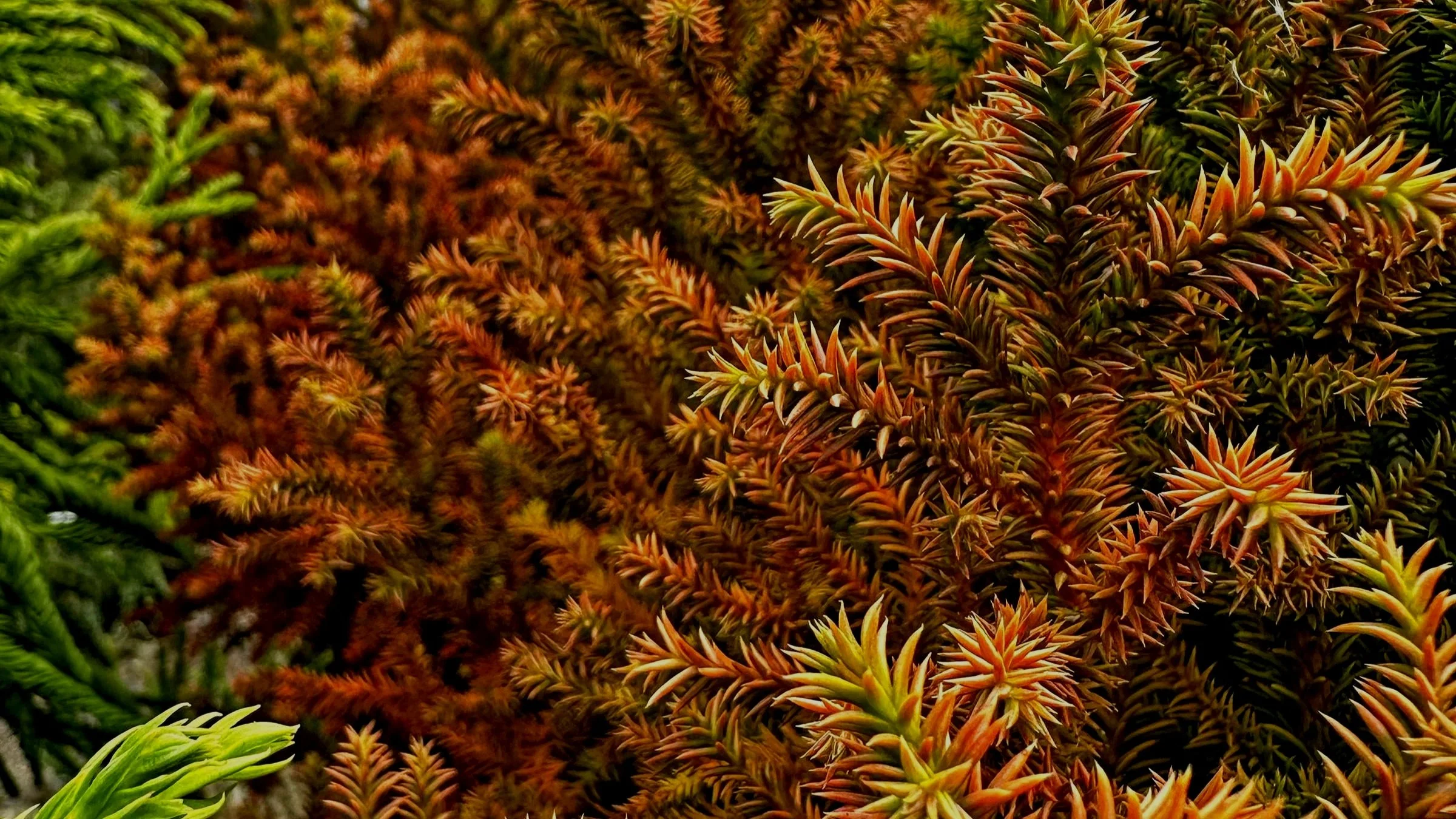
Before I get into some specific flavors of Pieris, I want to emphasize their year-long attractiveness. First and foremost, they are evergreen and provide beautiful foliage in the winter. Once they bloom in spring, intensely colored new growth pops out, adding a much needed foliage contrast. This can vary from hot pink to fire engine red to orangey to purplish-burgundy tones, depending on the variety. I think by now you may realize that I am also a lover of variegation, and there are some lovely variegated options available too. By mid-summer and into fall you will see next year’s flower buds have emerged - these are lovely, beaded, gently weeping, raceme clusters that adorn the tips of branches, adding a graceful element. To me, these represent the promise of spring, sitting there all through the grey days of winter and then bam, bursting into color the following spring.
Like with most plants, Pieris can be found in all kinds of shapes of sizes, both large and small. There is certainly one out there for every gardener, so explore the many flavors available, both old and new. Here are a few worthy of consideration - certainly not all of them, but some useful ones to whet your appetite…
‘Mountain Fire’: This classic larger grower matures into a lovely specimen 8-feet tall or even bigger. Reliable white flowers and intense bright red new growth add impact each and every spring.
‘Forest Flame’: Another oldie but goodie, a taller selection like above with bright white blooms and new growth that pops more in the orangey-red tones each spring.
‘Valley Valentine’: This is another classic taller flavor, adding intense red flowers each spring followed by new growth in a bit more subtle bronzy tone.
‘Katsura’: Perhaps a bit tougher to find (but worth it!), this taller old school variety from Japan has light pink flowers and deep purplish-burgundy new foliage.
‘Flaming Silver’: I think this taller grower sets the standard for foliage color. White flowers are showy, but they take a back seat to the stunning foliage. Variegated white and dark green year round and the new growth is an intense pinky-red.
‘Tiki’: This newer dwarf stays much tidier, boasting white flowers that stand more upright and do not weep. Plants grow to 3 to 4-feet tall and wide, and new growth has a touch of bronze coloring.
‘Prelude’: This great dwarf seems to always bloom heavily, is pure white in color, and offers a touch of pink on the new leaves. These mature at only 3-feet tall and 4-feet wide.
‘Little Heath’: Probably the most popular variegated dwarf, this beauty sporadically blooms with white flowers, but it is all about foliage here. Bright white and green variegated leaves add a flash of intense pinky-red every spring to this 4-foot tall variety.
‘Cavatine’: Perhaps the smallest option around, this white bloomer reaches just 2-feet tall and 3-feet wide. This compact variety also produces bronze tinted new foliage and is noted for excessive flowering each spring.
‘Passion Party’: These sport unusual yellowish-green variegated foliage, cherry red flowers, reddish-purple new growth and mature at about 5-feet tall and 3-feet wide.
‘Passion Frost’: These grow to about 5-feet tall and 3-feet wide. Its creamy white and green variegation is striking, with new growth being a bronzy-red. Flowers are deep red, maturing more to pink over time.
‘Impish Elf’: This newer dwarf is part of the ‘Enchanted Forest Collection’, offering hot pink flowers followed by rich red new foliage. It matures in the 4 to 5-feet tall neighborhood, one of the most compact darker flower forms around.
I encourage you to discover Pieris and give thought to adding them into your landscape. With a visit to the local garden center this time of year, numerous varieties (old and new) should be on display, including options for both flower and foliage color. Speak with a Certified Professional Horticulturist and allow them to help you select the best one(s) for you. These versatile shrubs really do offer year ‘round interest in the landscape. Bright spring flowers, intensely colored new growth and interesting flower buds over fall to winter combine to keep them looking sharp season after season in any garden. It is almost spring after all, so go find your perfect Pieris.