The glorious season of spring has sprung, officially signaling the annual awakening of all things gardening. We all tend to pick away at timely garden projects throughout the year, but in spring it becomes open season. I would love to promise you day after day of sunshine and warmth, but we all know in reality the clouds and rain are our PNW companions. Remember that this keeps things green and when added to some extra evening daylight, it will certainly help wash away winter and motivate us to get working in the yard. Having said that, I will still wish for daily rain from 10pm to 6am, with daylight hours being nothing but spring sunshine. We can hope…
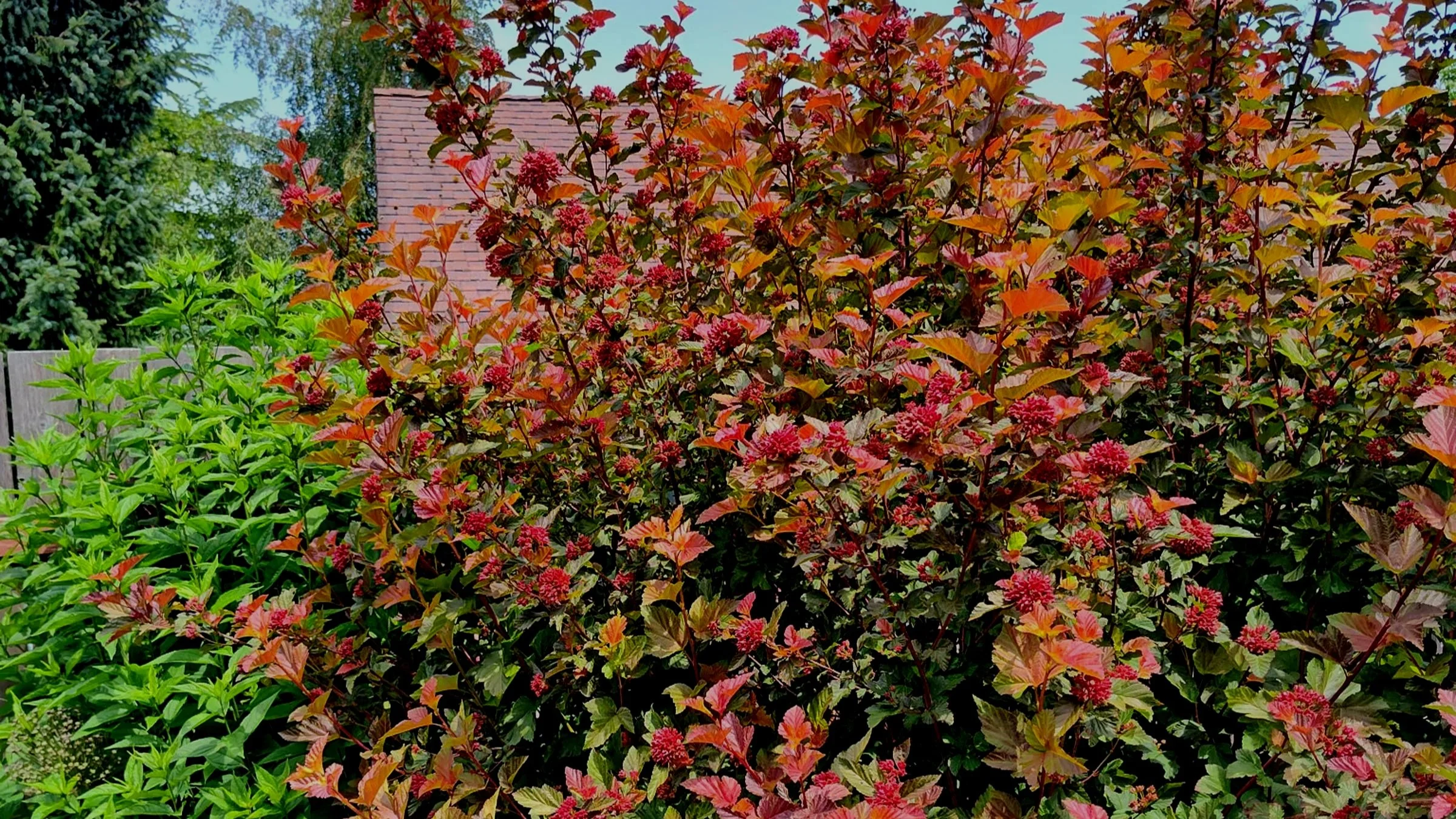
Spring always offers a myriad of plants and topics to delve into, and often I look around my own landscape to see what excites me. The various Eastern Ninebarks (Physocarpus opulifolius cvs.), both in my garden and around the garden center, are about to do their spring thing and emerge from dormancy with intensely colored foliage!
Ninebarks are a wonderful deciduous shrub that fit in nicely with our local plant palette. We are lucky to have a native Pacific Ninebark (Physocarpus capitatus), which represents a perfectly fine option for local lovers of natives. These thrive in many locales, sporting green toothed leaves, a white button flower and bright red seeds/fruits for local wildlife to forage on. These grow into 10 to 12-feet tall, multi-stem specimens and are typically found in moist meadows and on the edges of forests up and down the west coast from SE Alaska into California. Our native bees love to pollinate them and our native butterflies adore their flowers each May and June as well. As I said above, there is nothing wrong with growing Pacific Ninebark, but my focus today will be on ornamental cultivars of Physocarpus opulifolius, an eastern native that thrives here just as nicely.
Eastern Ninebarks are deciduous, but honesty tend to offer year ‘round interest. They are adorned with lovely toothed foliage of varying color (depending on the variety you choose), tidy little pink to white button flower clusters that open from late April into June in our region and bright red seeds/fruits in September and October. Leaves turn lovely shades in autumn before dropping, but over winter the lovely peeling bark adds even more interest.
Keep in mind that Ninebarks bloom on old-wood, so be sure to keep major pruning projects for after they bloom each summer. Thinning them out in winter is great, as well as some simple shaping, but cutting them back beyond that should be saved for early summer or your flowers will be minimal.
A major bonus is their tolerance of wetter soils, even including clay. However, the one potential issue I see on occasion with Physocarpus is powdery mildew due to our wet spring weather, and that is why I will always advise growing them in more sun than shade. If sun is maximized and air circulation is adequate around the plant, mildew should be a minimal issue. If it is crowded in a congested garden space, your chances are exponentially higher for sure. Either way, mildew is not the plague by any means and can be controlled easily with a natural copper fungicide. Or better yet, maybe you have had mildew on your Ninebark (or another plant) before… be proactive and use organic Neem Oil as a preventative so it never gets started again.
While Ninebarks offer multiple seasons of interest to any garden, the spring foliage color is what I truly crave and what I am going to focus on today. We are blessed with many shades of green in our region, so adding a touch of spring color really pops, providing some of the contrast that makes a landscape appealing to the eye. A few of the many excellent cultivars of Eastern Ninebark available are listed below. By no means are these the only worthy options, but I am emphasizing some wonderful flavors produced by Bailey Nurseries - a 100+ year old family grower in Minnesota. The distinctive First Editions breeding program they oversee has produced excellent shrubs of many kinds, including Ninebarks. Think of it this way, they take an old-fashioned beauty and modernize it with brighter foliage, superior growth habit and better disease resistance. These are all qualities the following flavors exude in our region…
‘Amber Jubilee’: I am always honest, and this is one of my favorite shrubs in my own landscape, period. I love me some orange tones and this one provides exactly that, with lovely orangey marmalade growth in spring. The mix of orange, gold and yellow really glows in the garden, then fades into some green tones in summer with the pops of color remaining on the tips. In fall the leaves brighten into tones of scarlet red to purple, finally dropping and highlighting its lovely peeling bark for the winter. This larger specimen was bred for mildew resistance and matures in the 6 to 8-feet tall and wide range, with a nice upright yet compact habit.
‘Fireside’: For the darker foliage lovers, this one will catch your eye. New growth emerges bright red in spring and matures to a striking deep reddish-purple color. This holds through the heat of the summer and then turns even more purple before dropping in autumn. Flowers have a bit more pink in them as well as mixed with the white. This is another flavor bred for both superior mildew resistance and tidier growth habit. Plants will mature in the 6 to 8-feet tall and wide range with a more upright habit.
‘Honeycomb’: This newer version from the First Editions program sports bright yellow foliage, particularly intense in spring. Its chartreuse color holds well all season long, even in full sun, and really does brighten up a shrub border. White flowers add a nice contrast against the leaves each spring. In fall the foliage deepens into golden tones, finally shedding and exposing its lovely winter bark. This is a bit bushier grower, maturing at 5 to 6-feet tall and a bit wider with an arching habit.
‘Dwarf Ninebarks’: Some useful smaller selections of this plant have also been introduced through the First Editions program. These varieties will stay at about 4-feet tall and wide and add foliage that is a bit smaller but just as colorful. All are mildew resistant and should not need much pruning in all honesty. ‘Spicy Devil’ offers yellow to orange color in spring, turning to reddish-purple over the summer. Flowers are a pinky-white and fall color is in the scarlet-purple tones. ‘Lucky Devil’ sports bright yellow foliage all spring and summer, turning bright orange in autumn. The flowers are more pure white on this one. ‘Little Devil’ gives us crisp burgundy-red foliage spring through fall and more of a purplish-white flower. All are compact, tidy, and drought tolerant once established.
Eastern Ninebark has been introduced in many modern forms, each offering similar characteristics of flower, seed, fruit and bark, BUT vastly different foliage colors. Be sure to seek these out during your next visit to the local garden center this spring. The year ‘round interest of these wonderful shrubs make them worthy of prime placement in our landscapes. They are useful as specimens, foundation plants, or even as a clipped informal hedge. Browsing deer even leave these alone! There is certainly a Ninebark to catch any gardener’s eye, so speak with a Certified Professional Horticulturist about your needs and allow them to help you select the best one(s) for your garden. As my friends at Bailey Nurseries might say, “Get your shrub on!” and be sure to “Get twiggy with it!”