The topic of fertilization can sometimes be overwhelming. I often see patrons examining their options and their eyes soon gloss over with all the choices available in the world of fertilizers. I am going to do my best today to simplify things, explain some of the basics and hopefully help you feel confident to start down the path towards plant nutritional success.
Why are we talking about this now? Timing is everything and almost all of the plants in our landscapes should be fed this time of year so that nutrients are available as they awake from their dormant slumber. We will then feed them once again in June, if needed, providing additional support to keep them thriving over the summer. An early feeding now maximizes growth and the second one will ensure a nice summer push, including promoting flower bud (or in some cases fruit/berry/veggie) production for the long term. Just like humans, plants need to be fed - I often exclaim “You feed your children, feed your plants!” Answering the simple questions of who, what, why, how and when are all pertinent with plant foods, and I will try my best over this week, and next, to simplify things.
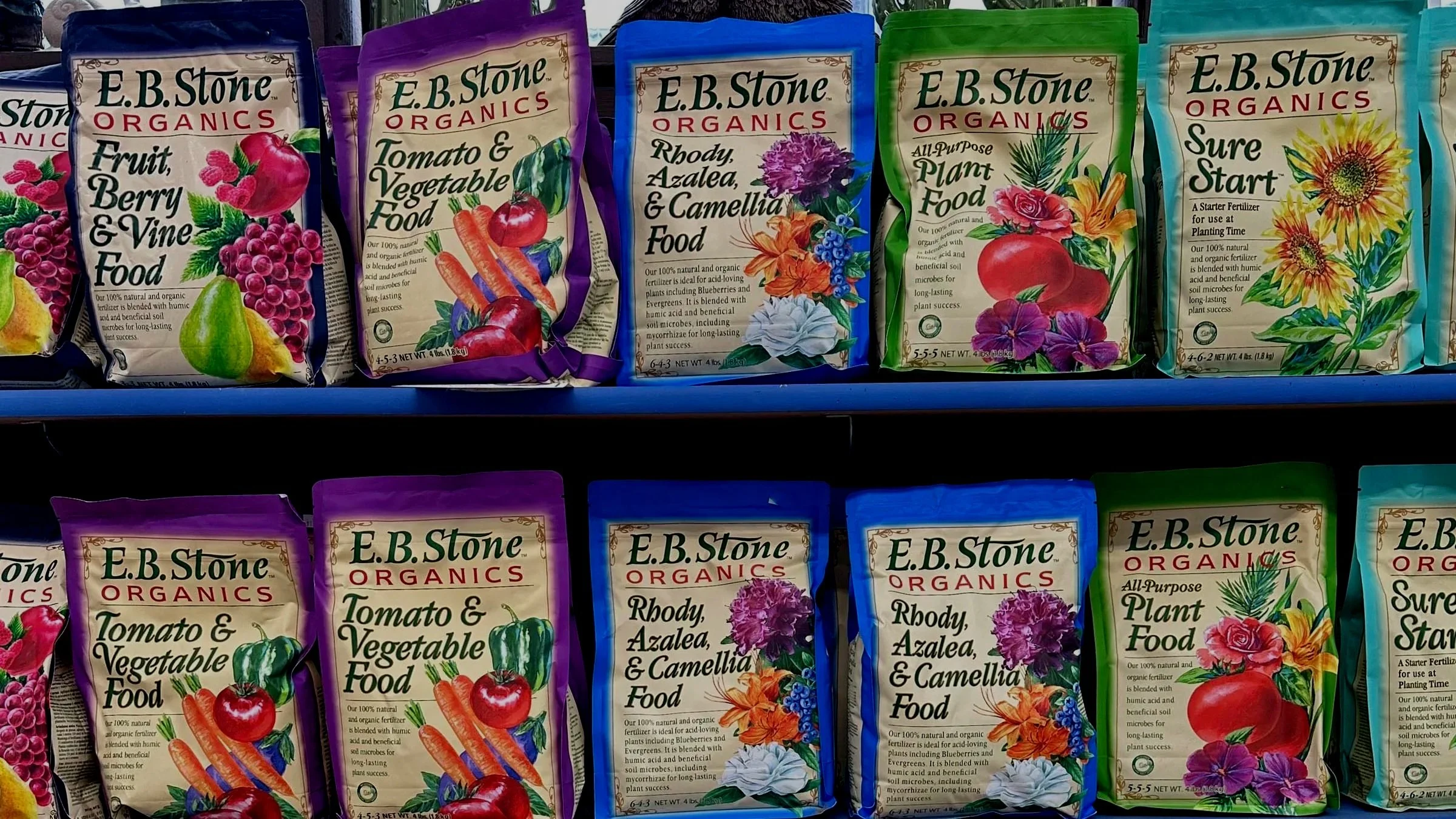
First and foremost, we need to understand what fertilizer is. When examining any bag you will see three simple numbers: this refers to what we call “N-P-K” of a plant food and represents the percentage by weight of the particular elements within the product. These are the three essential nutrients all plants must have, in appropriate amounts, to thrive. The first number (N) provides Nitrogen content, which aids in photosynthesis and provides the lush healthy green color we desire. The second number (P) is Phosphorous content, which helps in root development and boosts bud/flower/fruit production. The third number (K) is Potassium, a valuable nutrient for the overall health of any plant, aiding in resistance to pests and diseases and improving water retention amongst other worthwhile duties. These are by no means the only nutrients a plant needs, as there are also what we call “trace elements” (things like Iron, Boron, Magnesium, Calcium, etc.) that are also needed in smaller amounts to keep plants in good health. A quality fertilizer, especially organic, should contain all of these blended into the perfectly formulated conglomeration for any plant’s specific needs.
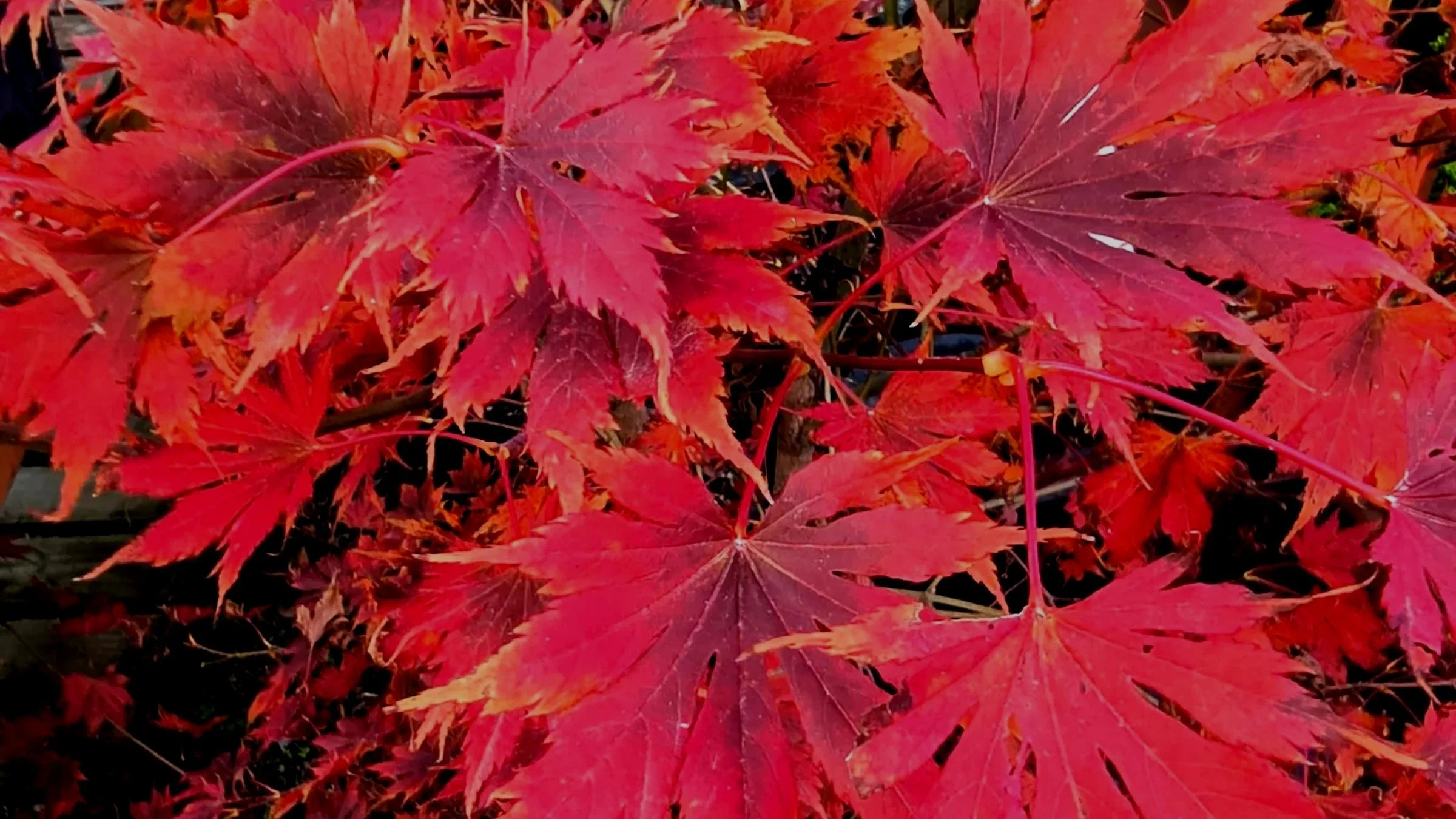
Now speaking of perfectly formulated blends, there is certainly an ideal blend for each type of plant. For example, why should we feed our roses or perennials? Because we want flowers, and lots of them! So if we think of the breakdown above, we want a fertilizer higher in P but still containing suitable amounts of N and K. Say you are feeding a Rhododendron or Azalea… We still want some N for healthy green color, but we also want more P and K for added bloom. A typical acid-loving fertilizer (Rhody food) would cover most of our basic shrubs and would be the best choice for Blueberries as well. If you consider a hedge plant (say Laurel, Boxwood or even Arborvitae), we need nice green growth and maximum foliage for screening, so a food higher in N would be the way to go - conifers and Japanese maples would be similar as well. This in no way means these plants only need N to thrive, but the percentage should be higher, containing much less P and K. The point is this, ideally you will find a specifically suited food for the various styles of plants you are growing, each with amounts of N-P-K formulated to maximize their garden performance season after season.
In the world of fertilizing, you will see granular types, water soluble options or even time-release blends. There are also organic and synthetic options available. With all these different types and options to choose from, it does become a bit overwhelming. I will try to quickly explain so that you can distinguish between them…
Organic: This is the way I would go, whenever possible, as organic fertilizers contain not only the basic N-P-K and trace elements plants desire but also the microbial goodness we call Mycorrhizae. If you are a Sci-Fi lover like me, think Avatar… all those interconnected filaments and roots underground thrive with this beneficial fungus. Mycorrhizae essentially multiples your root systems exponentially, allowing the intake of water and nutrients from a great distance away and not just at the base of a plant. This is of utmost importance for me and extra useful when new plants are added to the landscape. That is why an organic fertilizer from E.B. Stone Organics called 'Sure Start’ is a must have for all new plantings. Keep in mind that organics are not very water soluble, meaning that they last longer in the soil and do not wash away in our spring rains. They also contain Humic Acid, a wonderfully necessary component aiding both the breakdown of food in the soil with microbes and the subsequent uptake by plants. As a gardener using organics, you will see the benefit of naturally vital growth and longevity year after year.
Synthetic: This type of food is chemical based and contains the same type of elements and N-P-K information. These do work (sometimes quicker), but they are water soluble and will wash through the soil structure must faster. There is also a huge chance of burning plants with synthetic foods when too much is applied, which is never the case with organic foods. Take a lawn for example… I can find synthetic food with 30%, even 40%, N which is simply way too much! An organic lawn food would be closer to 10% N, lasting longer and could be put down with fresh seed with no chance of burning. To me, synthetics might be a consideration for annuals – hanging baskets, containers and annual in-ground plantings, but not for the garden or lawn.
Time Release: Personally, organic is my time release since they last longer, requiring less use. True “time release” blends are synthetic as scientists have encapsulated the food with slowly dissolving shells, allowing some out today, more tomorrow and so on week after week. Many will last for months, but again be careful of burning. To me this is a perfectly fine option for hanging baskets and containers but not much else – you mix the food in the soil blend, plant and off you go. ‘Osmocote’ is a common brand that has been around for many years now. This type of fertilizer may help eliminate the need to feed annuals multiple times, unlike the next type of food…
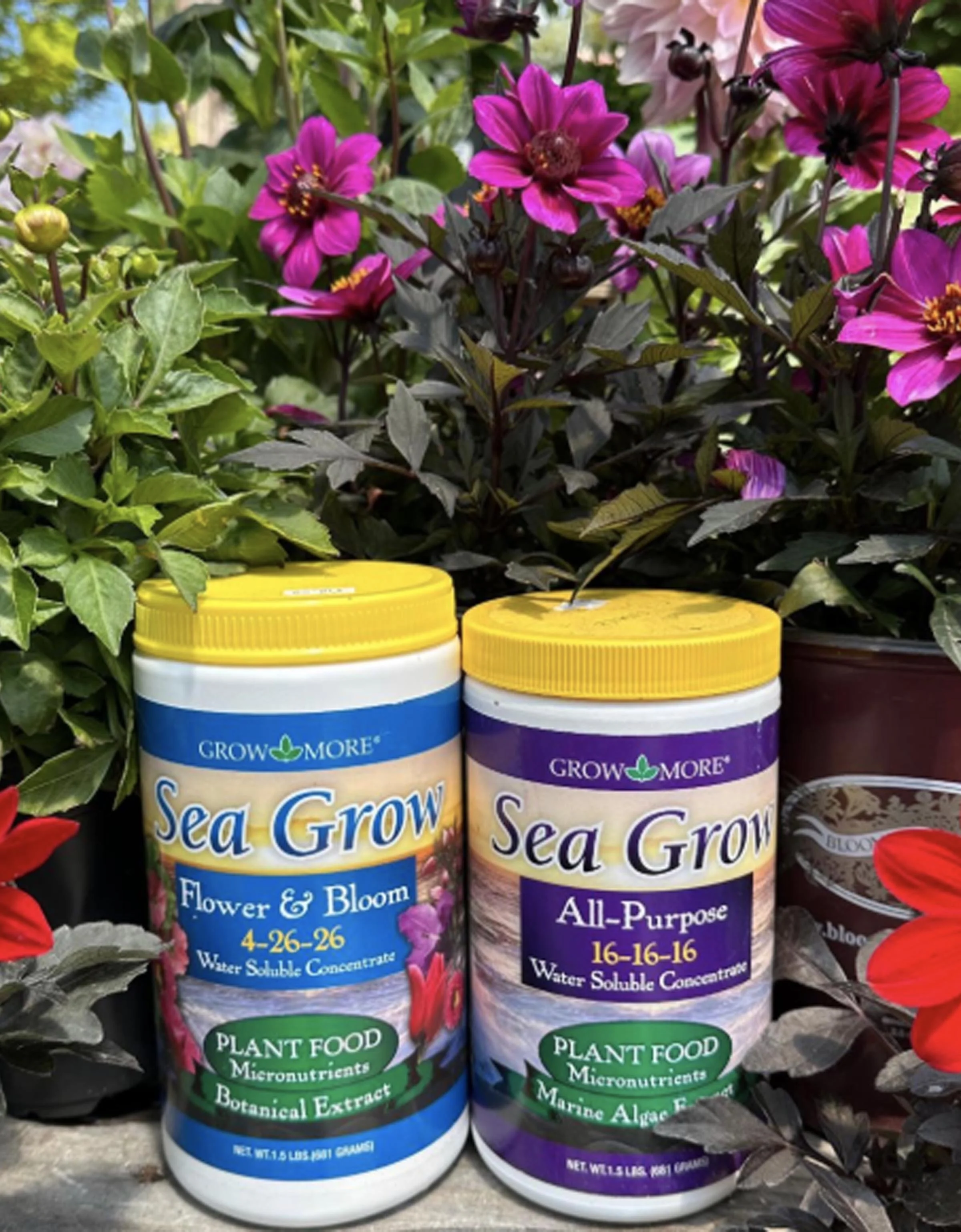
Water Soluble: Traditional water soluble foods (think Miracle-Gro) have their space with annuals, but they really do not last long and need to be applied with water week after week all summer long to keep things blooming their best. Your powdered food is dissolved in the appropriate amount of water, either in a watering can or hose-end applicator, then you simply water your plants with the mix. If this is your thing, no worries, but I might try to persuade you to come to the organic side. Now there are superior organic liquids from Espoma Organics, or even hybrid mixes, which mesh the best of organic and synthetic together. I always recommend a product called ‘Sea Grow’ for this type of use, something I even use to boost my baskets, planters and Dahlias every couple of weeks when needed.
Now that spring has officially sprung, it is the perfect time of year to dial in your fertilization battle for the year. Local garden centers should be fully stocked with all of the options I have mentioned and staff should be able to help you select the best one(s) for your specific needs. I talked types of food today and next week I will get into more specific details along with useful techniques of proper fertilization. My hope is that you will recall some of these basics, make the right choices for you and see your specimens respond to the attention. All of your plants will thank you, perhaps not with actual words, but rather with vastly improved growth, flowers and production… And that is what we are all looking for in our gardens, without a doubt!